How Much Does It Cost to Build a House? 2026 Budget Breakdown
Discover how much it costs to build a house in 2026. Get a detailed budget breakdown, per-square-foot estimates, and expert planning frameworks.
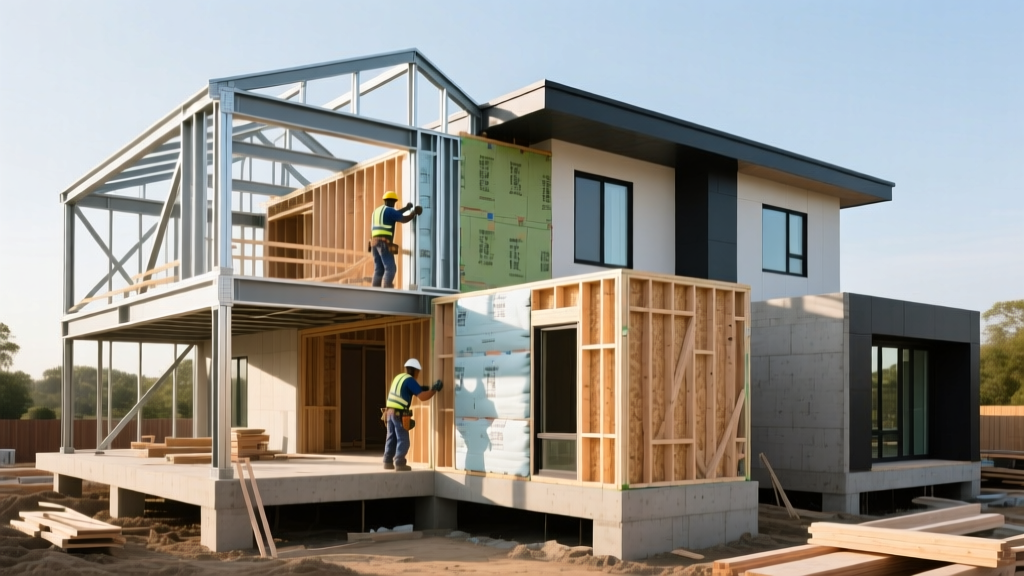
The Baseline: 2026 National Construction Averages
Calculating exactly how much it costs to build a house requires moving beyond generic online estimators. As of 2026, the national average for building a standard, builder-grade single-family home ranges from $150 to $250 per square foot. For a typical 2,000-square-foot residence, this translates to a hard construction cost between $300,000 and $500,000. Custom architectural builds utilizing premium materials and complex engineering routinely push this metric to $300–$500+ per square foot.
While supply chain stabilization over the last two years has normalized dimensional lumber and concrete pricing, a persistent shortage in skilled trades—specifically electricians, plumbers, and HVAC technicians—has driven mechanical, electrical, and plumbing (MEP) labor rates up by 4% to 6% annually. Understanding where your capital is actually deployed is the first step in preventing budget overruns.
- National Average Cost: $195 per sq. ft.
- Typical Build Time: 7 to 10 months (from groundbreaking to certificate of occupancy)
- Land Cost: Excluded from per-square-foot build metrics; averages $75,000–$150,000 depending on utility access.
The Hard Cost Matrix: Where the Money Goes
Hard costs represent the physical materials and labor required to construct the home. The following breakdown illustrates the financial distribution across major construction phases for a 2,000-square-foot build priced at $200 per square foot ($400,000 total hard costs).
| Construction Phase | Budget % | Cost per Sq. Ft. | Total Estimate (2k sq ft) |
|---|---|---|---|
| Site Work & Earthmoving | 6% | $12 | $24,000 |
| Foundation & Concrete | 11% | $22 | $44,000 |
| Framing & Roof Decking | 17% | $34 | $68,000 |
| Exterior Finishes (Siding, Roof, Windows) | 14% | $28 | $56,000 |
| MEP Rough-in & Trim | 15% | $30 | $60,000 |
| Interior Finishes (Drywall, Paint, Flooring, Cabinets) | 27% | $54 | $108,000 |
| Final Fixtures & Landscaping | 10% | $20 | $40,000 |
According to data tracked by the U.S. Census Bureau, interior finishes and framing consistently command the largest share of the budget. Upgrading from standard builder-grade materials to premium selections in these two categories alone can increase your total project cost by 25% or more.
Hard Costs vs. Soft Costs: The Budget Blindspot
A common failure in initial budget planning is ignoring soft costs. While hard costs pay for the physical house, soft costs pay for the legal, administrative, and design prerequisites. Industry data from the National Association of Home Builders (NAHB) indicates that soft costs and financing fees typically consume an additional 20% to 30% of the total project budget.
Standard Soft Cost Allocations
- Architectural & Engineering Fees: 8% to 15% of hard costs. Custom designs require structural engineering stamps, which cost $2,500 to $5,000 independently.
- Permits & Impact Fees: 1% to 3%. Municipal impact fees for water and sewer tap-ins can range from $3,000 in rural townships to over $25,000 in high-growth urban suburbs.
- Geotechnical & Soil Testing: $2,000 to $4,500. Mandatory in many jurisdictions to determine load-bearing capacity and drainage requirements.
- Construction Loan Interest: Variable. During a 9-month build, interest reserves on a $400,000 construction loan at a 7.5% rate will add roughly $22,500 in carrying costs.
Material Selection Tiers and Financial Impact
To accurately forecast how much it costs to build a house, you must define your material tier. The variance between builder-grade and premium selections drastically alters the per-square-foot metric.
Tier 1: Builder Grade
Target: $150 - $180 / sq. ft.
- Roofing: 3-tab asphalt shingles
- Siding: Standard vinyl lap
- Windows: Dual-pane builder vinyl
- Countertops: Laminate or entry-level granite
- Flooring: LVP (Luxury Vinyl Plank) and carpet
Tier 2: Mid-Grade
Target: $190 - $260 / sq. ft.
- Roofing: Architectural dimensional shingles
- Siding: James Hardie fiber cement
- Windows: Andersen 100 Series fiberglass
- Countertops: Quartz (e.g., Caesarstone)
- Flooring: Engineered hardwood and large-format porcelain
Tier 3: Premium Custom
Target: $300 - $450+ / sq. ft.
- Roofing: Standing seam metal or slate
- Siding: Natural stone veneer and cedar
- Windows: Marvin Ultimate wood-clad
- Countertops: Custom quartzite or marble
- Flooring: Site-finished solid hardwood and natural stone
Expert Insight: Upgrading from Tier 1 dual-pane vinyl windows ($250–$400 per unit) to Tier 2 fiberglass-clad windows ($600–$900 per unit) adds roughly $7,000 to $10,000 to an average home. However, this upgrade yields a 15% to 20% improvement in thermal envelope efficiency, reducing long-term HVAC loads.
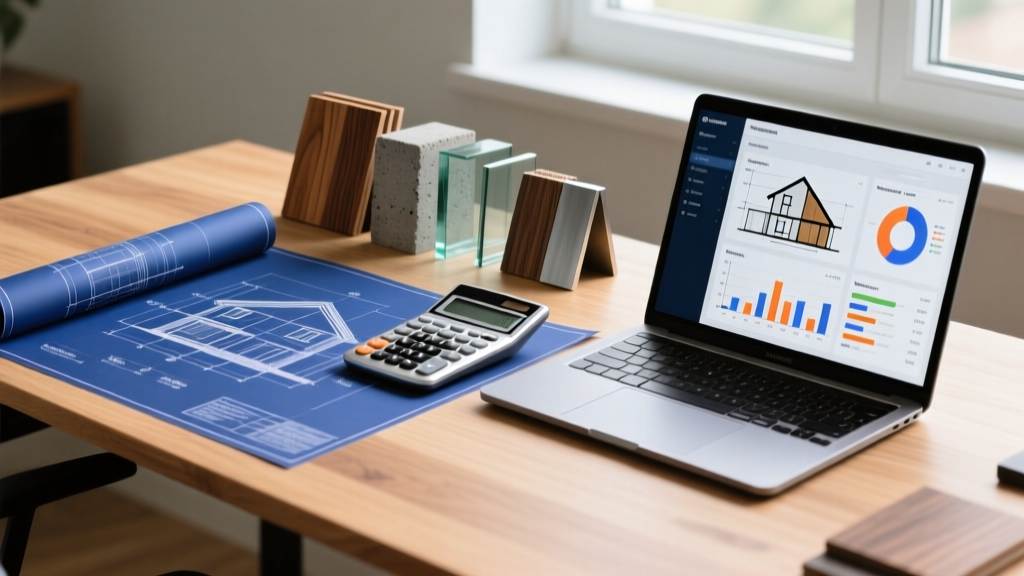
Regional Labor and Material Variance
Geography dictates labor availability and material transport costs. According to consumer cost aggregates from Angi, building the exact same 2,000-square-foot floor plan will yield vastly different invoices depending on the zip code.
- Northeast & West Coast: $220 to $350+ per sq. ft. High unionization rates, strict seismic or snow-load building codes, and expensive municipal impact fees drive costs upward.
- Midwest: $160 to $210 per sq. ft. Proximity to raw material manufacturing (lumber mills, steel plants) and lower prevailing wage requirements keep costs moderate.
- South: $140 to $190 per sq. ft. Lower labor costs and less stringent insulation requirements reduce baseline costs, though hurricane tie-downs and impact-resistant glass in coastal zones can add $25,000+ to the exterior envelope.
The 5-Step Budget Planning Framework
Executing a build without a rigid financial framework guarantees overruns. Utilize this sequence to structure your capital allocation.
- Land Feasibility & Due Diligence: Before purchasing land, spend $1,500–$3,000 on a boundary survey and a perc test (for rural septic). Discovering expansive clay soils after closing could require an engineered pier-and-beam foundation, adding $20,000 to your site budget.
- The 80/15/5 Allocation Rule: Cap your hard and soft construction costs at 80% of your total available capital. Reserve 15% strictly for a contingency fund (to cover change orders, lumber spikes, or weather delays). Allocate the final 5% for post-construction landscaping, driveway paving, and window treatments.
- Scope Leveling Contractor Bids: When soliciting bids, require contractors to use a standardized line-item scope of work. A bid that is $30,000 lower than the others usually indicates the contractor excluded site grading, builder's risk insurance, or final utility hookups.
- Strategic Value Engineering: If bids exceed your budget, do not cut material quality; cut geometric complexity. Simplifying a roofline from multiple intersecting gables to a single hip roof reduces framing labor and truss costs by 10% to 15% without compromising square footage.
- Draw Schedule Management: Never front-load payments to a general contractor. Tie disbursements to verified milestones (e.g., 15% upon foundation pour, 20% upon dry-in, 25% upon MEP rough-in inspection). Retain 10% of the total contract value until the final punch list is cleared and the Certificate of Occupancy is issued.
Change orders executed after construction begins are typically billed at cost-plus-20% to cost-plus-30%. Moving a single plumbing wall after the foundation is poured and framing has begun can cost $2,500 to $4,000 in rework, demolished materials, and schedule delay penalties. Finalize all architectural and MEP plans before breaking ground.
Hidden Budget Killers to Anticipate
Even meticulous budgets fail to account for site-specific anomalies. Prepare for these three common financial traps:
- Utility Tap and Extension Fees: If your lot is more than 200 feet from the municipal water main, extending the line costs $75 to $150 per linear foot. Running power and water to a rural build site can easily consume $20,000 to $40,000 of your site-work budget.
- Rock Excavation: Standard earthmoving bids assume dirt. If the excavator hits bedrock, blasting or mechanical hammering is billed as an extra, often at $100 to $250 per cubic yard. Always include a rock-excavation contingency clause in your site-work contract.
- Energy Code Upgrades: The 2024 and 2025 IECC (International Energy Conservation Code) adoptions in many states now require continuous exterior insulation (like 1-inch rigid polyiso) and advanced air-sealing. This adds $4,000 to $8,000 to the framing and exterior phase compared to older building standards.
Accurately forecasting how much it costs to build a house is an exercise in risk mitigation. By anchoring your estimates in current 2026 labor rates, respecting the financial weight of soft costs, and maintaining a rigid 15% contingency reserve, you transition from guessing to strategic capital deployment.
Written by
David NakamuraDavid Nakamura is a licensed architect (AIA) and construction technology writer focused on sustainable building methods, mass timber engineering, and high-performance building envelopes. He holds a Master of Architecture from the University of Washington and is a certified Passive House Consultant (CPHC). David spent eight years at the Seattle firm Mithun, where he led the design of three LEED Platinum projects, before founding his own practice specializing in net-zero residential design. He serves on the editorial advisory board of GreenBuilder Magazine and has authored peer-reviewed papers on cross-laminated timber (CLT) connections for the Journal of Structural Engineering. In his spare time, David teaches woodworking at Pratt Fine Arts Center and kayaks the Puget Sound.
More from David Nakamura
View all
Construction Cost
Labor Cost to Build a Deck Per Sq Ft: 2026 Installation Guide
Discover the exact labor cost to build a deck per sq ft in 2026. This installation guide breaks down contractor rates, complexity factors, and hidden fees.
Aug 4, 2026

Construction Cost
How Much Does It Cost to Build a 3 Bedroom House? Financing Guide
Learn exactly how much it costs to build a 3 bedroom house and explore 2026 financing options, construction loan types, and budget frameworks for your build.
Aug 4, 2026

Construction Cost
Cost to Build a Tennis Court: 2026 Guide
How much does it cost to build a tennis court in 2026? Breakdowns for asphalt, concrete, and synthetic surfaces plus fencing and lighting.
Jul 30, 2026