Regional Cost to Build an Indoor Shooting Range in 2026
Discover the 2026 regional cost to build an indoor shooting range. Compare HVAC, bullet trap, and labor pricing across US markets to budget accurately.
The Baseline: National Averages vs. Regional Reality
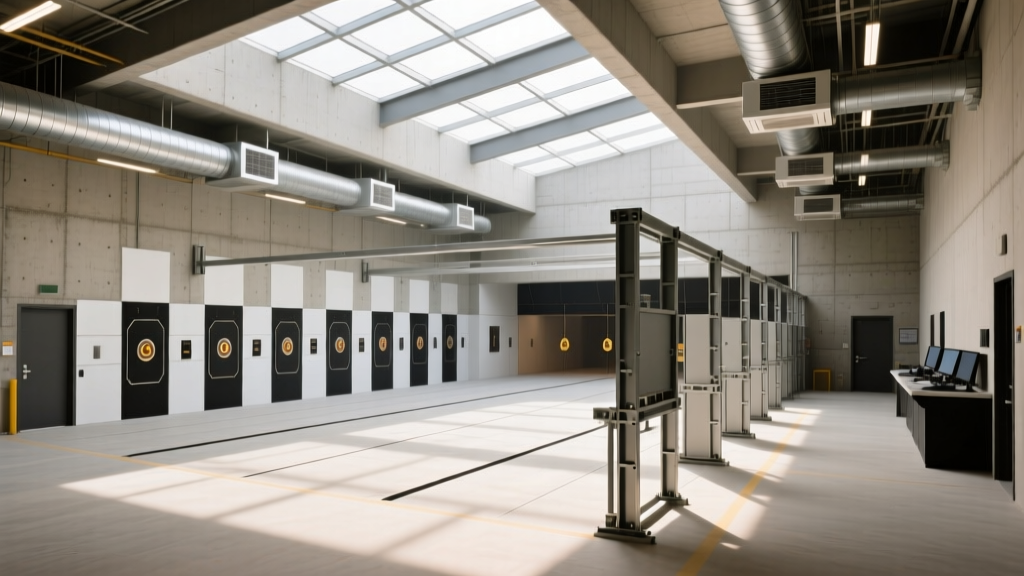
The baseline national average to build a commercial indoor shooting range sits between $65,000 and $95,000 per lane in 2026. However, treating this as a flat metric is a critical estimating error. The true cost to build an indoor shooting range fluctuates by up to 45% depending on regional labor rates, local environmental regulations, and material logistics. A 4-lane facility that costs $280,000 in Texas can easily exceed $480,000 in Southern California when factoring in union labor, Title 24 HVAC compliance, and stringent lead abatement permitting.
- Southeast: $55,000 - $70,000
- Midwest: $65,000 - $80,000
- Northeast: $85,000 - $105,000
- West Coast: $95,000 - $125,000
Core Cost Centers and Regional Variance
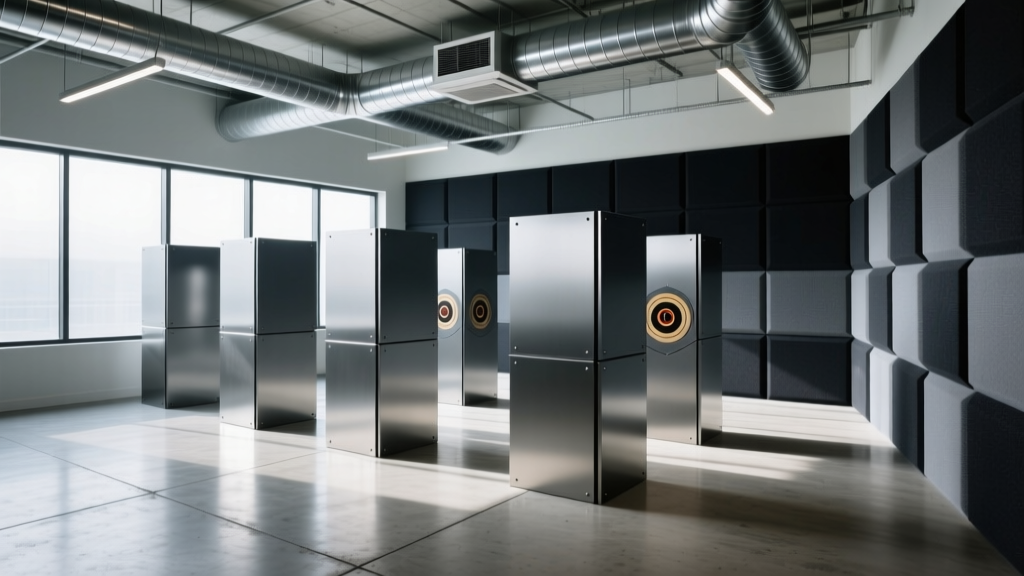
To build an accurate regional estimate, you must decouple the specialized range equipment from the general construction shell. The shell (concrete, framing, roofing) follows standard regional commercial construction indexes. The specialized equipment—HVAC, bullet traps, and acoustics—carries its own regional multipliers based on shipping weight, local code strictness, and specialized labor availability.
HVAC and Lead Mitigation (The 30% Wildcard)
Indoor range HVAC is not standard commercial climate control. It requires precise laminar airflow, negative pressure containment, and HEPA-grade filtration to manage airborne lead particulates from primer residue and jacket fragmentation. According to the CDC NIOSH guidelines for indoor firing ranges, ventilation systems must supply 750 to 1,000 cubic feet per minute (CFM) of make-up air per lane, moving downrange from the shooter to the backstop.
In the Southeast and Midwest, standard commercial HVAC contractors can often adapt make-up air units (MAUs) with variable frequency drives (VFDs) for roughly $12,000 to $18,000 per lane. On the West Coast and in the Northeast, strict energy codes (like California's Title 24) mandate advanced heat recovery ventilators (HRVs) and hyper-specific exhaust scrubbing. This specialized engineering pushes HVAC costs to $25,000 to $35,000 per lane, requiring certified industrial hygienists to validate the airflow dynamics before occupancy permits are issued.
Bullet Traps and Backstop Engineering
The bullet trap is the most abused component of any range. The two primary options are granular rubber traps and steel deceleration traps. Granular rubber traps (shredded tire mulch) have a lower upfront cost ($8,000 to $12,000 per lane) but carry severe fire risks from tracer ammunition and require frequent, labor-intensive lead reclamation.
Modern commercial facilities heavily favor AR500 steel deceleration traps, such as the Action Target Total Containment Trap or Meggitt snail traps. These systems use angled steel baffles to decelerate projectiles without fragmenting the lead, dropping it into a sealed collection bin. Expect to pay $18,000 to $28,000 per lane for a premium steel trap. Regional variance here is driven almost entirely by freight costs; shipping 15,000 pounds of hardened steel baffles to a rural Midwestern site will cost significantly more in LTL freight surcharges than delivering to a major coastal port city.
Acoustic Containment and Ballistic Architecture
Firearms generate peak sound pressure levels exceeding 160 dB. To meet OSHA's 140 dB peak limit and prevent structural noise bleed into adjacent commercial spaces, ranges require STC (Sound Transmission Class) ratings of 65 or higher. This necessitates 12-inch poured solid concrete walls or 8-inch CMU blocks fully grouted and lined with specialized acoustic baffling and closed-cell polyurethane foam. In dense urban markets like New York or Boston, where ranges often occupy retrofitted basement or warehouse spaces, structural reinforcement and acoustic decoupling can add $40,000 to $60,000 to the total shell cost.
2026 Regional Pricing Matrix: 4-Lane Commercial Range
The following table models the estimated total capital expenditure for a 4-lane, 4,500-square-foot commercial indoor shooting range (including retail lobby, classroom, and HVAC) across four distinct US markets. Estimates assume a greenfield build on a commercially zoned slab.
| Region (Representative Markets) | Shell & General Labor | Specialized Equipment | Permitting & Soft Costs | Total Project Cost |
|---|---|---|---|---|
| Southeast (TX, GA, FL) | $110,000 - $130,000 | $115,000 - $135,000 | $15,000 - $25,000 | $240k - $290k |
| Midwest (OH, IN, WI) | $135,000 - $160,000 | $125,000 - $145,000 | $20,000 - $30,000 | $280k - $335k |
| Northeast (NY, MA, PA) | $180,000 - $220,000 | $140,000 - $160,000 | $45,000 - $65,000 | $365k - $445k |
| West Coast (CA, WA, OR) | $190,000 - $240,000 | $150,000 - $180,000 | $60,000 - $90,000 | $400k - $510k |
Regulatory Multipliers: OSHA and EPA Compliance
Environmental and occupational safety regulations act as a massive hidden multiplier on range construction costs. Under OSHA Standard 1910.1025, employers must ensure that airborne lead concentrations do not exceed 50 micrograms per cubic meter of air (µg/m³) as an 8-hour time-weighted average.
Estimator Warning: In states with independent OSHA plans (like Cal/OSHA in California or DOSH in Washington), the permissible exposure limits (PEL) and required engineering controls are often stricter than federal baselines. Failing to spec your HVAC system to state-specific PELs will result in failed final inspections and mandatory, highly expensive post-construction retrofits.
To meet these standards, estimators must include line items for specialized janitorial sinks with lead-filtering drain traps, HEPA-vacuum systems for daily range cleaning, and dedicated clean/dirty locker rooms to prevent cross-contamination of lead dust on employees' street clothes. In highly regulated states, these compliance architecture requirements can add $25,000 to $40,000 to the interior build-out.
Target Retrieval and Lighting Systems
While not structural, the electro-mechanical target retrieval systems and range lighting represent a significant capital outlay that varies by supplier proximity and installation complexity. Modern commercial ranges utilize automated, programmable target carriers (e.g., ProTarget or Meggitt Enduro) that allow for dynamic scenario programming. Budget $4,500 to $8,500 per lane for motorized carriers, track extrusions, and control server integration.
Lighting must be engineered to eliminate downrange shadows and prevent glare off brass casings or optical sights. Estimators should specify specialized no-glare LED fixtures delivering 100 to 150 foot-candles at the target line, with angled baffles to protect the lenses from stray fragments. Budget $2,500 to $4,000 per lane for ballistic-rated, anti-glare lighting arrays.
Actionable Bidding and Procurement Strategy
When preparing an RFP for an indoor shooting range, general commercial contractors will almost always underestimate the specialized MEP (Mechanical, Electrical, Plumbing) and ballistic requirements. To protect your budget and timeline, follow this procurement framework:
- Mandate Range-Specific Experience: Only invite bids from GCs who have partnered with specialized range engineering firms. The National Shooting Sports Foundation (NSSF) maintains resources and directories for range development that can help identify qualified consultants.
- Separate the Shell from the Equipment: Bid the general construction shell (slab, tilt-up walls, roof) locally to capitalize on regional labor rates. Bid the bullet traps, acoustic baffling, and range HVAC as a separate, specialized package from national manufacturers who provide certified installation crews.
- Require CFD Modeling: Before finalizing the HVAC contract, require the mechanical engineer to perform Computational Fluid Dynamics (CFD) modeling of the range. This 3D simulation proves that the laminar airflow will effectively push lead particulates downrange without creating turbulent eddies that blow toxic dust back into the shooter's breathing zone.
- Specify AR500 Hardness Certifications: When procuring steel traps and baffles, require mill test reports verifying the steel is true AR500 (Brinell hardness 470-540). Substituted mild steel will crater and fragment upon impact, creating lethal ricochet hazards and necessitating a total teardown within the first year of operation.
Accurately estimating the cost to build an indoor shooting range requires looking past simple square-footage metrics. By isolating the heavy steel logistics, mapping local environmental codes, and separating general construction from ballistic engineering, developers can build resilient budgets that withstand the unique pressures of regional commercial development in 2026.
Written by
James ThorntonJames Thornton is a construction industry veteran with 25 years of hands-on experience in wood framing, lumber grading, and residential building codes. He started as a framing carpenter in rural Oregon, earned his ICC Residential Building Inspector certification, and eventually became a senior plan reviewer for the City of Portland Bureau of Development Services. James holds a B.S. in Wood Science & Technology from Oregon State University and is a certified lumber grader through the West Coast Lumber Inspection Bureau (WCLIB). He has inspected over 3,000 residential construction sites and authored the city's internal guide on advanced framing techniques (2x6 at 24" O.C.). James lives in Bend, OR, where he builds custom timber-frame cabins and competes in lumberjack sports.
More from James Thornton
View all
Insulation
Best Home Insulation Materials: Complete 2026 Guide
Compare top home insulation materials for 2026. Find R-values, installed costs per square foot, and best uses for fiberglass, spray foam, and mineral wool.
Aug 4, 2026

Sustainable Building
Certify Your Green Building Material for LEED and WELL
Step-by-step guide to certifying a green building material for LEED v5 and WELL v2. Master EPDs, HPDs, and VOC limits for 2026 project specifications.
Aug 4, 2026

Stone & Masonry
Veneer Stacked Stone Panels: Interior Design & Style Showcase
Discover how veneer stacked stone panels transform interiors. Explore modern design profiles, material pairings, and technical installation specs.
Aug 4, 2026