Cost to Build a Bookcase: Detailed Wood & Hardware Breakdown
Discover the true cost to build a bookcase with our detailed breakdown of lumber, plywood, hardware, and finish expenses for DIY and custom built-ins.
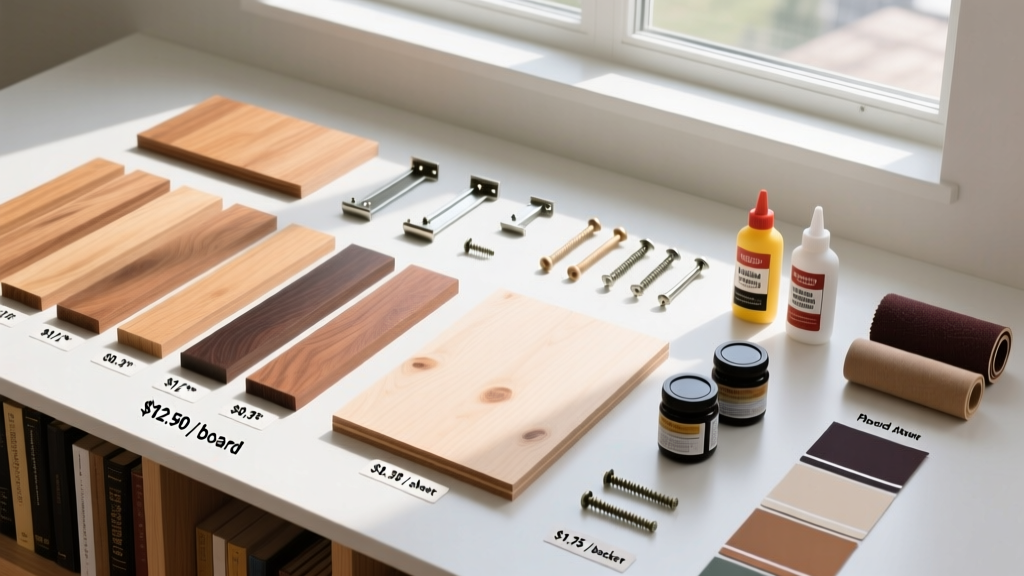
The True Cost to Build a Bookcase: Beyond the Lumber
Calculating the cost to build a bookcase requires looking past the initial price of sheet goods. While a basic MDF cabinet might seem inexpensive, the cumulative expenses of edge banding, specialized fasteners, shelf hardware, and professional-grade finishes dictate your final budget. According to HomeGuide's built-in shelving cost report, professional custom built-ins average $150 to $300 per linear foot, making DIY construction a highly cost-effective alternative if you accurately forecast your material requirements.
Quick Cost Snapshot: 4x8 ft Freestanding Bookcase
- Budget Tier (MDF/Painted): $180 - $260
- Mid-Range (Oak Plywood/Stained): $350 - $520
- Premium Tier (Solid Walnut/Cherry): $850 - $1,400+
Note: Prices reflect 2026 material averages and exclude power tool depreciation or specialized dust collection systems.
Material Matrix: Core Panels and Sheet Goods
The carcass (the main structural box) of your bookcase will consume the majority of your material budget. Choosing between MDF, standard plywood, and hardwood plywood involves balancing weight, moisture resistance, and fastener holding strength.
| Core Material | 2026 Sheet Price (4x8) | Weight per Sheet | Best Application |
|---|---|---|---|
| 3/4" MDF | $55 - $70 | 95 lbs | Painted built-ins (low moisture) |
| 3/4" Birch Plywood | $85 - $105 | 70 lbs | Shop cabinets, utility shelving |
| 3/4" Red Oak Plywood | $115 - $140 | 75 lbs | Stained furniture, premium built-ins |
| 3/4" Solid Poplar (Glued) | $350+ (Board Foot) | Varies | Heirloom pieces, traditional joinery |
The Hidden Costs: Edge Treatment and Fasteners
Plywood requires edge treatment to hide the alternating veneer layers. This is where novice builders often underestimate the cost to build a bookcase. Iron-on PVC edge banding is cheap ($15 per roll) but yields a commercial, low-end aesthetic that chips easily. The professional standard is real wood veneer tape.
Edge Banding Economics
- FastCap 2" Wide Wood Veneer Tape: ~$35 per 50-foot roll. The extra width allows for forgiveness during trimming with a flush-trim router bit or a specialized edge trimmer.
- Adhesive: If using raw veneer rather than pre-glued, you will need a high-quality PVA wood glue or contact cement ($15-$25).
- Consumables: Flush-trimming router bits (e.g., Whiteside or Freud) cost $30-$45 but are mandatory for a seamless transition between the plywood face and the veneer edge.
Fastener Selection: Pocket Holes vs. Confirmat Screws
Joinery method drastically alters both the budget and the structural integrity of the shelving unit. Kreg pocket hole joinery systems are ubiquitous in DIY circles. A Kreg K4 or K5 jig requires an upfront investment of $100 to $150, but the specialized coarse-thread screws cost only pennies per joint. Pocket holes are excellent for face-frame assembly but leave visible holes on the underside of shelves that require wood filler or tapered plugs.
For a cleaner, heavy-duty alternative, European cabinet makers rely on Hafele Confirmat screws. These thick, specialized steel bolts require a 7mm step drill bit ($25) and provide immense sheer strength for carcass assembly, though they are generally hidden behind a face frame or covered with plastic caps.
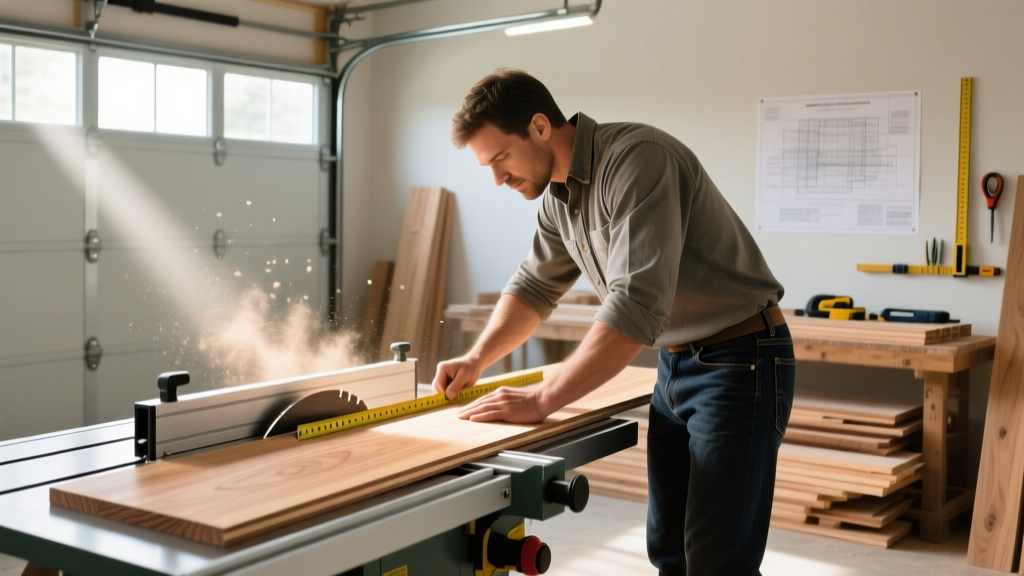
Finish and Protection: Calculating Square Footage
A common miscalculation when estimating the cost to build a bookcase is the surface area required for finishing. A standard 8-foot tall by 4-foot wide by 12-inch deep bookcase with five shelves possesses approximately 110 to 130 square feet of finishable surface area (accounting for both sides of the shelves, the interior carcass, and the face frame).
Topcoat Coverage and Pricing
Water-based polyurethanes and polycrylics are the industry standard for indoor shelving due to their low VOCs, rapid drying times, and resistance to yellowing. General Finishes Water-Based Topcoats retail for approximately $35 to $45 per quart. One quart yields roughly 400 square feet of coverage per coat. Therefore, a single quart is mathematically sufficient for three coats on a standard 4x8 bookcase, provided you are using a high-density foam roller or an HVLP sprayer to minimize waste and brush marks.
Pro Tip: Never skip the sanding budget. A flawless finish requires progressing through 80, 120, 150, and 220-grit abrasives. Budget at least $35 for a multi-pack of 5-inch random orbital sanding discs or premium sanding sheets. Raising the grain with a damp cloth before the final 220-grit sand is mandatory for water-based finishes to prevent a rough, fuzzy texture.
Built-In vs. Freestanding: Installation Variables
If your project involves built-in shelving anchored to a wall, your material list must expand to accommodate scribing and structural anchoring. Homes rarely feature perfectly plumb walls or level floors.
- Scribing Material: You must add 10-15% extra lumber to your stiles (the vertical face frame pieces) to allow for scribing to uneven drywall. A high-quality contour gauge ($18) and a belt sander are mandatory for tight fits.
- Baseboard Integration: You have two choices: cut away the baseboard behind the bookcase (saving material but damaging the room's trim) or notch the back of the bookcase's base frame. Notching requires precise measurement and adds roughly 2 hours of labor to the build.
- Anchoring Hardware: Do not use standard drywall anchors. Built-ins must be anchored directly to wall studs using 3.5-inch structural screws (e.g., GRK RSS or Simpson Strong-Tie), which cost about $15 per box. Add a $20 budget for metal L-brackets and finish washers to secure the top of the unit discreetly.
Step-by-Step Cost Accumulation: 8-Foot Oak Plywood Unit
To provide a concrete baseline, here is the exact material accumulation for a freestanding, stain-grade Red Oak plywood bookcase measuring 84" H x 36" W x 12" D, featuring a solid wood face frame and five adjustable shelves.
- Carcass Material: 1 sheet 3/4" PureBond Oak Plywood — $125.00
- Face Frame Stock: 14 Board Feet of 4/4 Poplar (paint grade) or Oak (stain grade) — $65.00
- Edge Treatment: 1 roll FastCap 2" Oak Veneer Tape — $38.00
- Shelving Material: 0.5 sheet 3/4" Oak Plywood (yields 5 shelves) — $62.50
- Backing Panel: 1 sheet 1/4" Oak Veneer Plywood (pre-finished one side) — $55.00
- Shelf Hardware: 5mm Nickel-Plated Shelf Pins with Sleeves (50-pack) — $18.00
- Fasteners & Glue: Pocket screws, 16oz Titebond III, 18ga Brad nails — $32.00
- Finish & Abrasives: 1 qt General Finishes Topcoat, Sanding discs, Pre-stain conditioner — $65.00
Total Estimated Material Cost: $460.50
Compare this to a custom cabinet shop quote for a stain-grade oak built-in of the same dimensions, which typically ranges from $1,800 to $2,800 including installation.
Structural Integrity: Shelf Span and Sag Limits
A critical, often overlooked factor in bookcase construction is shelf deflection. Books are incredibly heavy, averaging 20 to 25 pounds per linear foot. If you build a bookcase that is 48 inches wide using standard 3/4" plywood without center support, the shelves will permanently sag within a year.
Warning: The 32-Inch Rule
According to the Wood Magazine Sagulator (the industry standard deflection calculator), 3/4" veneer-core plywood can only span a maximum of 32 inches while supporting 30 lbs per linear foot before exhibiting visible sag. If your design requires a 36-inch or 48-inch clear span, you must either add a 1.5-inch solid hardwood nosing to the front edge of the shelf (which increases stiffness by over 50%) or install a hidden steel shelf stiffener channel ($12 per shelf) routed into the underside of the plywood.
Accurately forecasting the cost to build a bookcase means respecting the physics of wood movement and structural load. By investing in high-quality plywood, precision edge banding, and proper structural reinforcement, your DIY build will rival the aesthetics and longevity of premium custom millwork at a fraction of the retail price.
Written by
Elena RodriguezElena Rodriguez is a civil engineer and technical writer specializing in concrete technology, masonry systems, and ASTM/ACI compliance. She earned her B.S. in Civil Engineering from Texas A&M University and spent a decade at a materials testing laboratory, performing over 2,000 concrete compressive strength tests and masonry prism evaluations. Elena is an ACI-certified Field Testing Technician (Grade I) and a member of ASTM Committee C12 on Natural Building Stone. She currently consults on forensic engineering cases involving concrete failures and moisture intrusion. Based in San Antonio, TX, Elena is a proud member of the Society of Women Engineers (SWE) and coaches her daughter's FIRST Robotics team.
More from Elena Rodriguez
View all
Walls & Panels
Cost Analysis: Light Gauge Steel Framing Advantages and Disadvantages
Evaluate light gauge steel framing advantages and disadvantages through a strict cost analysis lens, comparing material, labor, and lifecycle expenses.
Aug 4, 2026

Walls & Panels
Gypsum Board Types: Exact Specifications, Thickness & Dimensions
Compare standard, Type X, and moisture-resistant gypsum board types. Get exact specifications, thicknesses, dimensions, and ASTM standards for your project.
Aug 4, 2026

Fire Resistance
Best Fire-Resistant Outdoor Decking Materials: 2026 Buyer Guide
Discover the best fire-resistant outdoor decking materials for 2026. Compare Class A PVC, aluminum, and hardwood options for WUI compliance and safety.
Aug 4, 2026