Cost to Build an Apartment Building: 2026 Budget Planning Guide
Discover the true cost to build an apartment building. Learn budget planning strategies, per-unit pricing, and hidden expenses for multifamily construction.
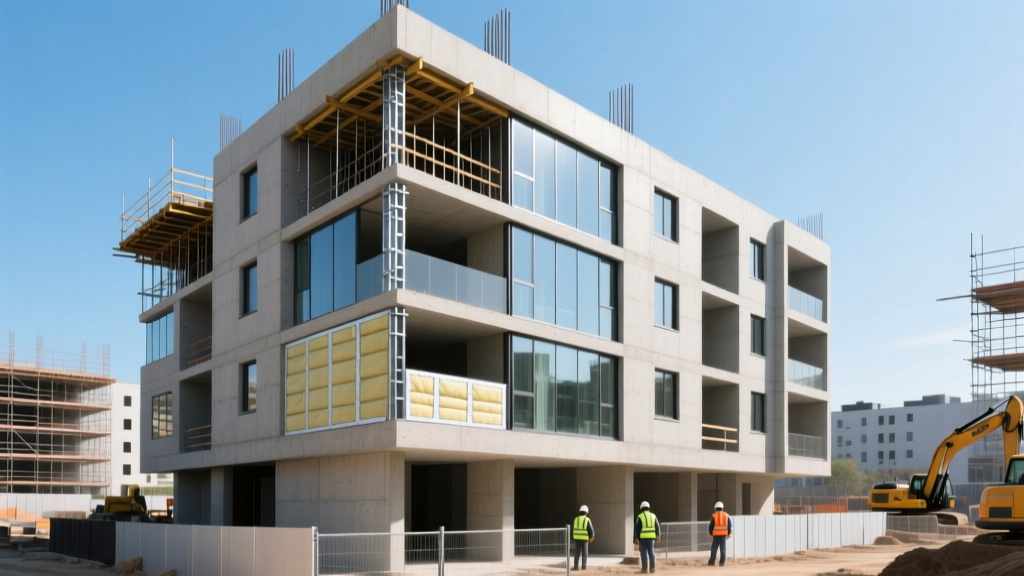
The Baseline: Average Cost to Build an Apartment Building
Calculating the accurate cost to build an apartment building requires moving beyond simplistic per-square-foot averages. Multifamily construction costs are highly sensitive to building height, structural classification, local labor markets, and municipal impact fees. According to data tracked by the National Multifamily Housing Council (NMHC), the national average for multifamily development hovers between $150 and $350 per square foot for low-to-mid-rise structures, but high-rise developments in Tier-1 urban markets frequently exceed $550 per square foot.
For developers and investors, understanding the granular breakdown of these expenses is the difference between a profitable pro forma and a stalled project. Budget planning must account for land acquisition, hard construction costs, soft costs, and the increasingly volatile carrying costs associated with construction debt.
2026 Cost Snapshot: Per-Unit Averages
- Garden-Style (Type V, 2-3 stories): $145,000 – $195,000 per unit
- Mid-Rise (Type III, 4-5 stories): $190,000 – $265,000 per unit
- High-Rise (Type I, 6+ stories): $310,000 – $480,000+ per unit
Hard Costs vs. Soft Costs: Where the Budget Actually Goes
A common mistake in early-stage budget planning is over-indexing on hard costs (the physical construction) while underestimating soft costs (design, legal, permitting, and financing). In a standard mid-rise apartment project, hard costs typically consume 65% to 75% of the total budget, leaving 25% to 35% for soft costs and land. However, in highly regulated municipalities, soft costs and municipal fees can push past 40%.
| Cost Category | Percentage of Total Budget | Average Cost per Sq. Ft. | Key Line Items |
|---|---|---|---|
| Site Work & Foundation | 10% - 15% | $18 - $32 | Excavation, grading, utility tap-ins, concrete slab/piers |
| Superstructure & Framing | 20% - 25% | $35 - $65 | Wood/steel framing, concrete podiums, structural steel |
| Exterior Enclosure | 12% - 18% | $22 - $45 | Roofing, siding, windows, waterproofing, balconies |
| MEP (Mechanical, Electrical, Plumbing) | 18% - 24% | $30 - $55 | HVAC systems, electrical panels, plumbing risers, fire sprinklers |
| Interior Finishes | 15% - 20% | $25 - $50 | Drywall, flooring, cabinetry, appliances, paint |
| Soft Costs & Fees | 20% - 35% | $40 - $90+ | Architecture, engineering, permits, legal, insurance, impact fees |
Construction Type Classifications and Their Impact on Pricing
The International Building Code (IBC) classifies buildings by their fire-resistance ratings, which directly dictates the materials you can use and the maximum allowable height. This classification is the primary driver of your hard costs.
Type V (Wood Frame): The Garden-Style Standard
Type V construction utilizes combustible materials (wood framing) and is typically limited to 3 or 4 stories (often 5 stories if built over a Type I concrete podium). This is the most cost-effective method for suburban apartment buildings. However, lumber price volatility and stringent fire-sprinkler requirements can compress margins. Expect to pay $145 to $195 per square foot for the physical structure.
Type III (Non-Combustible / Ordinary): The Mid-Rise Compromise
Type III features non-combustible exterior walls (masonry or concrete) with combustible interior framing. Often used for 4-to-5-story urban infill projects, it offers better fire resistance and soundproofing than Type V but requires heavier foundations and more expensive masonry labor. Costs generally range from $190 to $265 per square foot.
Type I (Fire-Resistive): The High-Rise Premium
Required for buildings over 6 stories (or exceeding 75 feet in height), Type I construction relies on structural steel and poured-in-place concrete. While the per-square-foot cost is the highest ($310 to $480+), the density of units per acre often makes the per-unit land cost highly favorable. The Dodge Construction Network frequently notes that high-rise projects face the steepest premiums in crane rental, vertical logistics, and specialized union labor.
Hidden Budget Killers in Multifamily Development
Pro formas often fail not because of lumber or concrete prices, but due to localized, easily overlooked expenses. When underwriting the cost to build an apartment building, explicitly budget for the following:
- Municipal Impact Fees: Many jurisdictions charge exorbitant fees for new utility connections, school district expansion, and park dedications. In parts of California and the Pacific Northwest, impact fees can exceed $30,000 to $50,000 per unit.
- Utility Tap and Capacity Charges: Beyond the physical trenching, cities charge 'capacity fees' to tie into municipal water and sewer lines. A 100-unit building requiring a new 8-inch water main tie-in can face $150,000+ in municipal charges.
- Geotechnical Remediation: Soil boring tests might reveal expansive clay, high water tables, or previous chemical contamination. Budget a minimum of $5,000 to $10,000 per unit in contingency for deep-pile foundations or soil export/import.
- Acoustic and Energy Code Upgrades: Modern building codes (like California's Title 24 or Washington's Clean Buildings Act) require advanced building envelope sealing, triple-pane windows, and specialized acoustic underlayments between units (STC 50+ ratings), adding 5% to 8% to enclosure costs.
If your project utilizes any form of local, state, or federal tax credits (such as LIHTC - Low-Income Housing Tax Credits) or density bonuses, you may trigger prevailing wage requirements (e.g., Davis-Bacon Act). This can increase your labor costs by 20% to 35% overnight. Always verify wage requirements during the initial land-entitlement phase.
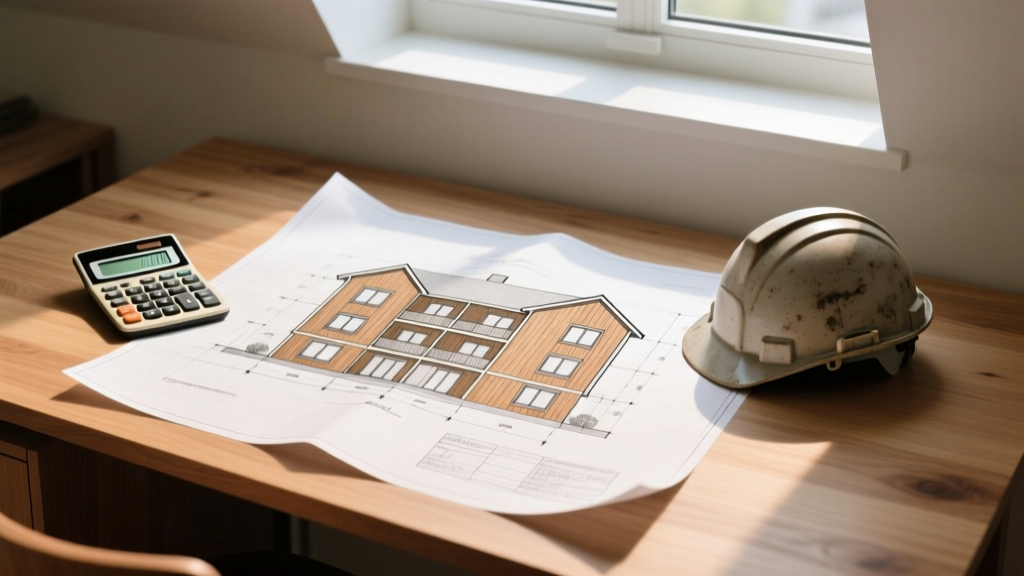
Regional Variance: Why Geography Dictates Your Pro Forma
The cost to build an apartment building is intrinsically tied to geography. A 150-unit garden-style complex in Austin, Texas, will have a fundamentally different cost basis than an identical footprint in Boston, Massachusetts.
According to the U.S. Department of Housing and Urban Development (HUD), regional cost multipliers must be applied to baseline national estimates. The Southeast and Midwest generally operate at a 0.85 to 0.95 multiplier (5-15% below national average) due to lower union density, favorable soil conditions, and relaxed seismic codes. Conversely, the West Coast and Northeast Corridor operate at a 1.20 to 1.45 multiplier, driven by strict seismic engineering requirements, high union labor rates, and complex environmental review processes (like CEQA in California).
Step-by-Step Budget Planning Framework
To build a defensible budget for lenders and equity partners, follow this sequential underwriting framework:
- Establish the Land Basis: Calculate the per-unit land cost. If the land costs $4 million and yields 100 units, your land basis is $40,000 per unit. Ensure this aligns with local rent comps (land basis should typically not exceed 20-25% of total project cost).
- Run the Massing and Zoning Study: Before pricing materials, hire an architect to produce a massing study. This determines the exact unit mix, gross-to-net rentable area efficiency (aim for 80-85% in garden style, 75-80% in high-rise), and identifies required parking ratios.
- Price the Hard Costs via RSMeans or Local Bids: Do not rely on national averages. Use localized cost-estimating software (like RSMeans Data Online) adjusted for the specific zip code, or solicit conceptual bids from three local general contractors who specialize in multifamily.
- Calculate Soft Costs as a Percentage of Hard Costs: Instead of guessing, apply standard multipliers: Architectural/Engineering (5-7% of hard costs), Permits/Fees (3-5%), Legal/Insurance (2-3%), and Developer Fee (4-5%).
- Apply Contingencies Based on Design Phase: At the schematic design phase, apply a 15% hard cost contingency and 10% soft cost contingency. By the time construction documents (CDs) are 100% complete, reduce hard contingency to 5% to 7%.
Financing and Carrying Costs: The Invisible Expense
Construction loans are typically interest-only, variable-rate facilities. With construction interest rates fluctuating, carrying costs can severely impact the total cost to build an apartment building. If your $25 million project takes 18 months to build, and the construction loan carries a 9% interest rate (plus 1.5% origination fees), you will pay approximately $3.3 million in interest and fees before a single tenant moves in.
Budget planners must also account for the 'lease-up' period. Lenders usually require an interest reserve that covers the construction period plus the first 6 to 12 months of stabilization. Failing to accurately model the lease-up velocity and subsequent carrying costs is a primary reason multifamily developments face capital calls mid-construction. Always stress-test your interest reserve against a 200-basis-point rate hike and a 3-month delay in the certificate of occupancy (CO) issuance.
Written by
Marcus ChenMarcus Chen is a licensed structural engineer (PE) and building materials analyst with over 12 years of experience across residential, commercial, and industrial construction. He holds a Master of Science in Civil Engineering from UC Berkeley and spent six years at Thornton Tomasetti before transitioning to independent consulting and technical writing. Marcus specializes in material selection for seismic-prone regions, concrete reinforcement strategies, and lifecycle cost analysis. His work has been cited by the American Concrete Institute (ACI) and the Structural Engineers Association of California (SEAOC). When he is not on a job site or at his desk, you will find him hiking the Sierra Nevada or restoring a 1920s craftsman bungalow in Oakland, CA.
More from Marcus Chen
View all
Construction Cost
How Much Did the Eiffel Tower Cost to Build?
How much did the Eiffel Tower cost to build in 1889? We adjust for inflation and compare its budget to modern skyscraper construction.
Aug 4, 2026

Fire Resistance
What Is a Fire Resistant Material? Testing & Certification Guide
Discover what is a fire resistant material through ASTM and UL testing. Learn how fire ratings, certifications, and assemblies work in construction.
Aug 4, 2026

Construction Cost
How Much Did the Burj Khalifa Cost to Build?
How much did the Burj Khalifa cost to build? We break down the $1.5B project and extract 5 money-saving strategies for your next build.
Jul 30, 2026