The Versailles Cost to Build: Financing a Mega-Chateau
Discover the true Versailles cost to build a modern mega-chateau and master the specialized private wealth financing structures required for ultra-luxury estates.

Deconstructing the Modern Versailles Cost to Build
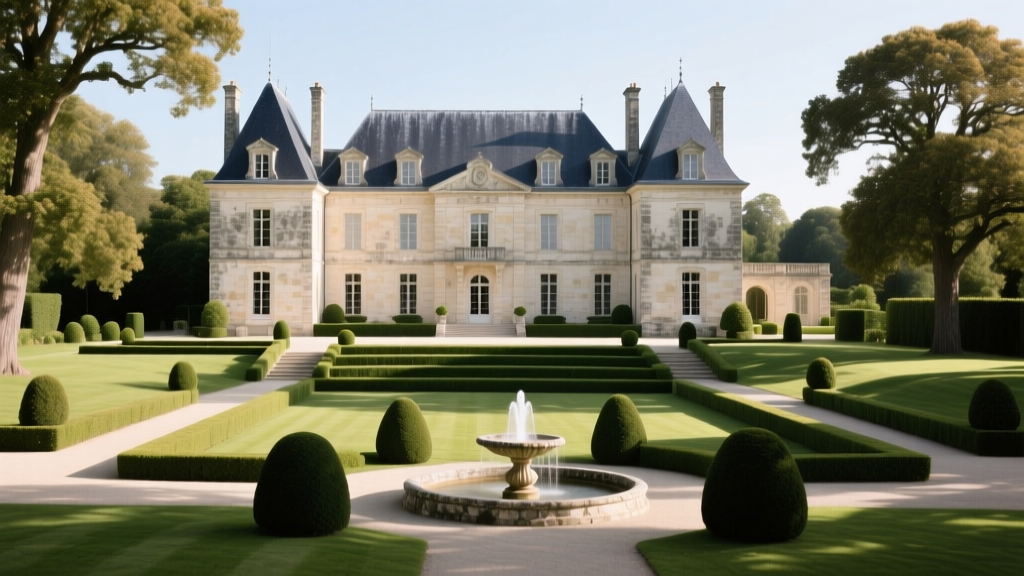
When high-net-worth individuals reference the "Versailles cost to build," they are rarely talking about replicating the 17th-century French palace in its entirety. Instead, they are underwriting a modern French neoclassical mega-chateau—a 50,000 to 100,000+ square foot ultra-luxury estate featuring authentic masonry, formal parterre gardens, and museum-grade interior finishes. In 2026, the baseline hard construction costs for an authentic chateau of this caliber range from $1,800 to $3,500 per square foot, pushing total project capitalization well past the $100 million threshold.
Financing a project of this magnitude requires moving far beyond traditional residential construction loans. Private wealth syndication, asset-backed liquidity, and phased equity capitalization become the primary mechanisms for funding. Below is a detailed breakdown of the hard and soft costs involved in a 60,000-square-foot Versailles-inspired estate.
| Cost Category | Specification / Material | Estimated Cost (2026) | % of Total Budget |
|---|---|---|---|
| Exterior Masonry | Indiana Bedford Limestone (hand-carved) | $220 - $310 / sq ft | 18% |
| Roofing | Buckingham Virginia Slate (Mansard style) | $95 - $140 / sq ft | 6% |
| Interior Millwork & Plaster | Artisan boiserie, gold leaf, scagliola | $450 - $800 / sq ft | 22% |
| Mechanical & Smart Systems | Geothermal HVAC, Crestron enterprise AV | $180 - $250 / sq ft | 10% |
| Landscaping & Hardscape | Le Nôtre style parterres, reflecting pools | $8M - $15M (Flat) | 12% |
| Soft Costs & Architecture | Specialized heritage architects, permitting | 15% - 22% of Hard Costs | 14% |
| Contingency Reserve | Ultra-luxury supply chain buffers | 10% - 15% of Hard Costs | 10% |
Why Traditional Jumbo Construction Loans Fail
Standard jumbo construction loans, typically offered by regional and national banks, cap out between $5 million and $15 million. These instruments are designed for high-end custom homes, not 100,000-square-foot mega-estates. When the National Association of Home Builders (NAHB) tracks luxury construction trends, they note that ultra-high-net-worth (UHNW) builds require bespoke underwriting that standard secondary market guidelines cannot accommodate.
Specialized Financing Structures for Mega-Chateaus
To bridge the gap between the Versailles cost to build and the appraised value, UHNW borrowers utilize specialized private banking and capital markets. Here are the four primary structures used in 2026.
1. Securities-Backed Lines of Credit (SBLOC)
Rather than pledging the unfinished real estate as collateral, borrowers pledge their liquid investment portfolios. Private banks (such as U.S. Trust or J.P. Morgan Private Bank) will issue an SBLOC against a diversified portfolio of equities and fixed income. According to Knight Frank’s Wealth Report, UHNW individuals increasingly leverage SBLOCs to avoid triggering capital gains taxes that would occur if they liquidated assets to fund construction. Rates are typically priced at SOFR + 1.25% to 2.00%, offering vastly cheaper capital than hard money lenders.
2. Private Wealth Syndicated Construction Debt
For the actual construction draws, a syndicate of private banks will underwrite a non-recourse or limited-recourse construction facility. This requires a massive equity injection—usually 40% to 50% of the total project cost upfront. The syndicate relies heavily on the borrower's global balance sheet and liquidity covenants rather than just the property's future value.
3. Phased Equity Capitalization (The Wing-by-Wing Method)
Many mega-chateaus are financed through phased development. The central corps de logis (main building) is financed and completed first. Once a certificate of occupancy is issued for the primary residence, the borrower can secure a traditional ultra-jumbo mortgage on the completed structure, using those proceeds to fund the construction of the secondary wings, guest pavilions, and extensive formal gardens.
4. Foreign National Non-Recourse Bridge Financing
For international buyers building in the US, specialized debt funds offer non-recourse bridge loans. These carry higher interest rates (typically 8% to 11%) but do not require personal guarantees or US credit histories. The loan is strictly underwritten against the land value and the architectural plans, with a strict 12-to-18-month interest-only term before mandatory refinancing.
Hidden Financial Traps in Chateau Construction
Underestimating the Versailles cost to build usually stems from ignoring the logistical realities of heritage-grade materials. When assembling your capital stack, ensure your contingency reserves account for these specific failure modes:
- Limestone Supply Chain Volatility: Authentic Indiana Bedford limestone requires quarrying specific beds for consistent color. According to the U.S. Geological Survey, dimensional stone extraction is highly sensitive to labor shortages and environmental regulations. A 6-month delay in quarry delivery can add millions in carrying costs on a $100M loan.
- Artisan Labor Premiums: Applying scagliola (faux marble plaster) or carving boiserie (wood paneling) requires master artisans. There are fewer than a dozen firms in North America capable of executing museum-grade 18th-century French detailing. If your lead plasterer falls ill or retires, replacing them mid-project will trigger a 30% to 50% premium on labor rates.
- Climate Control for Heritage Materials: A 100,000 sq ft stone mansion requires commercial-grade dehumidification to prevent the limestone from spalling and the antique timber from warping. Standard residential HVAC bids will fail; you must budget for bespoke museum-grade climate control systems.
Step-by-Step Capital Stack Assembly
Securing financing for a project of this scale requires a 12-to-18-month runway before ground is broken. Follow this sequence to structure your debt and equity:
- Month 1-3: Land Acquisition & Soft Cost Funding. Use liquid cash or an SBLOC to purchase the land and fund the architectural and engineering teams. Do not use high-interest bridge debt for soft costs.
- Month 4-8: The Appraisal & Underwriting Phase. Commission three independent MAI (Member of the Appraisal Institute) appraisers who specialize in ultra-luxury and historic properties. Present these to your private banking syndicate.
- Month 9-11: Equity Injection & Covenant Setup. Wire the required 40-50% equity into the project's escrow account. Finalize liquidity covenants (e.g., maintaining $20M in liquid assets outside the project).
- Month 12: First Draw & Groundbreaking. The syndicate releases the first draw for site work and foundation. Subsequent draws are released monthly based on AIA G702/G703 payment applications verified by a third-party construction inspector.
Frequently Asked Questions
Can I use a standard 20% down jumbo loan for a Versailles-style build?
No. Standard jumbo mortgages are for purchasing completed homes, not ground-up construction. Furthermore, a 20% equity position is entirely insufficient for ultra-luxury builds due to the appraisal gap. Private banks require 40% to 50% equity to mitigate the risk of hyper-customized, illiquid assets.
How are construction draws managed on a $100M+ estate?
Draws are managed by a third-party fund control company. The general contractor submits an AIA G702 application, the fund controller physically inspects the site to verify the percentage of completion, and the private bank releases the funds directly to the subcontractors via joint checks to prevent mechanic's liens.
What happens if the project runs out of funds before completion?
In a syndicated private bank loan, the borrower must sign a "deficit funding agreement" prior to closing, legally obligating them to inject personal liquid capital to finish the project. If the borrower defaults, the bank will foreclose on the unfinished shell, which typically results in a massive financial loss, as unfinished limestone chateaus have virtually zero secondary market value.
Written by
Elena RodriguezElena Rodriguez is a civil engineer and technical writer specializing in concrete technology, masonry systems, and ASTM/ACI compliance. She earned her B.S. in Civil Engineering from Texas A&M University and spent a decade at a materials testing laboratory, performing over 2,000 concrete compressive strength tests and masonry prism evaluations. Elena is an ACI-certified Field Testing Technician (Grade I) and a member of ASTM Committee C12 on Natural Building Stone. She currently consults on forensic engineering cases involving concrete failures and moisture intrusion. Based in San Antonio, TX, Elena is a proud member of the Society of Women Engineers (SWE) and coaches her daughter's FIRST Robotics team.
More from Elena Rodriguez
View all
Walls & Panels
Cost Analysis: Light Gauge Steel Framing Advantages and Disadvantages
Evaluate light gauge steel framing advantages and disadvantages through a strict cost analysis lens, comparing material, labor, and lifecycle expenses.
Aug 4, 2026

Walls & Panels
Gypsum Board Types: Exact Specifications, Thickness & Dimensions
Compare standard, Type X, and moisture-resistant gypsum board types. Get exact specifications, thicknesses, dimensions, and ASTM standards for your project.
Aug 4, 2026

Fire Resistance
Best Fire-Resistant Outdoor Decking Materials: 2026 Buyer Guide
Discover the best fire-resistant outdoor decking materials for 2026. Compare Class A PVC, aluminum, and hardwood options for WUI compliance and safety.
Aug 4, 2026