Black Fence Durability: Lifespan Analysis of Metal, Vinyl & Wood
Compare the durability and lifespan of black fence materials. Discover how powder-coated metal, vinyl, and stained wood withstand weather and time.
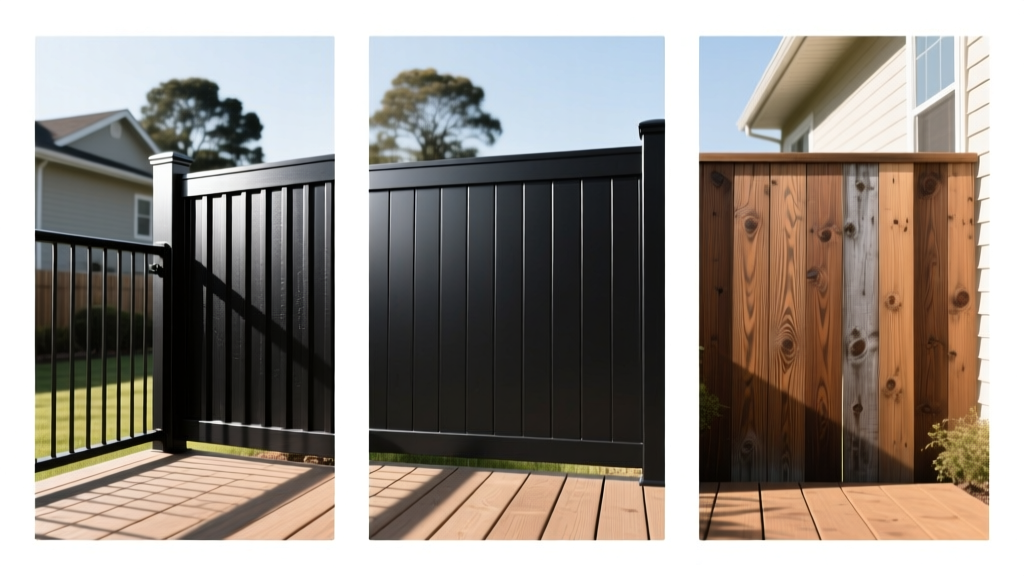
The Physics of Black: Thermal and UV Degradation
When specifying a black fence for residential or commercial perimeters, aesthetics usually drive the decision. The deep, matte, or gloss finish provides a sharp architectural contrast against landscaping and modern facades. However, from a materials science perspective, black pigments introduce severe environmental stressors that lighter-colored fences do not face.
Black surfaces absorb up to 90% of visible light, converting it into thermal energy. In direct summer sunlight, a black fence surface can easily exceed 160°F (71°C), even when ambient air temperatures are only 90°F. This extreme thermal load accelerates UV degradation, induces rapid thermal expansion and contraction, and fundamentally alters the failure modes of metal, vinyl, and wood substrates.
Black Metal Fencing: Aluminum vs. Welded Steel
Metal is the most structurally stable substrate for black fencing, but its longevity relies entirely on the chemical composition of the powder coating. The underlying metal does not fail from UV exposure; the coating does.
Extruded Black Aluminum
Black aluminum fencing typically boasts a 30- to 50-year structural lifespan, but the aesthetic lifespan (time before severe fading or chalking) depends on the Architectural Aluminum Manufacturers Association (AAMA) specification used during the finishing process.
- AAMA 2604 (Standard Polyester): A basic powder coat. When pigmented black, AAMA 2604 coatings will typically begin to chalk and lose gloss within 3 to 5 years in high-UV regions. Cost: $35 - $45 per linear foot.
- AAMA 2605 (PVDF / Kynar 500®): A superior fluoropolymer resin. If you are installing a black aluminum fence, you must demand an AAMA 2605 certified finish. PVDF resins resist UV breakdown, retaining their dark color and chalk resistance for 20+ years. Cost: $45 - $60 per linear foot.
Galvanized Black Steel
Welded steel offers higher tensile strength and security but introduces a secondary failure mode: sub-surface oxidation. Steel expands and contracts at different rates than the powder coat. Over years of 100°F+ summer temperature swings, micro-cracks can form in the black coating. Once moisture breaches these micro-cracks, the steel rusts from the inside out, causing the black coating to blister and flake. To mitigate this, specify steel that is hot-dip galvanized before powder coating, with a minimum coating thickness of 2.5 mils tested to ASTM B117 salt spray standards.
Black Vinyl (PVC): Co-Extrusion and Thermal Expansion
Black vinyl fencing has surged in popularity, but PVC is highly susceptible to both UV photodegradation and thermal expansion. Mono-extruded (single-layer) black PVC is a guaranteed failure. You must specify co-extruded PVC, where a dark, UV-resistant cap stock is fused over a lighter, impact-resistant inner core.
The Titanium Dioxide (TiO2) Requirement
To prevent the black cap stock from turning gray and chalking, manufacturers must load the outer layer with Titanium Dioxide (TiO2). For black vinyl, the TiO2 concentration should be a minimum of 8 to 10 parts per hundred resin (phr). Without this, the UV rays will break the polymer chains, resulting in a chalky residue that transfers to clothing and hands upon contact.
Thermal Expansion: The Installer's Blind Spot
Black PVC absorbs massive amounts of heat, causing severe thermal expansion. According to industry testing data, PVC expands approximately 1/2 inch per 10 linear feet for every 40°F temperature swing.
Installation Specification: If a 6-foot black vinyl rail is installed tightly on a 60°F spring morning, it will grow nearly 1/4 inch when summer surface temperatures hit 140°F. Installers must leave exact 1/8-inch to 1/4-inch expansion gaps at rail ends and bracket connections. Failure to do so will result in severe rail bowing, sagging, and post-stress fractures.
Expected Lifespan: 20 to 30 years.
Average Cost: $30 to $45 per linear foot.
Black Wood Fencing: The Paint vs. Solid Stain Dilemma
Wood presents the most challenging substrate for black finishes. The surface temperature of black-painted wood can easily exceed the thermal tolerance of standard exterior paint films, leading to rapid delamination. The USDA Forest Products Laboratory explicitly warns against using film-forming paints on exterior wood exposed to direct, high-heat sunlight.
Why Film-Forming Paint Fails on Black Wood
When you paint a cedar or pine fence black, the paint forms a rigid plastic-like film on the surface. The wood underneath expands and contracts with moisture changes, while the black paint film expands and contracts with temperature changes. Because these two materials move at different rates, the paint film cracks. Once cracked, moisture enters, gets trapped behind the opaque black film, and accelerates wood rot. Furthermore, the intense heat degrades the lignin in the wood surface, causing the paint to peel off in large sheets.
The Solution: 100% Acrylic Solid Stain
For a black wood fence, you must use a heavy-bodied, 100% acrylic solid color stain (such as Cabot Solid Color or Benjamin Moore MoorGard). Unlike paint, solid stain penetrates the wood fibers and does not form a continuous surface film. It allows the wood to breathe while providing the opaque black aesthetic.
- Substrate Choice: Use Western Red Cedar or Redwood. Pressure-treated pine contains high moisture and alkaline chemicals that will bleed through and degrade black stains prematurely.
- Maintenance Cycle: Solid black stains will fade to a charcoal gray within 4 to 6 years due to UV exposure. Expect to re-stain the fence every 5 years.
Expected Lifespan: 15 to 20 years (with strict 5-year maintenance cycles).
Average Cost: $20 to $35 per linear foot (including premium stain).
Comparative Lifespan and Cost Matrix
The following matrix synthesizes the long-term viability of black fencing materials based on current manufacturing standards and regional environmental stressors.
| Material Profile | Aesthetic Lifespan | Structural Lifespan | Primary Failure Mode | 2026 Avg. Cost (Installed) |
|---|---|---|---|---|
| Black Aluminum (AAMA 2605) | 20+ Years | 40-50 Years | Fading (extreme UV) | $45 - $60 / ft |
| Black Galvanized Steel | 15-20 Years | 30+ Years | Sub-surface rust blistering | $50 - $75 / ft |
| Co-Extruded Black Vinyl | 15-20 Years | 25-30 Years | Thermal bowing / chalking | $30 - $45 / ft |
| Cedar w/ Solid Black Stain | 4-6 Years | 15-20 Years | UV fading / wood rot | $20 - $35 / ft |
Regional Environmental Failure Profiles
The durability of a black fence is not uniform across all geographies. Procurement specifications must be adjusted based on the installation site's specific environmental vectors.
Coastal and Marine Environments
In areas within 5 miles of a saltwater coast, black steel fencing is highly discouraged. The combination of salt spray and the high surface heat of black metal accelerates galvanic corrosion. Even powder-coated steel will experience edge-creep rust. Specification: Use exclusively black marine-grade aluminum (Alloy 5052 or 6061-T6) with a PVDF coating.
High-UV and Arid Climates (Southwest US)
In regions with intense, direct solar radiation and low humidity, thermal expansion is the primary threat to black vinyl. Daily temperature swings from 65°F at night to 150°F fence-surface temperatures at noon will cause vinyl rails to fatigue and snap at the brackets over time. Specification: Use black aluminum or heavily reinforced black vinyl with internal aluminum extrusions running through the horizontal rails.
Final Procurement Checklist for Black Fencing
Before signing a contract or placing a material order for a black perimeter fence, verify the following technical specifications with your supplier:
- For Aluminum: Demand written certification of AAMA 2605 compliance for the powder coat. Standard AAMA 2604 is unacceptable for dark colors.
- For Steel: Confirm the steel is hot-dip galvanized prior to the powder-coating process, not just chemically pre-treated.
- For Vinyl: Verify the profile is co-extruded with a UV-cap layer and confirm the installer's protocol for thermal expansion gaps (minimum 1/4 inch on 8-foot spans).
- For Wood: Reject all film-forming exterior paints. Specify a 100% acrylic solid color stain applied to kiln-dried cedar or redwood.