Silt Fence Selection Guide: Geotextile Types and SWPPP Compliance
Master silt fence selection with our SWPPP compliance guide. Compare woven vs. non-woven geotextiles, wire-backed options, post types, and 2026 costs.
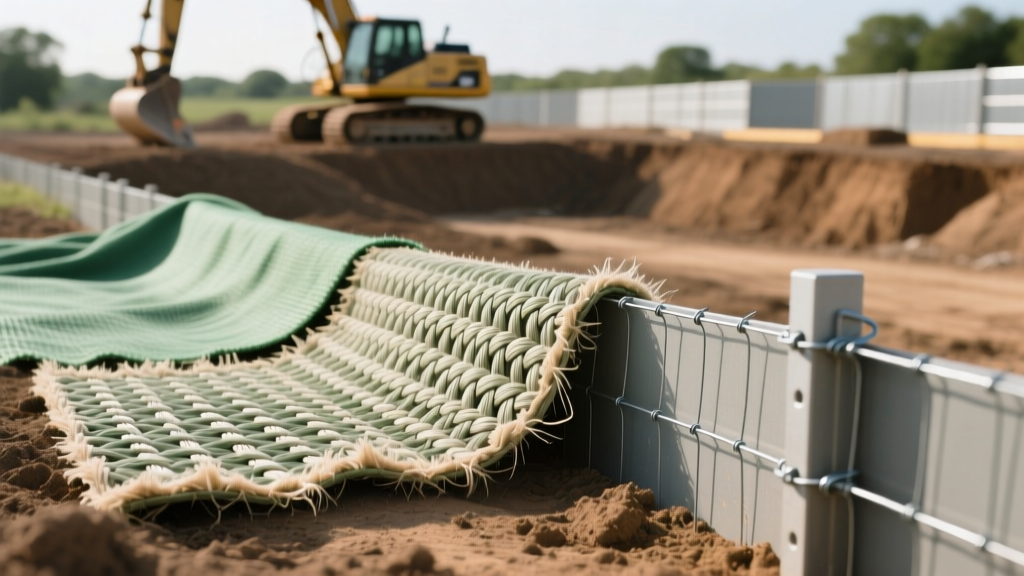
Silt fences are temporary sediment control barriers engineered to intercept sheet flow, slow water velocity, and trap suspended solids on construction sites. Governed by Stormwater Pollution Prevention Plans (SWPPP) and the EPA's Construction General Permit, selecting the correct silt fence material is not a generic procurement task—it requires precise alignment with site hydrology, soil gradation, and drainage area limits. Misapplication of geotextile fabrics or structural supports remains one of the leading causes of sediment discharge violations and subsequent municipal fines.
Geotextile Fabric Taxonomy: Woven vs. Non-Woven
The core filtration medium of any silt fence is the geotextile fabric. The material choice dictates the fence's permeability, tensile strength, and susceptibility to clogging (blinding). Selection must align with ASTM D4491 (Standard Test Methods for Water Permeability of Geotextiles) and ASTM D4632 (Grab Breaking Load and Elongation).
Non-Woven Geotextiles (Needle-Punched)
Non-woven fabrics consist of synthetic fibers (typically polypropylene) mechanically bonded via needle-punching. This creates a three-dimensional matrix that excels in filtration.
- Permittivity: High (typically 0.05 to 0.15 sec⁻¹), allowing water to pass through while retaining soil particles.
- Apparent Opening Size (AOS): Usually equivalent to a #30 to #50 sieve, ideal for trapping fine silts and clays.
- Failure Edge Case: Lower grab tensile strength (often 150–250 lbs) makes non-woven fabrics prone to tearing under high hydrostatic pressure if post spacing exceeds 6 feet.
Woven Geotextiles (Monofilament or Slit-Film)
Woven fabrics are produced by interlacing yarns on a loom, resulting in a highly structured, two-dimensional grid.
- Permittivity: Lower than non-woven. While they handle high-flow volumes without stretching, they are highly susceptible to 'blinding'—where fine clay particles seal the fabric pores, causing water to pool behind the fence and eventually overtop it.
- Tensile Strength: Exceptionally high (400+ lbs grab strength), making them suitable for heavy debris or rocky backfill environments.
- Application Rule: Reserve woven geotextiles for sandy soils with larger particle sizes where clogging risk is minimal.
Structural Reinforcement Matrix
Fabric alone cannot withstand the lateral pressure of ponding water. The structural classification of a silt fence dictates its maximum allowable drainage area and slope placement. According to EPA's Construction Stormwater guidelines, exceeding the drainage area limits for a specific fence class guarantees structural failure.
| Fence Classification | Reinforcement Material | Max Post Spacing | Max Drainage Area (per 100 LF) |
|---|---|---|---|
| Standard Silt Fence | Fabric only (no wire) | 6 feet | 1/4 Acre |
| Wire-Backed Silt Fence | 14-ga galvanized wire (2x4 inch mesh) | 4 to 5 feet | 1/2 Acre |
| Super Silt Fence | Heavy-duty wire mesh + chainlink ties | 3 to 4 feet | 1 Acre+ |
Post Material Selection and Spacing Dynamics
The vertical supports transfer hydrostatic loads into the soil. The choice between wood and steel depends on soil density, driving equipment, and budget.
Wooden Stakes (1x3 or 2x2 Nominal)
Hardwood stakes (oak or hickory) are mandatory when using pneumatic post drivers. Softwood (pine/spruce) will splinter and shatter under mechanical driving forces. Hardwood stakes provide superior friction against the backfilled trench but are susceptible to rot if left in saturated soils for more than 6 months.
Steel T-Posts (1.25 to 1.33 lb/ft)
Steel T-posts are required for rocky or highly compacted soils where wooden stakes would snap. When using T-posts, the geotextile fabric must be secured using heavy-duty UV-resistant zip ties or specialized hog rings threaded through the post's anchor studs. Never wrap the fabric directly around a T-post without mechanical fasteners; the fabric will slip under load.
The Anatomy of Failure: Edge Cases and Troubleshooting
Silt fences rarely fail due to fabric degradation; they fail due to installation geometry and maintenance neglect. Understanding these failure modes is critical for site superintendents and SWPPP inspectors.
- The 'Bathtub' Effect (Undercutting): If the bottom 6 inches of the fabric is not buried in a 4-inch wide, 6-inch deep trench and mechanically compacted, water will erode the soil beneath the fence. This creates a subterranean channel, completely bypassing the filtration medium. Fix: Use a vibratory plate compactor on the trench backfill, not just manual tamping.
- Overtopping via Grading Errors: Silt fences are designed for sheet flow, not concentrated flow. If placed in a natural swale or depression where water naturally concentrates, the ponding depth will exceed the 36-inch fence height. Fix: Install earth berms upslope to divert concentrated flows away from the fence line, or upgrade to a sediment trap/basin.
- End-Return Bypass: Failing to turn the ends of the fence uphill (creating a 'J-hook' or 'pigtail') allows water to wrap around the termination point. Fix: Always return the final 10 feet of the fence line directly upslope at a 90-degree angle.
2026 Procurement and Cost Benchmarks
Material and installation costs fluctuate based on regional lumber prices and geotextile resin costs. Below are the 2026 baseline benchmarks for commercial procurement.
- Standard Silt Fence (Material Only): $1.15 – $1.65 per linear foot (LF). Includes 36-inch fabric and 4-foot hardwood stakes.
- Wire-Backed Silt Fence (Material Only): $2.80 – $3.90 per LF. The galvanized wire mesh adds significant weight and raw material cost.
- Turnkey Installation (Labor + Equipment): $2.50 – $4.50 per LF. Trenching via a walk-behind ditch witch or mini-excavator drives the higher end of this range, especially in clay-heavy or rocky substrates.
- Removal and Disposal: $1.20 – $2.00 per LF at project closeout. Sediment-laden fabric is often classified as contaminated waste and must be disposed of in approved landfills, not recycled.
Placement Rules and Trenching Specifications
Proper placement is dictated by topography. According to the Federal Highway Administration's erosion control manuals and standard state DOT specifications, silt fences must never be installed on slopes steeper than 2:1 (horizontal:vertical). On steep slopes, the hydrostatic head builds too rapidly, and the trench backfill will inevitably wash out.
Furthermore, silt fences must be placed a minimum of 5 feet away from the toe of a slope to allow sediment to settle before hitting the fabric. If the fence is placed directly at the toe of a 15-foot embankment, the sheer velocity of the runoff will punch through the geotextile matrix. Always maintain a continuous, unbroken trench line; overlapping fabric sections must be spliced by wrapping the ends around a shared central post and securing them with heavy-duty staples or hog rings, never by simply laying one fabric flap over another in the trench.