Dog Fencing Performance Ratings: Gauge, Mesh & Tensile Specs
Compare dog fencing performance ratings, wire gauge, mesh sizes, and tensile strength specs to ensure secure, escape-proof containment.
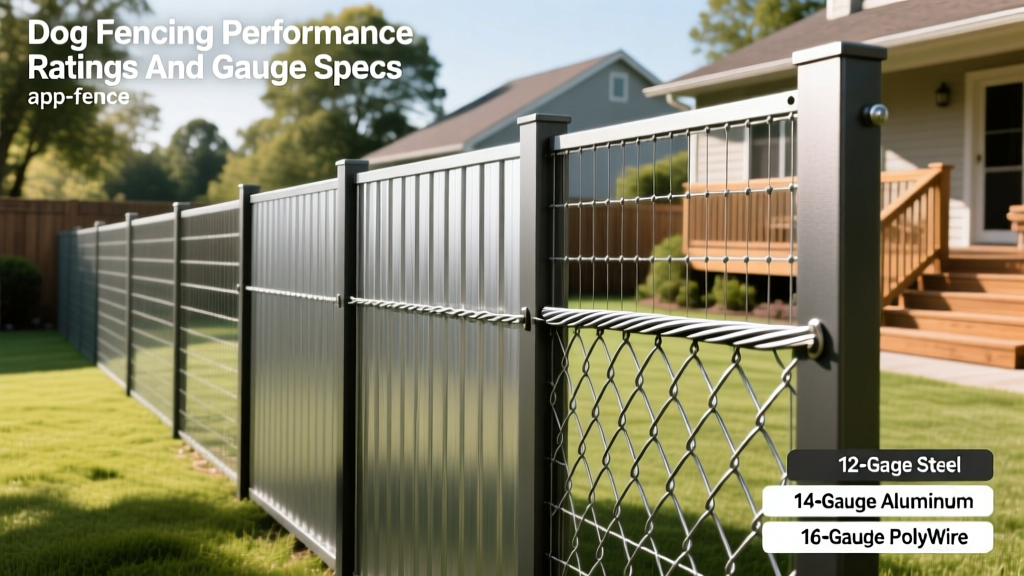
Understanding Wire Gauge and Tensile Strength in Dog Fencing
When evaluating dog fencing, the structural integrity of the wire is the primary determinant of containment security. The industry relies on the American Wire Gauge (AWG) system, where a lower numerical value indicates a thicker, stronger wire. For residential dog fencing, 11.5-gauge wire (0.120 inches or 3.05mm in diameter) is the baseline standard. However, for large, high-drive breeds or commercial kennel runs, 9-gauge (0.148 inches) or even 6-gauge (0.192 inches) wire is required to prevent bending and deformation under dynamic impact loads.
Wire diameter alone does not dictate strength; the metallurgical tensile strength is equally critical. Standard residential chain link wire operates at 50,000 PSI. High-tensile wire, heat-treated for commercial dog runs, reaches 80,000 to 85,000 PSI. When a 70-pound dog impacts a fence at 12 mph, the dynamic shock load can easily snap standard 50,000 PSI welded wire at the joints, whereas woven high-tensile chain link absorbs and distributes the kinetic energy.
Mesh Size and Aperture Specifications for Containment
Mesh aperture—the size of the gaps in the fencing material—must be calibrated to the canine's cranial measurements to prevent head entrapment, a leading cause of fence-related injuries. According to safety guidelines highlighted by the Humane Society, fencing must eliminate any risk of a dog pushing its snout through a gap and becoming stuck.
| Dog Weight Profile | Recommended Max Mesh Size | Minimum Wire Gauge | Minimum Fence Height |
|---|---|---|---|
| Toy / Small (Under 20 lbs) | 1.00" x 1.00" (Welded or Woven) | 14 AWG | 4 Feet |
| Medium (20 - 50 lbs) | 1.25" Diamond (Chain Link) | 11.5 AWG | 5 Feet |
| Large / Giant (50+ lbs) | 2.00" Diamond (Chain Link) | 9 AWG or 6 AWG | 6 Feet |
Coating Performance: Galvanization vs. Polymer Extrusion
Corrosion resistance dictates the lifespan of dog fencing, particularly in environments where urine, soil acidity, and weather accelerate oxidation. The industry standard for galvanization is governed by ASTM A641.
Zinc Coating Classes
- Class 1 Galvanized: Contains a minimum of 0.40 oz/sq ft of zinc. Suitable for dry, arid climates but will typically show red rust within 3 to 5 years in high-humidity zones.
- Class 3 Galvanized: Contains a minimum of 1.20 oz/sq ft of zinc (three times the protection of Class 1). This is the mandatory specification for coastal regions or areas with heavy snow-salt exposure.
Vinyl and Polymer Coatings
For aesthetic integration and additional bite-resistance, vinyl-coated chain link is frequently utilized. The performance metric here is coating thickness, measured in mils (thousandths of an inch). A high-performance dog fence should feature a minimum 15-mil to 20-mil PVC extrusion applied over Class 3 galvanized wire. Thinner coatings (under 10 mils) are prone to micro-tearing when chewed by dogs, allowing moisture to trap against the steel core and causing hidden internal rust. The ASPCA emphasizes ensuring that any painted or coated materials used in pet enclosures are non-toxic and free of lead-based pigments, which is inherently solved by using modern, UV-stabilized virgin PVC coatings.
Structural Framing, Post OD, and Wind Load Ratings
The wire mesh is only as secure as the framework supporting it. Fence posts are measured by Outside Diameter (OD) and wall thickness. For a 6-foot dog fence, the following structural specifications are required to withstand both wind loads (up to 90 mph in hurricane-prone zones) and the lateral force of large dogs leaning or jumping against the fabric:
- Terminal Posts (Corners and Gates): Minimum 2-7/8" OD with a 0.203" wall thickness (Schedule 40 steel).
- Line Posts: Minimum 2-3/8" OD with a 0.145" wall thickness.
- Top Rail: Continuous 1-5/8" OD steel rail. A top rail is non-negotiable for dog fencing; it prevents the fence from bowing inward when a dog jumps and grabs the top edge with its paws.
"A common failure point in DIY dog fencing is the use of 16-gauge lightweight tubing for terminal posts. When a 60-pound dog repeatedly throws its weight against the gate latch area, lightweight posts will torque and bend, misaligning the gate and creating an escape gap at the latch. Always specify Schedule 40 or Schedule 80 steel for gate hinge and latch posts."
Dig-Proofing and Base Tension Specifications
Digging is a primary escape vector. Relying solely on burying the bottom of the fence fabric is a flawed strategy that accelerates rust due to constant soil moisture contact. Instead, professional dog fencing relies on a combination of base tension and physical barriers.
The Bottom Tension Wire
A 7-gauge galvanized steel tension wire must be woven through the bottom diamonds of the chain link and pulled taut using a turnbuckle. This wire, secured to the terminal posts, prevents the bottom of the fence from lifting when a dog pushes its snout underneath.
Concrete Footing Specifications
Terminal posts must be set in concrete to resist the leverage applied by gate tension and fabric pulling. The standard specification requires a hole diameter three times the post width, filled with 3,000 PSI concrete mix to a depth of at least 18 inches (or below the local frost line). For extreme diggers, an 18-inch concrete grade beam (a continuous shallow concrete footing along the entire fence line) is the ultimate performance upgrade, completely eliminating the soil interface.
Decision Matrix: Matching Fence Specs to Canine Profiles
Selecting the right material requires analyzing the specific behavioral profile of the dog. Use this framework to finalize your material order:
- The Climber/Jumper (e.g., Huskies, Malinois): Prioritize height (6 feet minimum) and eliminate horizontal bracing. Add a 2-foot inward-facing leaner (coyote roller or angled top arm) with a 45-degree pitch. Smooth vinyl privacy panels are preferred over chain link to remove toe-holds.
- The Digger (e.g., Terriers, Dachshunds): Prioritize base security. Specify an L-footer configuration where the bottom 18 inches of wire is bent at a 90-degree angle facing inward, buried under 2 inches of topsoil or secured with landscape staples.
- The Chewer/Destoyer (e.g., Pitbulls, Shepherds): Prioritize tensile strength and coating thickness. Avoid welded wire entirely, as the spot-welds will snap under repetitive jaw pressure. Specify 9-gauge woven chain link with a 20-mil black vinyl coating, which is less visually stimulating to the dog than bare metal.