Shadow Box Fence Applications: When to Choose This Style
Discover if a shadow box fence fits your property. We match this semi-private style to specific scenarios like high winds, HOA rules, and shared lines.
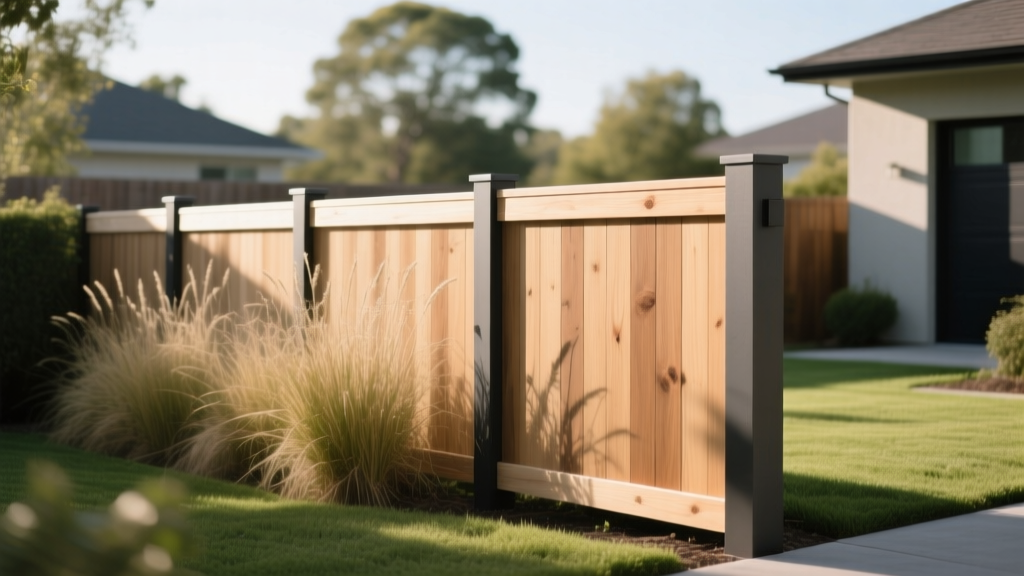
A shadow box fence—often confused with a solid board-on-board privacy fence—is defined by its offset picket configuration. Pickets are installed on both the front and back of the horizontal rails, but unlike true privacy fences, they are spaced apart. The back pickets overlap the gaps of the front pickets, blocking the direct line of sight while allowing air and filtered light to pass through. This unique structural geometry makes it a highly specialized fencing solution. Choosing a shadow box fence is not merely an aesthetic decision; it is an engineering and application-matching choice that dictates how your property handles wind loads, neighbor disputes, and municipal codes.
The Anatomy and Dimensions of a Shadow Box Fence
To evaluate if this fence style fits your scenario, you must first understand its physical footprint and structural demands. A standard 6-foot-tall shadow box fence requires significantly more material and load-bearing capacity than a standard stockade fence.
- Posts: 4x4 pressure-treated pine or cedar, minimum 8 feet long (buried 30 to 36 inches deep in 5000 PSI concrete).
- Horizontal Rails: Three 2x4 or 2x6 rails per section. Because pickets are attached to both sides, the rails must bear roughly 50% more dead weight than a single-sided fence.
- Pickets: 1x6 boards on both the front and back. The front pickets are typically spaced 1.5 to 2 inches apart, with the back pickets centered over those gaps.
- Fasteners: 1.5-inch hot-dipped galvanized or stainless steel ring-shank nails for pickets; 3-inch structural screws or ring-shank nails for rails. Electroplated nails will rust and cause severe tannin streaking on cedar within one season.
Scenario Matching Matrix: Is Shadow Box Right for You?
Use this decision matrix to cross-reference your specific property conditions against the functional capabilities of the shadow box design.
| Property Scenario | Shadow Box Fit | Technical Rationale | Better Alternative |
|---|---|---|---|
| High-Wind Coastal or Plains Regions | Excellent | The 30-40% porosity disrupts wind vortices, reducing lateral load on posts. | Tubular aluminum or chain link. |
| Shared Property Lines (Litigious Neighbors) | Excellent | Identical 'finished' appearance on both sides eliminates boundary disputes. | Solid privacy (neighbor sees exposed rails). |
| Strict HOA Aesthetic Guidelines | Good | Provides a clean, uniform look, though some HOAs mandate zero-gap solid panels. | Solid vinyl privacy panels. |
| Small Pet Containment (Under 20 lbs) | Poor | The 1.5-inch gaps allow small dogs to see out (triggering reactivity) or squeeze through. | Solid wood privacy or chain link with privacy slats. |
| Acoustic Buffering (Busy Streets) | Poor | Sound waves easily pass through the offset gaps; negligible noise reduction. | Masonry, brick, or solid acoustic wood fencing. |
Ideal Applications: Where Shadow Box Fences Excel
High-Wind Zones and Porosity Engineering
In regions prone to high wind events, a solid 6-foot privacy fence acts as a massive sail. According to windbreak research from the University of Minnesota Extension, a fence with 30% to 40% porosity (like a shadow box) is vastly superior for wind mitigation. The gaps allow air to filter through, which breaks up the high-pressure zone on the windward side and prevents the formation of destructive, uplifting vortices on the leeward side. If you live in an area where wind gusts regularly exceed 60 mph, the shadow box design drastically reduces the risk of posts snapping at the ground line or rails pulling away from fasteners.
The 'Good Neighbor' Legal and Social Advantage
Many municipal building codes and Homeowner Association (HOA) covenants legally require the 'finished' side of a boundary fence to face the neighbor or the public street. With a standard privacy fence, the neighbor is forced to look at the exposed horizontal rails and vertical posts. The shadow box fence inherently solves this compliance issue. Because the picket pattern is mirrored on both sides of the central rails, both property owners receive the exact same premium visual experience. This makes it the premier choice for boundary lines where neighborly relations or strict municipal code enforcement are primary concerns.
In municipalities with strict 'view corridor' ordinances that prohibit solid visual barriers over 4 feet in height, a shadow box fence is sometimes approved up to 6 feet. Because the gaps allow filtered light and air, some zoning boards classify them as 'semi-permeable screens' rather than solid walls. Always verify this with your local planning department before purchasing materials.
Poor Fits: When to Avoid This Style
Do not default to a shadow box fence if your primary objective is absolute containment or environmental blocking.
- Reactive Dogs: The gaps provide just enough visibility for a dog to see passing cars, pedestrians, or other animals, but not enough to process the full environment. This 'peek-a-boo' effect often triggers severe barrier frustration and reactive barking. For reactive dogs, a solid visual barrier is mandatory.
- Pool Enclosures: Many local building codes dictate specific maximum gap sizes for pool barriers to prevent small children from climbing or reaching through. The offset 1.5-inch gaps of a shadow box fence often fail the 'climbability' and 'reach-through' tests of the International Swimming Pool and Spa Code (ISPSC).
- Dust and Snow Drift Control: While it breaks wind, the gaps will still allow fine dust and blowing snow to penetrate the yard. Solid fencing with a sealed bottom edge is required for environmental drift control.
2026 Material and Cost Breakdown
Pricing for shadow box fencing is inherently higher than standard privacy fencing due to the 40-50% increase in picket material and the additional labor required to align and fasten both sides. Below are the current installed costs per linear foot for a standard 6-foot-tall shadow box fence.
- Pressure-Treated Southern Yellow Pine: $32 to $48 per linear foot. Requires immediate sealing or staining upon installation to prevent warping and checking.
- Western Red Cedar: $50 to $75 per linear foot. Naturally rot-resistant and dimensionally stable. The industry standard for high-end wood shadow box installations.
- Extruded Vinyl (PVC):strong> $65 to $90 per linear foot. Requires specialized routing to slide pickets into the rails. Offers zero maintenance but can become brittle in extreme freezing temperatures.
- Wood-Composite (Capped):strong> $85 to $120 per linear foot. Extremely heavy; requires 2x6 rails and closer post spacing (6 feet on center instead of 8 feet) to prevent catastrophic sagging.
Installation Gotchas and Failure Modes
When engineering your fence, reference the structural load guidelines provided by the American Wood Council to ensure your post footings can handle the combined dead load of dual-sided pickets and the lateral wind load. Avoid these common installation failures:
- Rail Sagging from Dual-Sided Weight: A standard 2x4 rail spanning 8 feet will sag under the weight of dual 1x6 pickets, especially in humid climates where wood absorbs moisture. Fix: Use 2x6 horizontal rails or reduce post spacing to a maximum of 6 feet on center.
- Moisture Trapping in the Overlap: The space between the front and back pickets where they overlap the rail can trap capillary moisture, accelerating rot in the center of the board. Fix: Ensure the top rail is sloped (beveled) at a 15-degree angle to shed water, and apply a penetrating oil-based sealer to all end-grains and overlapping surfaces before assembly.
- Post Heave in Frost Lines: Because shadow box fences are heavier, post heave from freezing soil will severely rack the gate frames. Fix: Dig post holes below the local frost line (typically 36 to 48 inches in northern climates) and bell the bottom of the concrete footing to anchor against uplift.
Final Decision Framework
Use this rapid framework to finalize your material and design choices:
- IF your primary concern is wind resistance on an exposed lot, THEN choose a cedar shadow box with 2-inch gaps to maximize porosity while maintaining visual privacy.
- IF you are building on a shared boundary line with a difficult neighbor, THEN choose shadow box to eliminate the 'unfinished side' dispute, but use composite materials to eliminate future disagreements over staining and maintenance.
- IF you are enclosing a yard for a small dog or require noise dampening from a busy road, THEN abandon the shadow box concept entirely and install a solid, zero-gap board-on-board or masonry wall.
For further guidance on ensuring your fence footings meet local wind-load and seismic requirements, consult the structural safety resources available through FEMA's Building Science division. Properly matched to the right scenario, a shadow box fence provides an unmatched balance of airflow, structural resilience, and bilateral aesthetic appeal.