PetSafe Wireless Fence Selection & Setup Guide 2026
Compare 2026 PetSafe wireless fence models, collar materials, and signal propagation limits. Expert selection guide for residential properties.
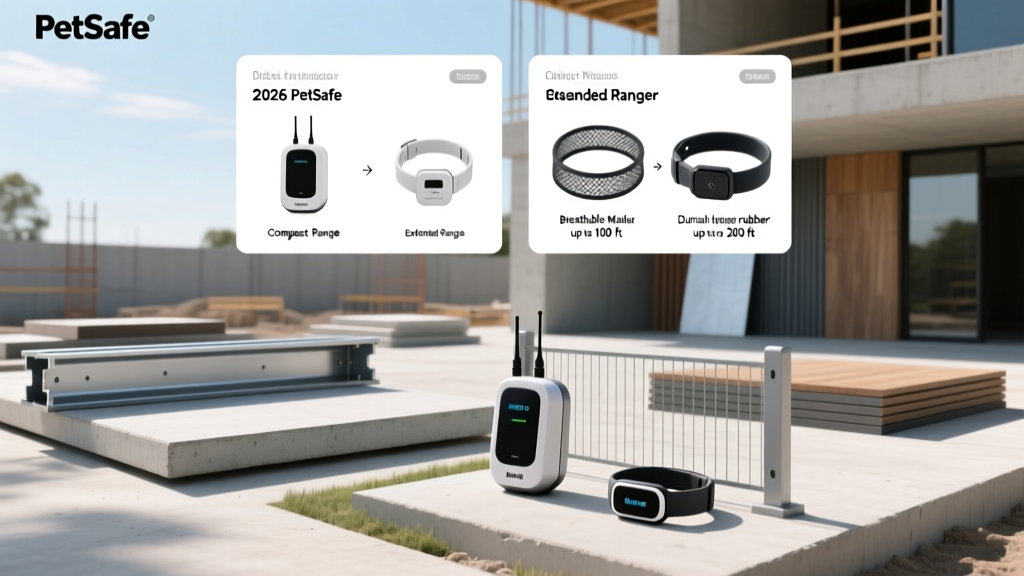
Material Taxonomy of Wireless Containment Systems
Unlike traditional wood, vinyl, or chain-link barriers, a wireless fence relies on an invisible electromagnetic boundary rather than physical obstruction. When evaluating a PetSafe wireless fence from a material and structural perspective, the system is defined by three distinct physical components: the transmitter housing, the receiver collar assembly, and the boundary delineation markers. Selecting the correct configuration requires understanding how these materials interact with your property's existing building materials and topography.
The core challenge with wireless containment is signal propagation. Radio frequency (RF) signals do not behave uniformly across all residential environments. The physical composition of your home's exterior and roofing materials will directly dictate which PetSafe model is viable for your property and where the transmitter must be located to prevent signal shadows or boundary collapse.
2026 PetSafe Wireless Model Comparison Matrix
PetSafe's current lineup utilizes distinct transmitter architectures and collar materials. The following matrix breaks down the specifications for the primary models available in 2026.
| Model Name | Model Number | Max Coverage | Collar Material | Transmitter Housing | Est. Price (2026) |
|---|---|---|---|---|---|
| Stay & Play | PIG00-12917 | 3/4 Acre (210 ft radius) | Thermoplastic Polyurethane (TPU) | UV-Stabilized ABS Plastic | $349 - $399 |
| Stay & Play Compact | PIG00-13663 | 1/2 Acre (150 ft radius) | TPU | Compact ABS / Polycarbonate | $299 - $349 |
| Free to Roam | PIG00-13664 | 1/2 Acre (150 ft radius) | Nylon Webbing | Standard ABS Plastic | $249 - $299 |
Stay & Play vs. Compact vs. Free to Roam
The Stay & Play (PIG00-12917) remains the flagship model for larger, perfectly circular lots. Its dome-shaped transmitter emits a more consistent spherical RF field. The Compact variant sacrifices 60 feet of radius for a smaller footprint, ideal for townhomes or dense suburban lots where a 210-foot radius would bleed into neighbor's yards. The Free to Roam is the legacy design; while cheaper, its nylon collar material and older transmitter antenna array make it less reliable in environments with high RF noise.
Collar and Contact Point Material Selection
The receiver collar is the only physical material that interacts directly with the animal. Material degradation and contact point biocompatibility are the primary failure points in wireless systems.
- Thermoplastic Polyurethane (TPU): Used in the Stay & Play series, TPU is vastly superior to standard nylon. It is hydrolysis-resistant, meaning it will not break down, stiffen, or harbor bacteria when exposed to constant moisture, saliva, and UV radiation. TPU collars also lack the micro-abrasive texture of nylon webbing, reducing friction alopecia on the dog's neck.
- Nylon Webbing: Found on the Free to Roam model. While high-tensile nylon is strong, it absorbs water and degrades under UV exposure over a 3-to-5-year lifespan, requiring earlier replacement.
- Stainless Steel Contact Points: Standard on most kits. Highly durable and conductive, but can cause contact dermatitis in dogs with nickel sensitivities.
- Titanium Contact Points: Available as an upgrade. Titanium is hypoallergenic and biocompatible. If your dog exhibits redness or localized hair loss around the contact zone, switching to titanium points is the definitive material solution.
Building Material Interference & Signal Degradation
Wireless fences operate by broadcasting a continuous RF signal from the central transmitter. According to the Federal Communications Commission (FCC), RF signals are highly susceptible to attenuation and reflection by dense or conductive building materials. Before purchasing a PetSafe system, you must audit your home's exterior envelope.
WARNING: The Faraday Cage Effect
Homes with standing seam metal roofs, corrugated steel siding, or foil-faced polyisocyanurate radiant barrier insulation will severely distort or block the wireless boundary signal. Metal mesh embedded in traditional stucco (wire lath) can also create localized signal shadows. If your home features these materials, the transmitter must be placed in a window facing the desired boundary area, or you must abandon wireless systems in favor of a wired in-ground loop.
Material Interference Hierarchy
- High Interference (Signal Blockers): Metal roofing, aluminum siding, foil-backed insulation, wire mesh stucco lath, and reinforced concrete with heavy rebar networks.
- Moderate Interference (Signal Attenuators): Thick masonry (brick, CMU blocks), dense stone veneer, and large bodies of water (swimming pools act as RF sinks).
- Low Interference (Signal Permeable): Wood framing, vinyl siding, fiberglass insulation, and standard asphalt shingle roofing.
For homes with moderate interference materials, the PetSafe transmitter must be elevated. Placing the unit on the ground floor of a two-story masonry home will result in an elliptical, rather than circular, boundary due to signal compression against the masonry walls. Always consult the PetSafe Support Knowledge Base for specific transmitter placement diagrams related to your home's architectural layout.
Property Topography Decision Framework
Wireless signals propagate in a three-dimensional dome. Topography dictates whether that dome intersects the ground at the correct distance to form a reliable boundary.
- Flat or Level Lots: Ideal. The transmitter should be placed centrally on the ground floor. The signal dome intersects the earth evenly, creating a true circle.
- Sloped Lots (Transmitter at the Top): The signal will travel further down the slope than up the slope. You must shift the transmitter physically toward the lower edge of the property to center the boundary circle.
- Sloped Lots (Transmitter at the Bottom): High risk of signal failure. The RF dome will shoot over the dog's head on the uphill side, creating a 'dead zone' where the collar will not trigger. Wireless fences are not recommended for severe uphill gradients from the transmitter location.
Boundary Delineation and Grounding Materials
While the fence itself is invisible, the training and safety infrastructure requires specific physical materials.
Boundary Flags
PetSafe includes boundary flags made from UV-resistant polypropylene. These flags are critical during the initial 14-day training protocol. Do not substitute these with standard vinyl or PVC flags, which can become brittle and shatter in freezing temperatures, creating sharp plastic hazards in the yard. The polypropylene flags flex in high winds and resist UV degradation for up to two seasons before requiring replacement.
Power and Surge Protection
The transmitter must remain powered 24/7. In regions prone to electrical storms, connecting the transmitter directly to a standard wall outlet is a critical error. A lightning strike within a half-mile radius can induce a surge that destroys the transmitter's internal logic board. You must install an inline surge protector rated for low-voltage electronics, utilizing a dedicated copper grounding wire (minimum 14 AWG) driven into a dedicated grounding rod if your outlet lacks a verified equipment ground.
Final Selection Checklist
Before finalizing your material and model selection, verify the following parameters:
- Is the target containment area strictly circular or elliptical? (Wireless systems cannot create square or custom-shaped boundaries).
- Does the home exterior consist of signal-permeable materials (wood, vinyl, asphalt)?
- Is the property slope less than 15 degrees from the central transmitter placement?
- Have you selected a TPU collar model to ensure long-term hydrolysis resistance?
If any of these conditions fail, a wireless system will result in boundary inconsistencies and containment escapes. In such cases, pivot to a traditional physical fence or a hardwired in-ground copper loop system, which bypasses RF interference entirely by relying on magnetic induction through the soil.