Galvanized Fence Post Selection: Matching Scenarios & Soil Types
Match the right galvanized fence post to your project. Learn gauge requirements, soil compatibility, and wind load scenarios for lasting durability.
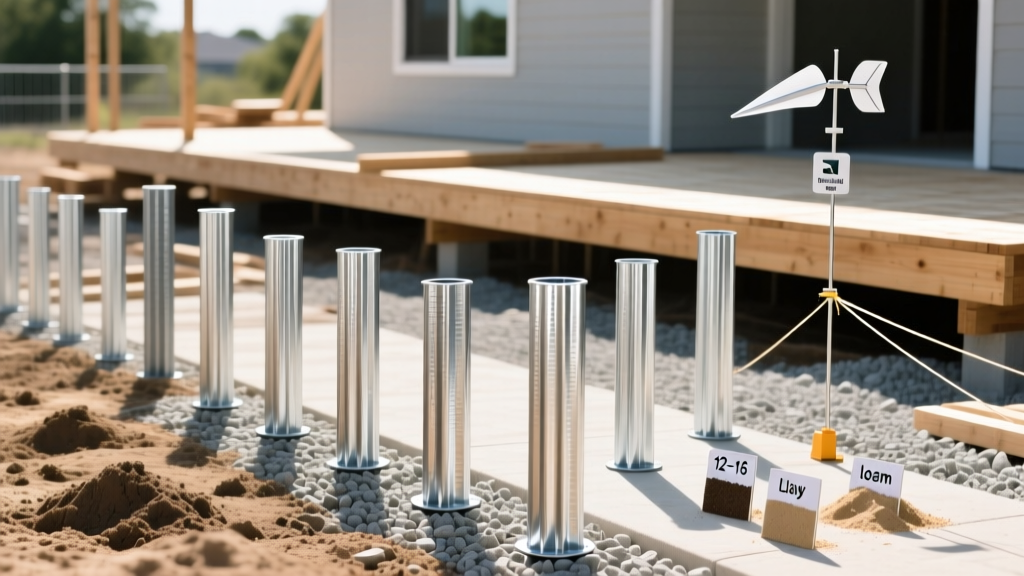
The Core Advantage: Why Zinc-Coated Steel Outperforms in Specific Scenarios
A galvanized fence post provides structural rigidity and corrosion resistance that wood, vinyl, and aluminum simply cannot match in high-stress environments. The protective zinc coating acts as both a physical barrier and a sacrificial anode, meaning it will corrode before the underlying steel does. However, not all galvanized posts are engineered equally. The longevity of your fence depends entirely on matching the post's gauge, outer diameter (OD), and zinc coating thickness to your specific environmental stressors.
According to the American Galvanizers Association, hot-dipped galvanized steel exposed to typical rural atmospheres can last 75 to 100 years before requiring maintenance. In contrast, electro-galvanized (zinc-plated) posts may fail in under 10 years in the same conditions. For permanent perimeter fencing, always specify hot-dipped posts meeting ASTM A123 standards, which mandate a minimum zinc coating thickness based on the steel's wall thickness.
Scenario Matrix: Matching Post Gauge to Environmental Stressors
Selecting the correct pipe schedule and gauge is the most critical decision in fence engineering. The table below maps specific galvanized fence post specifications to their ideal real-world applications.
| Post Gauge | Wall Thickness | Standard OD | Zinc Coating (Min) | Ideal Scenario & Wind Load Capacity |
|---|---|---|---|---|
| 14-Gauge | 0.083' | 2-3/8' | 1.8 oz/sq ft | Light residential chain link; low wind zones (<90 mph) |
| 12-Gauge | 0.109' | 2-3/8' | 1.8 oz/sq ft | Standard wood/vinyl panel inserts; moderate wind zones (90-115 mph) |
| 10-Gauge | 0.134' | 2-7/8' | 2.0 oz/sq ft | Heavy privacy fences, agricultural; high wind zones (115-140 mph) |
| 8-Gauge | 0.165' | 3-1/2' | 2.3 oz/sq ft | Terminal/Corner posts, commercial security; extreme wind (>140 mph) |
Scenario A: High-Wind Coastal & Hurricane-Prone Zones
In coastal environments, salt spray accelerates the depletion of the zinc layer. A standard 14-gauge post will suffer from red rust bleeding within five years. For these zones, you must specify a 10-gauge or 8-gauge galvanized fence post with a Class 3 hot-dipped coating (minimum 2.0 oz/sq ft of zinc). Furthermore, the FEMA Building Science guidelines for high-wind regions recommend embedding terminal posts a minimum of 42 inches into the ground, encased in 4,000 PSI concrete, to resist the overturning moment generated by 140+ mph gusts hitting a solid privacy fence.
Scenario B: Expansive Clay & Frost-Heave Soil Regions
Soils with high plasticity (like bentonite clay) expand when wet and shrink when dry, creating massive lateral shear forces on fence posts. In northern climates, the freeze-thaw cycle exacerbates this via frost heave. A thin-walled 14-gauge post will kink or snap at the ground line under these conditions. The solution is a 12-gauge or 10-gauge post set in a bell-shaped concrete footing that extends 6 inches below the local frost line. The bell shape anchors the post against upward heave, while the thicker steel wall resists lateral soil compression.
Terminal vs. Line Post Sizing: The Structural Framework
A common failure mode in DIY and poorly contracted installations is using uniform post sizes across the entire run. A properly engineered fence requires upsizing at critical stress points.
- Line Posts: These bear only the vertical weight of the fence panels and lateral wind loads. A 12-gauge, 2-3/8' OD galvanized fence post is typically sufficient for 6-foot tall wood or composite panels spaced 8 feet on center.
- Terminal (End/Corner/Gate) Posts: These absorb the cumulative horizontal tension of the entire fence run. Always step up to a minimum 10-gauge, 2-7/8' OD post for end posts, and an 8-gauge, 3-1/2' OD post for gate hinge posts. Gate posts endure dynamic kinetic loads every time the gate is slammed shut, requiring the thickest wall available.
The area exactly 2 inches above and 6 inches below the soil grade is the 'splash zone' where moisture, soil acids, and oxygen concentrate. This is where 90% of fence post failures occur. Never use posts with visible scratches or bare steel in this zone. If the zinc coating is damaged during installation, immediately apply a cold-galvanizing compound (containing 93% zinc dust) to restore the sacrificial anode protection.
Galvanic Isolation: Preventing Bimetallic Corrosion
When attaching aluminum fence rails, vinyl brackets, or copper accents to a galvanized fence post, you create a galvanic cell. Because zinc and steel are anodic to aluminum and copper, moisture will trigger a rapid electrical reaction that eats away the zinc coating and subsequently rusts the steel post.
'When dissimilar metals are in contact in the presence of an electrolyte (like rain or humidity), the less noble metal will corrode at an accelerated rate. Dielectric isolation is mandatory in mixed-metal fence assemblies.' — ASTM International Corrosion Standards
Always install EPDM (Ethylene Propylene Diene Monomer) rubber isolation pads or neoprene gaskets between galvanized steel post brackets and aluminum rails. For fasteners, never use standard zinc-plated lag screws; use 304 or 316 stainless steel bolts with nylon lock nuts to break the electrical pathway.
Installation Nuances: Concrete Encasement Best Practices
How you set a galvanized fence post dictates its lifespan. Trapping water inside the post or against the coating guarantees premature failure.
- Cap the Top: Always install a pressed steel or plastic post cap. An open tube will fill with rainwater, rusting the post from the inside out where the zinc coating is thinnest.
- Slope the Concrete Collar: When pouring the concrete footing, trowel the top 2 inches of the concrete into a 45-degree slope away from the post. A flat concrete collar creates a puddle ring that degrades the zinc coating via constant moisture exposure.
- Drainage Weep Holes: If setting posts in solid bedrock or heavy clay where water pools at the bottom of the hole, drill a 1/2-inch weep hole at the base of the post and fill the bottom 4 inches of the excavation with 3/4-inch crushed gravel before pouring concrete.
Cost Breakdown & ROI by Application
While galvanized steel posts carry a higher upfront material cost than pressure-treated pine (4x4 PT lumber), the lifecycle cost is significantly lower when factoring in replacement labor and concrete demolition.
- 14-Gauge Line Post (2-3/8' OD): $22 - $35 per post. Best for budget-friendly chain link or lightweight wire fencing.
- 12-Gauge Line Post (2-3/8' OD): $38 - $55 per post. The industry standard for residential wood and composite panel inserts.
- 10-Gauge Terminal Post (2-7/8' OD): $65 - $95 per post. Required for heavy 8-foot privacy gates and high-wind corner bracing.
- Powder-Coating Upgrade (Duplex System): Adds $12 - $18 per linear foot. Highly recommended for coastal properties to seal the zinc layer against salt spray, extending lifespan by an additional 40 years.
By matching the exact gauge, coating class, and installation method to your specific soil and wind scenario, a galvanized fence post transitions from a generic building material into a precision-engineered structural asset capable of outlasting the fence panels it supports.