Garden Chairs Wrought Iron vs Fencing: Performance Specs
Analyze performance ratings, gauge thickness, and powder coating specs for garden chairs wrought iron and ornamental fencing in 2026.
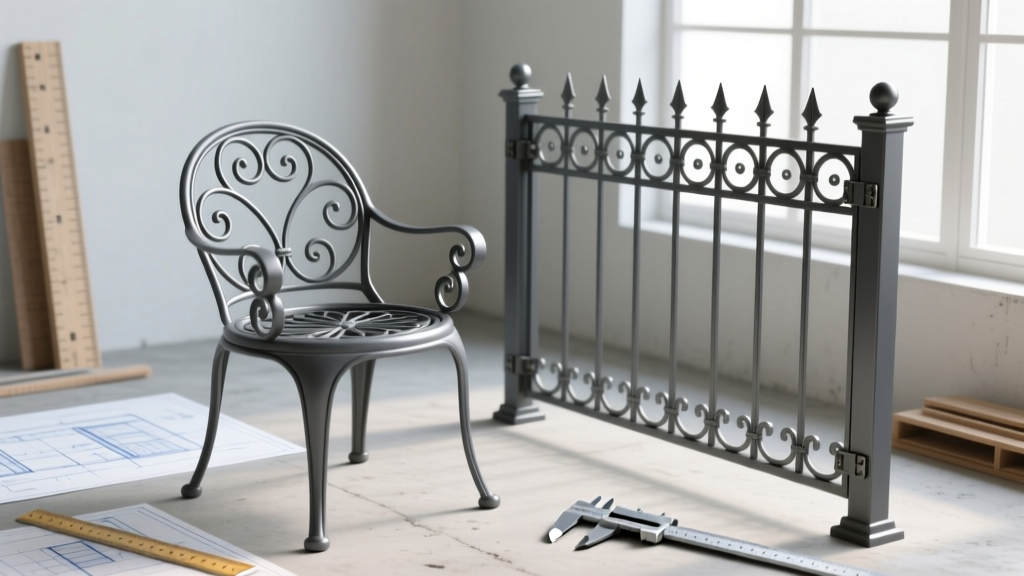
The Metallurgy of Outdoor Wrought Iron: Furniture vs. Perimeter Security
While historically defined by its slag inclusions and puddled manufacturing process, modern commercial "wrought iron" utilized in outdoor applications is predominantly low-carbon mild steel (conforming to ASTM A1011 specifications) that is hot-forged to replicate the malleability and aesthetic of traditional iron. For landscape architects and property managers, evaluating the structural divergence between ornamental perimeter barriers and outdoor seating requires a deep understanding of metallurgical performance ratings. When specifying garden chairs, wrought iron must withstand dynamic, multi-axis human loading, whereas fencing materials are engineered primarily for static wind shear and impact resistance. Understanding these distinct performance profiles is critical for 2026 procurement and long-term lifecycle management.
Core Performance Ratings: Yield Strength and Gauge Specifications
The structural integrity of any forged metal product begins with its base material gauge and yield strength. Fencing pickets and furniture frames utilize entirely different cross-sectional profiles to achieve their respective performance targets. Tubular steel is frequently substituted for solid bar stock in lower-tier products, but premium commercial specifications mandate solid square or round bar stock to prevent internal, unseen corrosion.
| Specification Metric | Ornamental Fencing (6-ft Height) | Commercial Garden Chairs |
|---|---|---|
| Primary Material Profile | 5/8" Solid Square Bar or 12-Gauge Tubular | 3/4" Solid Square Bar or 11-Gauge Heavy Tubular |
| Minimum Yield Strength | 36,000 PSI (Standard Mild Steel) | 50,000 PSI (High-Strength Low-Alloy preferred) |
| Primary Joinery Method | MIG Welding with Rosette Finishes | Full-Penetration TIG Welding (Ground Smooth) |
| Deflection Limit (L/360) | Tested at 50 lbs lateral point load | Tested at 300 lbs distributed seat load |
Load-Bearing Dynamics for Wrought Iron Garden Chairs
Outdoor seating must comply with rigorous dynamic load testing. While the Business and Institutional Furniture Manufacturer's Association (BIFMA) X5.4 standard primarily targets indoor lounge seating, premium outdoor metal furniture manufacturers adapt these protocols for environmental stress. A high-performance wrought iron garden chair must support a 300 lb static seat load without permanent deformation, and survive a 125 lb drop-test from 6 inches above the seat pan to simulate abrupt user impact. The critical failure point in garden chairs is rarely the mid-span of the metal bar; rather, it is the heat-affected zone (HAZ) at the weld joints. To prevent micro-fractures under cyclic loading, 2026 manufacturing standards require full-penetration Tungsten Inert Gas (TIG) welding at all primary structural nodes, followed by mechanical grinding to eliminate stress concentrators.
Wind Shear and Impact Resistance for Fencing Applications
Conversely, ornamental fencing is rated against environmental and vehicular forces. According to guidelines published by the National Ornamental & Miscellaneous Metals Association (NOMMA), a standard 6-foot wrought iron fence must withstand a uniform wind load equivalent to 110 mph gusts (approximately 25 lbs per square foot). This dictates that fence posts cannot merely be surface-mounted; they require a minimum 36-inch embedment depth below the local frost line, encased in 3,000 PSI compressive-strength concrete. The horizontal rails (typically 1" x 1" solid stock or 10-gauge tubular) must resist lateral bowing, which is why internal steel stiffeners are increasingly specified in high-security commercial perimeters.
Corrosion Resistance: E-Coat and Powder Coating Standards
The most significant threat to outdoor wrought iron is oxidation. Bare mild steel will begin to flash-rust within 48 hours of exposure to high humidity. Therefore, the finishing process is not merely cosmetic; it is a vital performance specification. The industry standard for high-performance outdoor ironwork is a multi-stage pretreatment followed by a thermoset powder coating.
Do not accept 3-stage wash systems for outdoor coastal or high-humidity environments. A true 2026 commercial specification requires a 5-stage iron phosphate wash: (1) Alkaline cleaner, (2) Water rinse, (3) Iron phosphate conversion coating, (4) Deionized water rinse, and (5) Zirconium or chromium-based seal rinse. This microscopic conversion layer is what prevents under-film corrosion creep if the topcoat is scratched.
Following pretreatment, the application of the powder coat must meet the rigorous adhesion and durability standards outlined by the Powder Coating Institute (PCI). For garden chairs, which experience high friction, UV exposure, and chemical contact (sunscreen, cleaning agents), a Triglycidyl Isocyanurate (TGIC) polyester topcoat is mandatory. TGIC polyesters offer superior UV resistance and mechanical flexibility compared to non-TGIC or epoxy hybrids, which tend to chalk and degrade under direct sunlight.
ASTM B117 Salt Spray Testing Requirements
When reviewing manufacturer cut sheets, look specifically for ASTM B117 Salt Spray Test results. This accelerated aging test exposes the coated metal to a continuous saline fog.
- Residential Grade: 500 hours to first signs of red rust (acceptable for mild inland climates).
- Commercial/Architectural Grade: 1,000 hours to first signs of red rust (required for municipal parks and commercial hospitality).
- Marine/Coastal Grade: 1,500+ hours, typically achieved via an epoxy e-coat primer (0.5 mils) beneath the TGIC polyester topcoat (2.5 mils), yielding a total dry film thickness of 3.0 mils.
2026 Cost Analysis and Lifecycle Maintenance Matrix
Budgeting for wrought iron requires looking past the initial capital expenditure to evaluate the total cost of ownership. The pricing landscape in 2026 reflects increased costs in raw steel commodities and advanced eco-friendly powder coating processes.
| Application | 2026 Installed/Unit Cost | Expected Lifespan | Maintenance Interval & Cost |
|---|---|---|---|
| Ornamental Fencing (6-ft) | $48.00 - $72.00 per linear foot | 40 - 60 years | Inspect annually; $15/LF for localized touch-up every 10 years. |
| Commercial Garden Chairs | $450.00 - $850.00 per unit | 15 - 25 years | Inspect biannually; $40/unit for full wet-wash and wax sealant annually. |
Procurement Checklist: Verifying Manufacturer Specifications
To ensure the products delivered to your site match the engineered performance ratings, require the following documentation from your fabricator or supplier before issuing a purchase order:
- Mill Test Reports (MTRs): Verify the base steel chemistry and yield strength to ensure it meets ASTM A1011 or equivalent structural grades.
- Coating Thickness Logs: Request random sampling data proving the dry film thickness (DFT) consistently measures between 2.0 and 3.0 mils using a magnetic or eddy-current thickness gauge.
- ASTM D3359 Adhesion Test: Require proof of cross-hatch tape testing (Rating 4B or 5B) to guarantee the powder coat will not flake upon impact.
- Weld Inspection Sign-offs: For garden chairs, require visual inspection reports confirming full-penetration TIG welds with no undercutting or porosity at the structural joints.
- Touch-Up Kit Inclusion: Mandate the inclusion of OEM-matched, zinc-rich cold-galvanizing compound and TGIC aerosol topcoat for immediate field repair of transit damage.
By enforcing these strict material and coating specifications, property managers and landscape architects can guarantee that both perimeter security fencing and high-traffic garden chairs maintain their structural integrity and aesthetic appeal despite years of harsh environmental exposure.