Welded Wire Fence Maintenance: Cleaning and Rust Repair Playbook
Master welded wire fence maintenance with our expert playbook. Learn bi-annual cleaning protocols, rust remediation, and ground-line corrosion prevention.
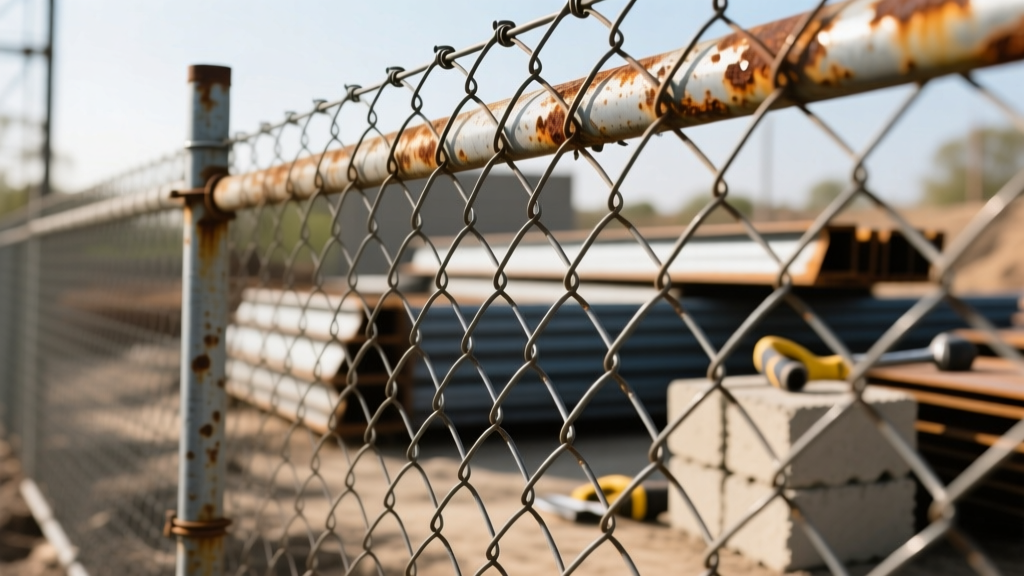
Welded wire fences are prized for their rigidity, visibility, and cost-effectiveness in both agricultural and residential applications. However, their longevity is entirely dependent on the integrity of their protective coating—typically zinc (galvanization) or a PVC/polymer overlay. Once that coating is compromised at the weld nodes or along the ground line, the high-carbon steel core oxidizes rapidly, leading to catastrophic structural failure. Replacing a 50-foot run of 12.5-gauge welded wire fencing costs between $400 and $600 in materials and labor, whereas a proactive bi-annual maintenance protocol costs less than $40 and extends the fence's lifespan by decades.
Anatomy of Welded Wire Fence Degradation
To maintain a welded wire fence, you must first understand how it was manufactured, as this dictates its primary failure points. There are two main types of galvanized welded wire:
- Galvanized Before Weld (GBW): The wire is zinc-coated prior to being welded into a mesh. The heat from the welding process burns off the zinc at every intersection (the weld nugget). These nodes are the exact spots where red rust will initiate, often within 3 to 5 years in humid climates.
- Galvanized After Weld (GAW): The mesh is welded first, then the entire panel is hot-dipped in molten zinc. This encapsulates the weld nodes, providing superior corrosion resistance. GAW fencing costs 20% to 30% more upfront but requires significantly less node-specific maintenance.
If your welded wire fence features a green or black PVC coating over the galvanized core, UV exposure and thermal expansion will eventually cause microscopic cracking in the polymer. Moisture becomes trapped between the PVC and the zinc, leading to 'hidden rust' that hollows out the wire from the inside. Inspect PVC-coated wire annually for blistering or peeling; once the core rusts, the entire panel must be replaced, as spot-treatment is impossible under the polymer shell.
Identifying Coating Failure: White Rust vs. Red Rust
Not all corrosion requires immediate aggressive intervention. According to the American Galvanizers Association, understanding the difference between white and red rust is critical for choosing the right remediation strategy.
- White Rust (Zinc Oxide/Zinc Hydroxide): Appears as a chalky, white, powdery residue on the wire. This occurs when newly galvanized wire is exposed to fresh water without adequate airflow. It is largely cosmetic and actually indicates the zinc is actively protecting the steel. It can be gently brushed off and left alone.
- Red Rust (Iron Oxide): Appears as flaky, orange-brown scale. This means the zinc layer has been entirely depleted, and the carbon steel core is actively corroding. Immediate mechanical removal and chemical treatment are mandatory.
The Bi-Annual Cleaning Protocol
Environmental pollutants, sap, and hard water stains degrade protective coatings over time. Clean your welded wire fence twice a year (early spring and late autumn) using the following protocol.
- Pre-Rinse: Use a garden hose to knock off loose dust, spiderwebs, and topsoil splatter. Do not use a pressure washer exceeding 1,200 PSI. High-pressure streams can strip the zinc layer directly off GBW wire and force water under PVC coatings.
- Alkaline Wash Application: Mix 1/2 cup of Trisodium Phosphate (TSP) substitute per gallon of warm water. Apply using a pump sprayer. TSP effectively breaks down organic biofilms and tree sap without attacking the zinc coating.
- Agitation: Use a soft-bristle nylon car wash brush (never steel wool or stiff synthetic brushes) to scrub the mesh, paying special attention to the bottom 12 inches where soil splash is heaviest.
- Neutralizing Rinse: Rinse thoroughly with fresh water. Any residual TSP left on the wire can attract moisture and accelerate oxidation.
Cleaning Agents & Compatibility Matrix
| Cleaning Agent | Galvanized (GBW/GAW) | PVC-Coated | Notes & Risks |
|---|---|---|---|
| TSP Substitute | Safe | Safe | Best all-purpose cleaner; rinse thoroughly. |
| White Vinegar (Acetic) | Avoid | Caution | Acids actively dissolve zinc coatings. |
| Muriatic Acid | Never | Never | Will strip galvanization instantly and cause flash rusting. |
| Mild Dish Soap | Safe | Safe | Weak on biofilms; good for light dust only. |
Rust Remediation and Touch-Up Playbook
When red rust appears at the weld nodes or along scratches, you must halt the oxidation process and replace the sacrificial zinc layer. Standard spray paints will not work; they merely trap moisture against the steel. You need a zinc-rich compound.
Step-by-Step Spot Repair
- Mechanical Removal: Attach a 2-inch wire cup brush to a cordless angle grinder. Crucial: Limit the grinder speed to 3,000 RPM or lower. High RPMs generate friction heat that will melt and strip the healthy, surrounding zinc coating. Brush only until the red/orange scale is gone and bare, shiny steel is visible.
- Chemical Conversion: Apply a phosphoric acid-based rust converter (such as Ospho or Rust-Oleum Rust Reformer) directly to the bare steel using a cotton swab. This chemically converts any microscopic iron oxide into iron phosphate, a stable, paintable black surface. Allow 24 hours to cure.
- Cold Galvanizing Application: Spray or brush on a cold galvanizing compound (e.g., ZRC or Rust-Oleum Cold Galvanizing Compound). These products contain 93% to 95% zinc dust in an organic resin binder. Apply two coats, 15 minutes apart, achieving a minimum dry film thickness of 2.5 mils. This restores the cathodic protection to the weld node.
After applying cold galvanizing compound, the patch will look slightly darker than the surrounding weathered fence. Do not attempt to paint over it with silver aluminum paint to match the color. Aluminum paint lacks the zinc content required for cathodic protection. The aesthetic mismatch is a sign of a properly protected structural node.
Vegetation and Ground-Line Management
The most common point of catastrophic failure for any welded wire fence is the ground line. Soil moisture, combined with organic acids from decaying plant matter, creates a highly corrosive microenvironment that depletes zinc up to five times faster than the airborne sections of the fence. Furthermore, the Association for Materials Protection and Performance (AMPP) notes that trapped moisture against metal substrates is the primary driver of localized galvanic corrosion.
Clearance Rules:
- Maintain a strict 12-inch clearance between the bottom wire and any soil, mulch, or vegetation.
- Do not allow vines (like ivy or morning glory) to weave through the mesh. The stems will expand as they grow, physically bending the wire and snapping the brittle zinc coating at the weld nodes.
- If installing a new fence in highly acidic soil (pH below 6.0), apply a 2-inch layer of crushed limestone gravel at the base of the fence line to buffer the soil acidity and protect the bottom wire.
Tension and Structural Integrity Checks
Welded wire is inherently rigid, but it relies on proper tensioning to prevent 'bowing' when subjected to wind loads or animal impact. During your autumn maintenance walk-through, check the following:
- Tension Bands and Tie Wires: Inspect the aluminum or steel tie wires securing the mesh to the line posts. If tie wires have snapped due to galvanic corrosion (caused by dissimilar metals touching in wet conditions), replace them with stainless steel tie wires or UV-stabilized zip ties rated for 50 lbs of tensile strength.
- Post Plumbness: Check corner and end posts for leaning. A leaning end post reduces the tension on the welded wire, causing it to sag in the middle. If a 4-inch steel post has shifted, use a manual post puller or a high-lift jack to re-plumb it, and pack the base with quick-setting hydraulic cement.
Frequently Asked Questions
Can I use WD-40 to prevent rust on my welded wire fence?
No. WD-40 is a solvent and light lubricant, not a long-term corrosion inhibitor. It will attract dust and dirt, creating an abrasive paste that accelerates coating wear. Always use a dedicated zinc-rich compound or a marine-grade wax sealant for protection.
How long does a cold galvanizing touch-up last?
When applied correctly over properly prepped bare steel, a high-quality cold galvanizing compound (like ZRC) will provide 10 to 15 years of cathodic protection in normal atmospheric conditions, closely matching the lifespan of the original hot-dip galvanization.
Is it safe to clean my fence with a bleach solution?
Sodium hypochlorite (bleach) is highly corrosive to zinc and will rapidly degrade the galvanization. If you must kill mold or mildew on the fence, use a 3% hydrogen peroxide solution instead, which breaks down into harmless water and oxygen without attacking the metal coating.