High-Performance Fence Ideas: Material Specs and Wind Ratings
Discover high-performance fence ideas backed by engineering specs. Compare wind load ratings, impact resistance, and material durability data.
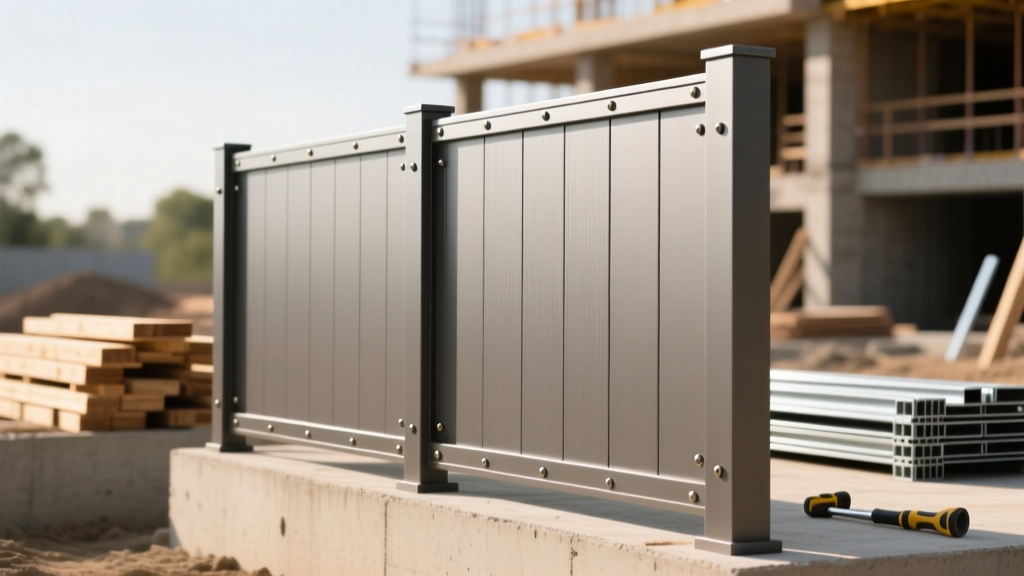
The Shift from Aesthetics to Engineering in Fence Design
When searching for residential or commercial fence ideas, property owners typically prioritize curb appeal, privacy, and color palettes. However, a visually striking boundary that fails under lateral wind loads or succumbs to frost heave within three years is a poor investment. True high-performance fence ideas are rooted in material science, structural engineering, and environmental specifications. In 2026, the most advanced perimeter solutions rely on precise manufacturing tolerances, specific alloy coatings, and rigorous testing standards rather than generic material categories. This guide bypasses superficial design trends to evaluate fence ideas through the lens of performance ratings, wind load capacities, and material longevity specifications.
Decoding Wind Load Ratings for Boundary Fencing
Every fence acts as a sail or a baffle, depending on its porosity. According to the ASCE 7-22 Standard, basic wind speeds in coastal and high-plains regions can exceed 150 mph, generating immense design pressures on solid structures. A standard 6-foot solid privacy fence can experience over 25 pounds per square foot (psf) of lateral pressure during a severe storm, translating to roughly 150 pounds of lateral force per linear foot of fencing.
Transitioning from a 100% solid fence idea to a semi-private design with 20% to 25% porosity (such as spaced pickets or louvered composite panels) reduces the overall wind load coefficient by up to 40%. This drastically decreases the required post embedment depth and concrete footing mass, saving on installation costs while increasing structural survivability.
For solid privacy fence ideas, manufacturers must test panels using protocols adapted from ASTM E330 (uniform static air pressure difference). When evaluating product spec sheets, look for a Design Pressure (DP) rating. A DP30 rating indicates the fence panel can withstand 30 psf of wind load without permanent deformation or fastener failure, which is the minimum threshold for high-wind zones.
High-Performance Fence Ideas by Material Specification
The following material profiles represent the current apex of fencing technology, moving beyond standard wood and basic chain-link into engineered composites and advanced metallurgy.
1. Zinc-Aluminum-Magnesium (ZAM) Coated Steel Privacy Panels
Traditional galvanized steel relies on a pure zinc coating (typically G90, meaning 0.90 ounces of zinc per square foot). While adequate, it eventually sacrifices itself to red rust. Modern high-performance metal fence ideas utilize ZAM coatings (often designated as AZ50 or AZ55). The addition of aluminum and magnesium creates a dense, self-healing barrier at cut edges. In ASTM B117 salt-spray testing, ZAM-coated steel routinely exceeds 3,000 hours to red rust, compared to roughly 1,000 hours for standard G90 galvanized steel. When paired with a TGIC-free polyester powder coat (minimum 2.0 mils thickness), these panels offer a 25-year fade and chalk warranty without the maintenance of wood.
2. Co-Extruded Cellular PVC with Aluminum Reinforcement
Unreinforced vinyl fencing suffers from thermal expansion and high-temperature sagging. The structural solution is co-extruded cellular PVC featuring a UV-inhibited acrylic cap layer and a continuous 16-gauge galvanized steel or aluminum insert within the bottom rail. The critical specification here is the Moment of Inertia (I). For an 8-foot span between posts, the bottom rail must possess an 'I' value of at least 1.2 in⁴ to prevent deflection under the dead load of the pickets and wind loads. Always demand the rail deflection data from the manufacturer; if they cannot provide the moment of inertia, the product is not engineered for high-performance applications.
3. High-Density Polyethylene (HDPE) Board-on-Board Systems
Derived from marine infrastructure, HDPE fencing is entirely impervious to moisture, rot, and insect infiltration. Unlike wood-plastic composites (WPC) that can absorb water at the cut ends and swell, solid HDPE has a water absorption rate of less than 0.1% per ASTM D570. The primary engineering challenge with HDPE is its high coefficient of thermal expansion (approximately 3.5 x 10⁻⁵ in/in/°F). High-performance HDPE fence ideas accommodate this by utilizing oversized, slotted fastener holes and floating rail brackets that allow the material to expand and contract up to 1/2 inch per 10-foot section without buckling.
Security and Impact Resistance Matrix
For properties requiring perimeter security or resistance to accidental impacts (such as commercial properties near loading docks or residential areas with heavy equipment), impact resistance is paramount. The following matrix compares common high-performance materials based on Gardner Impact testing (ASTM D5420) and structural rigidity.
| Material Profile | Impact Resistance (ft-lbs) | Climb Resistance Rating | Approx. Cost (per lin. ft.) |
|---|---|---|---|
| ZAM Steel (20-gauge, 2" pickets) | > 150 (Dents, does not shatter) | High (Anti-climb finials available) | $65 - $95 |
| Reinforced Cellular PVC (Solid) | 85 - 110 (Brittle below 32°F) | Medium (Smooth surface) | $50 - $80 |
| Solid HDPE (1-inch thick board) | > 200 (Highly ductile) | Medium (Requires horizontal bracing) | $75 - $110 |
| Welded Wire Mesh (358 Anti-Climb) | N/A (Flexes and rebounds) | Very High (1/2" x 3" apertures) | $45 - $70 |
Soil and Frost Heave Specifications for Post Setting
The most advanced fence panel will fail if the post footing is improperly engineered for local soil mechanics. Frost heave occurs when water in the soil freezes, expanding by 9% and exerting upward adfreeze forces on the fence post. In northern climate zones, adfreeze forces can exceed 30,000 pounds per square foot of post surface area.
A common installation error is pouring a concrete 'collar' at the top of the post hole, creating a lip that catches the frost line. As the ground freezes, it grips the widened concrete lip and pulls the entire post upward. High-performance installation requires a straight-shaft or bell-bottom footing that extends a minimum of 6 inches below the local frost depth, with the top 12 inches backfilled with compacted, free-draining crushed gravel to break the capillary action of water.
For commercial or high-tension fence ideas (such as chain-link or tight-wire agricultural fencing), driven steel posts (e.g., 2-3/8" O.D. Schedule 40 pipe driven 42 inches into undisturbed soil) often outperform concrete-set posts in expansive clay soils, as the smooth steel shaft offers less surface area for adfreeze bonding and allows for easier realignment if minor settling occurs.
Acoustic Attenuation Ratings for Privacy Fences
For properties adjacent to highways or commercial zones, acoustic privacy is a critical performance metric. The effectiveness of a noise barrier is measured by its Sound Transmission Class (STC). According to Federal Highway Administration noise barrier guidelines, a structure must possess sufficient mass and zero air gaps to effectively block low-frequency traffic noise.
Standard wood or vinyl privacy fences typically achieve an STC rating of 15 to 20, which barely masks normal conversation. High-performance acoustic fence ideas utilize a Mass Loaded Vinyl (MLV) core sandwiched between composite or wood facades. A 1 lb/sq ft MLV core integrated into a tongue-and-groove composite panel can elevate the STC rating to 27-32. Furthermore, to prevent noise flanking, the bottom gap between the fence and the grade must not exceed 1 inch. Every 1-inch gap at the base of an acoustic fence reduces the overall noise reduction coefficient (NRC) by nearly 50% due to diffraction.
Summary Checklist for Spec-Driven Fence Selection
When consulting with contractors or reviewing product catalogs, use the American Fence Association technical resources and the following specification checklist to ensure your chosen fence idea meets rigorous performance standards:
- Wind Load: Verify the DP (Design Pressure) rating matches your local ASCE 7-22 basic wind speed requirements (minimum DP30 for coastal/high-wind zones).
- Metallurgy: For steel, specify AZ50 (ZAM) or AZ55 coatings rather than standard G90 galvanized to ensure cut-edge protection.
- Vinyl/Composite Rigidity: Request the Moment of Inertia (I) for horizontal rails; ensure it exceeds 1.0 in⁴ for spans over 6 feet.
- Fastener Specs: Mandate 304 or 316 stainless steel fasteners with neoprene washers to prevent galvanic corrosion and water infiltration at the puncture sites.
- Footing Engineering: Confirm post embedment depth is at least 6 inches below the local frost line, utilizing bell-bottom footings in expansive clay soils.
- Acoustic Mass: If noise mitigation is required, specify an MLV core with a minimum weight of 1 lb/sq ft and an STC rating > 25.
By prioritizing these engineering specifications over superficial aesthetics, property owners can deploy fence ideas that not only define their boundaries but stand as resilient, high-performance infrastructure capable of withstanding decades of environmental stress.