How to Match Solar Lights for Fence Types & Scenarios
Learn how to match solar lights for fence materials and scenarios. Compare mounting methods for wood, vinyl, and metal, plus battery specs for 2026.
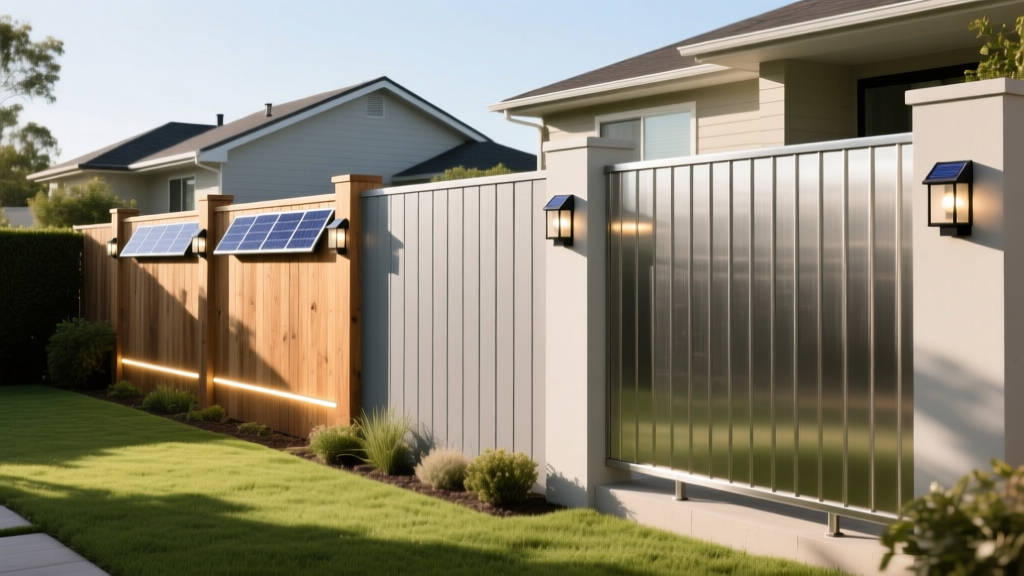
The Application-Fit Decision Matrix
Selecting solar lights for fence perimeters requires more than matching aesthetics to your yard. The core failure point in outdoor solar lighting is a mismatch between the light's operational profile, the fence material's structural limits, and the local microclimate. Before evaluating specific fixtures, define your primary scenario to narrow down the required lumen output, beam angle, and sensor type.
Target Lumens: 10-30 per fixture. Beam Angle: Wide (120+ degrees). Color Temperature: 2700K-3000K (Warm White). Best for: Defining property lines, illuminating garden beds, and maintaining Dark Sky compliance without light trespass.
Target Lumens: 300-800 (on motion activation). Beam Angle: Narrow to Medium (60-90 degrees). Color Temperature: 4000K-5000K (Cool White). Best for: Deterring intruders, illuminating driveways, and capturing clear CCTV footage. Requires PIR (Passive Infrared) motion sensors with adjustable sensitivity.
Target Lumens: 50-100. Beam Angle: Asymmetric or Up/Down wash. Color Temperature: 3000K. Best for: Highlighting the texture of stone pillars, composite fencing, or wrought iron scrollwork.
Material-Specific Mounting Protocols
The physical composition of your fence dictates which mounting hardware you can safely use. Using the wrong fastener can void manufacturer warranties, compromise structural integrity, or lead to premature fixture failure.
Wood Fences (Cedar, Redwood, Pressure-Treated Pine)
Wood is forgiving but subject to seasonal expansion, contraction, and moisture rot. When mounting solar panel brackets or light housings directly to wood pickets or posts, avoid standard zinc or black oxide screws. These will rust and cause severe tannin streaking on cedar and redwood.
- Fastener Spec: Use 1.5-inch 304 or 316 stainless steel pan-head screws.
- Placement: Mount fixtures at least 2 inches from the edges of pickets to prevent splitting as the wood dries and checks over time.
- Adhesive Warning: Avoid construction adhesives or double-sided mounting tapes on raw wood; the porous surface and natural oils in cedar prevent long-term bonding.
Vinyl and PVC Fencing
For vinyl fencing, rely entirely on non-penetrating mounting methods. Utilize tension-based post cap mounts that friction-fit over standard 4x4 or 5x5 post sleeves. For vertical picket mounting, use UV-rated nylon strap mounts or stainless steel hose clamps wrapped with EPDM rubber padding to prevent scratching the PVC surface.
Metal Fences (Aluminum, Wrought Iron, Steel)
Metal fences present unique challenges regarding magnetism and galvanic corrosion. Neodymium magnetic mounts are highly popular for their tool-free installation, but they only work on ferrous metals like steel and wrought iron. They will completely fail on aluminum fencing.
- Aluminum Fencing: You must use mechanical U-brackets or clamp-on mounts. Ensure a rubber or neoprene gasket sits between the steel bracket and the aluminum fence to prevent galvanic corrosion, which will rapidly pit and degrade the aluminum powder coating.
- Wrought Iron / Steel: Magnetic mounts work well, but ensure the magnet housing has a soft silicone outer shell. Bare magnets will scratch the powder coat, exposing the raw steel to moisture and initiating rust spots that will stain the fence.
Composite Fencing
Composite boards (a blend of wood fibers and HDPE plastics) are incredibly dense and heavy. Unlike wood, they do not compress easily. If you must screw into composite, you are required to pre-drill a 1/8-inch pilot hole using a carbide-tipped bit to prevent the material from bulging or 'mushrooming' around the screw head.
2026 Battery & Panel Specifications Matrix
The solar lighting market has shifted significantly toward advanced battery chemistries to handle extreme weather events. When evaluating solar lights for fence applications, the internal battery type is the single biggest predictor of the fixture's lifespan.
| Feature | Li-ion (Standard) | LiFePO4 (Premium 2026 Standard) |
|---|---|---|
| Chemistry | Lithium-Ion | Lithium Iron Phosphate |
| Cycle Life | 500 - 800 cycles | 2,000+ cycles |
| Cold Tolerance | Degrades rapidly below 32°F | Operates efficiently down to -4°F |
| Thermal Runaway Risk | Moderate (in extreme heat) | Near Zero |
| Best Scenario | Mild climates, budget ambient lighting | Northern climates, high-heat zones, security |
Additionally, look for fixtures utilizing monocrystalline solar panels rather than polycrystalline. Monocrystalline cells offer a 15-20% higher efficiency rate in low-light and overcast conditions, which is critical for fence lines that may experience partial shading from adjacent trees or structures.
Environmental Edge Cases & Troubleshooting
Even the best-matched solar lights for fence lines will fail if environmental edge cases are ignored during the planning phase.
High Shade and Tree Canopy
If your fence line is heavily shaded by mature trees, standard integrated solar lights will starve. The solution is to utilize split-system solar fixtures, where the LED light housing mounts to the fence, but the solar panel is attached via a 10-to-15-foot weatherproof cable, allowing you to mount the panel on a nearby roofline or sun-exposed post.
Snow Load and Ice Accumulation
In northern climates, horizontal solar panels mounted on top of fence post caps will accumulate snow and ice, rendering them useless for weeks. For snowy regions, select vertical-mount solar lights that attach to the side of the fence pickets or posts, or choose post-cap lights with steeply angled, domed solar arrays that encourage snow shedding.
Coastal Salt Spray
For properties within a half-mile of the ocean, salt spray will rapidly corrode standard aluminum or plastic housings with cheap metallic finishes. Specify fixtures with marine-grade 316 stainless steel housings or heavy-duty ASA (Acrylonitrile Styrene Acrylate) plastics, which resist UV degradation and salt pitting far better than standard ABS plastics.
Dark Sky Compliance and Light Trespass
When installing perimeter lighting, you must consider the impact on local ecosystems and neighborhood light pollution. The National Park Service Night Skies program highlights how unshielded outdoor lighting disrupts nocturnal wildlife and migratory bird patterns. Furthermore, the U.S. Department of Energy strongly recommends using fully shielded fixtures and motion sensors to minimize wasted energy.
To ensure your fence lighting is responsible and compliant with Dark Sky principles:
- Use Shielded Optics: Ensure the LED diode is recessed and shielded so that light is directed downward or strictly toward your property, not outward into the street or neighbor's yard.
- Limit Color Temperature: Stick to 2700K or 3000K for ambient fence lighting. Higher Kelvin ratings (blue-white light) scatter more easily in the atmosphere and cause severe glare.
- Implement Timers: For security lighting, configure PIR sensors to dim the lights to 20% brightness after midnight, ramping up to 100% only when motion is detected. This preserves battery life and drastically reduces light trespass.
By rigorously matching the solar light's mounting mechanism to your specific fence material, selecting the correct battery chemistry for your climate, and adhering to responsible lighting practices, you can create a perimeter illumination system that is both highly functional and structurally sound.