Best Mesh Pool Fence Brands in 2026: Safety & Durability Deep-Dive
Compare top mesh pool fence brands for 2026. We analyze Guardian, Katchakid, and Baby Guard on ASTM safety standards, pole strength, and pricing.
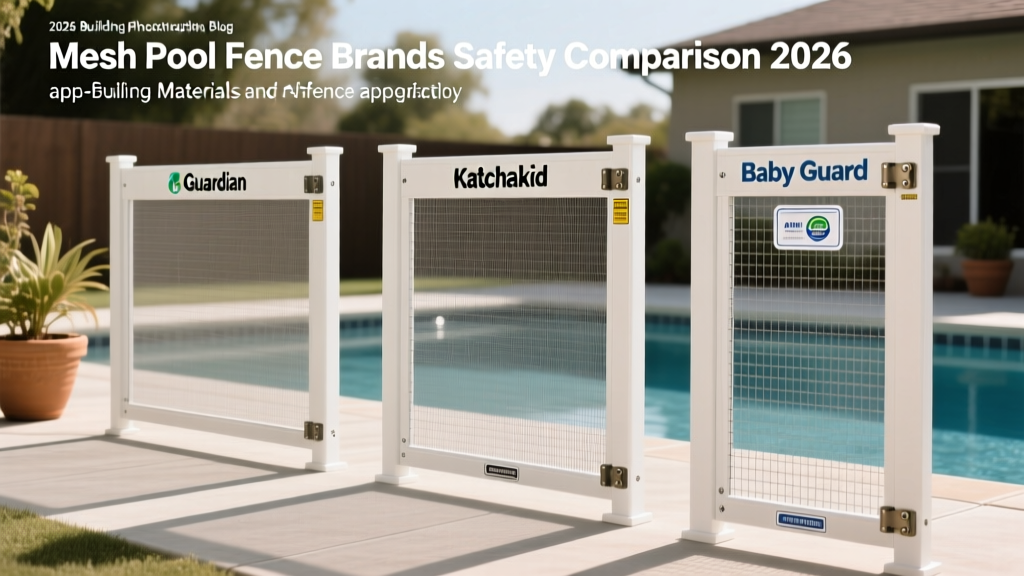
The Anatomy of an ASTM-Compliant Mesh Pool Fence
Removable barriers are the most effective secondary layer of protection against unauthorized aquatic access. According to the U.S. Consumer Product Safety Commission (CPSC), a physical barrier separating the home from the pool significantly reduces childhood drowning incidents. However, not all barriers are engineered equally. The industry benchmark for these systems is the ASTM F2286 standard, which dictates precise requirements for mesh aperture size, pole deflection, and latch release mechanisms.
When evaluating a mesh pool fence, superficial aesthetics must take a backseat to structural metallurgy and polymer science. A premium system relies on a triad of components: high-tensile mesh, rigid support poles, and fail-safe gate hardware. This deep-dive dissects the leading brands in the 2026 market—Guardian, Katchakid, and Baby Guard—analyzing their material specifications, pricing structures, and long-term durability in harsh environments.
Component Deep-Dive: Mesh, Poles, and Hardware
Before comparing brands, it is critical to understand the engineering tolerances that separate commercial-grade systems from big-box store alternatives.
1. The Mesh Matrix
Budget fences utilize lightweight polyethylene that degrades under UV exposure within two seasons. Premium brands use PVC-coated polyester yarns (commonly known by the brand name Textilene). For a mesh pool fence to resist climbing and withstand 250 lbs of lateral pressure without tearing, it must meet these minimums:
- Yarn Denier: Minimum 1000-denier polyester core.
- Weight: 340 g/m² to 400 g/m² (grams per square meter).
- Aperture Size: Less than 1.25 inches to prevent toe-holds and finger grips.
- Border Binding: Double-layered, UV-stabilized vinyl binding with reinforced nylon thread stitched at 8-10 stitches per inch.
2. Support Pole Metallurgy
The poles bear the entire structural load. If a pole bends more than 45 degrees under pressure, the mesh sags, creating a climbable hazard. Top-tier manufacturers use 6061-T6 marine-grade aluminum or reinforced fiberglass. The critical metric is the wall thickness: standard poles are 5/8-inch outer diameter (OD) with a 0.058-inch wall thickness. Anything thinner (e.g., 0.035-inch) will permanently deform during high winds or when a child leans against it.
3. Latch and Gate Mechanics
The American Academy of Pediatrics (AAP) emphasizes that self-closing, self-latching gates are non-negotiable. Premium systems utilize magnetic latches (like the LokkLatch Magnetic) that automatically engage when the gate swings shut. Mechanical hook-and-eye latches require manual engagement and are prone to user error, making them a liability in modern installations.
Brand Comparison Matrix: Guardian vs. Katchakid vs. Baby Guard
The following matrix compares the flagship product lines of the three dominant manufacturers in the removable pool fence sector as of 2026.
| Feature | Guardian Pool Fence (Premier Line) | Katchakid (Pro Series) | Baby Guard (Standard System) |
|---|---|---|---|
| Mesh Material | Textilene 400gsm, 1000-denier | Custom PVC-coated poly, 380gsm | Standard vinyl-coated poly, 340gsm |
| Pole Material | 6061-T6 Aluminum (0.058" wall) | Fiberglass / Aluminum hybrid | Aluminum (0.049" wall) |
| Gate Latch | Magnetic Self-Latching | Magnetic Self-Latching | Mechanical Hook & Eye (Magnetic optional) |
| Pole Spacing | Max 36 inches (ASTM compliant) | Max 36 inches | Max 36 inches |
| Warranty | Lifetime on poles, 5-year on mesh | Limited Lifetime on all components | 3-year comprehensive |
| Est. Installed Cost | $22 - $28 per linear foot | $26 - $32 per linear foot | $16 - $21 per linear foot |
2026 Pricing & Installation Economics
The cost of a mesh pool fence is dictated by linear footage, deck material, and gate requirements. In 2026, the national average for a standard 150-linear-foot installation (enclosing a typical 15x30 ft pool with a 3-foot setback) ranges from $2,400 to $4,200.
Cost Breakdown by Deck Material
Installation labor fluctuates heavily based on the surface being drilled. Installers use diamond-tipped core bits for hard surfaces and augers for soft ground.
- Poured Concrete / Kool Deck: Standard pricing ($22/ft). Drilling 3.5-inch deep holes for the ground sleeves is straightforward.
- Travertine / Pavers: Add 15-20% to labor costs. Installers must carefully core through the stone without cracking the edges, and often need to pour concrete footings beneath the pavers to anchor the sleeves securely.
- Wood / Composite Decking: Add 10% to material costs. Deck-mount brackets or specialized structural sleeves are required to anchor the poles to the joists beneath the decking.
The most common cause of fence failure is drilling sleeve holes too shallow. The ASTM standard requires the support sleeve to penetrate the structural base by at least 3 inches. If an installer hits rebar at 2 inches and stops, the pole will lack the leverage required to withstand a 250 lb lateral load, causing the fence to tilt and the mesh to detach from the deck. Always verify sleeve depth with a measuring tape during the installation walkthrough.
Maintenance Protocol for Coastal and High-UV Environments
Even the highest-grade mesh pool fence requires specific maintenance to maximize its lifespan, particularly in salt-air or high-UV regions like Florida, Texas, and Southern California.
- Quarterly Latch Lubrication: Magnetic latches contain internal springs and neodymium magnets. Salt spray can corrode the external spring mechanisms. Apply a dry PTFE (Teflon) lubricant to the latch moving parts every 90 days. Never use WD-40, as it attracts dust and grit, which will jam the locking mechanism.
- Mesh Tension Checks: Over time, thermal expansion and contraction can cause the mesh border binding to stretch. If the mesh sags more than 1 inch between poles, use the manufacturer's tensioning straps (usually located at the bottom hem of the mesh panels) to ratchet the fabric taut.
- Sleeve Debris Clearance: When the fence is removed for the winter or a pool party, the empty ground sleeves will collect dirt, pollen, and calcium deposits. Flush the sleeves with a garden hose and use a 3/8-inch pipe cleaner to remove calcified debris before reinserting the poles to prevent aluminum galvanic corrosion.
Frequently Asked Questions
Can a mesh pool fence be installed on an above-ground pool?
Standard deck-mounted mesh pool fences are designed for in-ground pools with surrounding hardscapes. For above-ground pools, you must install a specialized barrier that mounts directly to the pool's top rail or the surrounding wooden deck structure. The gate must still feature a self-closing, self-latching mechanism positioned at least 54 inches from the bottom of the barrier to comply with safety codes.
How does wind load affect mesh vs. glass pool fencing?
Mesh pool fences are highly aerodynamic. The woven aperture design allows up to 40% of wind to pass through the barrier, drastically reducing lateral wind load compared to frameless glass or solid wood fences. This makes mesh the superior choice for coastal properties or high-wind corridors where solid fences require massive concrete footings to prevent blow-overs.
Is the mesh material resistant to chlorine and saltwater?
Yes, provided you purchase a system using PVC-coated polyester (Textilene). Raw polyethylene or nylon meshes will absorb chlorinated water and become brittle within a single season. The PVC coating creates an impermeable barrier against pool chemicals, salt spray, and UV radiation, ensuring the fabric retains its tensile strength for 5 to 10 years.