Steel Fence Post Maintenance: Cleaning and Rust Prevention Playbook
Learn the exact steps to clean, inspect, and protect your steel fence post from rust. Our maintenance playbook ensures decades of structural integrity.
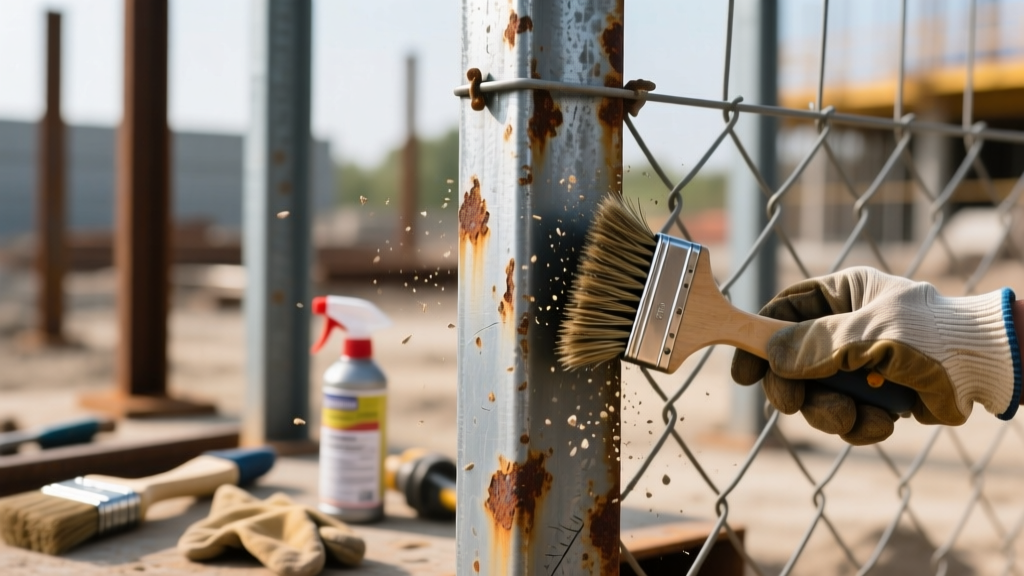
The Anatomy of Steel Fence Post Corrosion
Standard 2-3/8-inch OD galvanized steel fence posts, such as those used in chain-link and PostMaster wood fence systems, rely on a sacrificial zinc coating to prevent oxidation. When the zinc layer is intact, it undergoes a natural weathering process that forms zinc carbonate—a dense, insoluble patina that blocks moisture. However, mechanical damage from string trimmers, soil acidity, and trapped moisture at the concrete footing can compromise this layer. Once the underlying carbon steel is exposed to oxygen and water, iron oxide (red rust) forms, expanding up to six times its original volume and causing structural spalling.
According to the American Galvanizers Association, identifying the difference between white rust (zinc oxide/corrosion byproducts) and red rust (base metal failure) is the critical first step in any maintenance protocol. White rust appears as a chalky, powdery white residue and indicates the zinc is actively sacrificing itself but is poorly ventilated. Red rust indicates the zinc is gone and the steel post's structural integrity is actively degrading.
Annual Inspection Checklist: The 5-Point Structural Check
Perform this inspection in early spring before heavy seasonal rains. Document findings with photos to track year-over-year degradation rates.
- Ground-Line Probing: Use a flathead screwdriver to probe the steel exactly at the soil-to-air and concrete-to-air interfaces. If the screwdriver penetrates the metal more than 1mm, the post has suffered section loss and requires immediate structural sleeving or replacement.
- Fastener Torque Verification: Check all 3/8-inch carriage bolts and tension bands. Vibration and thermal expansion/contraction loosen these over time. Retorque to 20 ft-lbs using a calibrated torque wrench to prevent fence fabric sagging, which transfers asymmetric loads to the post base.
- Coating Adhesion Test: For powder-coated or painted steel posts (often black or green), perform a cross-hatch test on a discreet 1-inch section using a utility knife and ASTM D3359 tape. If more than 15% of the coating flakes off, a full chemical stripping and recoating is required.
- Concrete Collar Integrity: Inspect the concrete footing surrounding the post. Look for radial cracking or spalling. Water pooling in these micro-fissures accelerates galvanic corrosion at the post base.
- Cap and Top Seal Check: Ensure post caps are securely seated. An open, uncapped steel tube traps rainwater inside the post, causing internal rust that is invisible until the post snaps under wind load.
Step-by-Step Cleaning and Rust Remediation Playbook
When red rust or heavy white rust is identified, surface wiping is insufficient. You must execute a complete chemical and mechanical remediation to halt the oxidation process.
Phase 1: Alkaline Degreasing and Washing
Mix 1/2 cup of Trisodium Phosphate (TSP) substitute per gallon of warm water. Scrub the affected steel fence post using a stiff nylon-bristle brush. This removes organic matter, soil acids, and surface oils. Rinse thoroughly with a pressure washer set to a maximum of 1,500 PSI; higher pressures can mechanically strip remaining sound zinc layers. Allow the post to dry completely (minimum 4 hours in direct sunlight).
Phase 2: Mechanical Surface Preparation
For areas exhibiting red rust, mechanical abrasion is mandatory. Attach an 80-grit aluminum oxide sanding disc or a knotted wire wheel to an angle grinder. Grind the rusted areas until you reach bright, bare metal, feathering the edges into the surrounding sound coating. For white rust, use a brass-bristle hand brush to avoid removing the underlying intact zinc.
Never use muriatic (hydrochloric) acid or standard household rust removers containing strong mineral acids on galvanized steel. These acids will instantly strip the remaining sacrificial zinc layer, accelerating future corrosion. Always use phosphoric acid-based converters for galvanized surfaces.
Phase 3: Chemical Conversion
Apply a phosphoric acid-based metal prep solution (such as Ospho or Naval Jelly) to the bare steel areas using a synthetic brush. The phosphoric acid reacts with any microscopic iron oxide to form iron phosphate, a stable, inert black crystalline layer that acts as an ideal primer base. Allow it to dwell for 15 to 20 minutes, then wipe off the excess with a clean, lint-free cloth. Do not rinse.
Protective Coating Matrix: What to Apply and When
Following the touch-up and repair guidelines for galvanized steel, selecting the correct topcoat is vital. The coating must match the existing post finish and provide adequate zinc dust content for bare metal spots.
| Product Category | Specific Product Example | Zinc Dust Content | Best Use Case | Approx. Cost (2026) |
|---|---|---|---|---|
| Cold Galvanizing Compound | ZRC Cold Galvanizing Compound | 95% Zinc Dust | Bare steel spots on galvanized posts; restores sacrificial anode. | $42 / quart |
| Zinc-Rich Primer | Rust-Oleum Stops Rust Clean Metal Primer | None (Barrier coat) | Previously painted posts; encapsulating minor surface staining. | $14 / quart |
| Polyurethane Topcoat | Dupont Imron Industrial Polyurethane | None (UV shield) | High-UV environments; topcoat over epoxy primers for color retention. | $95 / gallon |
Apply the cold galvanizing compound to bare spots in two thin coats, waiting 90 minutes between applications. If the post is in a highly visible area and requires a color match (e.g., black or green), you must apply a barrier sealer coat before applying standard exterior enamels, as the high zinc content in cold galvanizing compounds will saponify (react and peel) when directly overcoated with alkyd or oil-based paints. For detailed painting protocols over galvanized steel, refer to the AGA painting guidelines.
Concrete Collar Repair: Fixing the Most Common Failure Point
The interface where the steel fence post meets the concrete footing is the most frequent point of catastrophic failure. Concrete is naturally alkaline and porous; it holds moisture against the steel. Furthermore, differential expansion rates between steel and concrete create micro-gaps over time.
- Excavation and Cleaning: Dig away soil 4 inches down around the concrete collar. Use a shop vacuum and compressed air to blow out all debris, dirt, and standing water from the gap between the steel post and the concrete.
- Priming the Gap: Wipe the exposed steel in the gap with xylene to remove any invisible oils or moisture films.
- Sealant Injection: Inject a high-modulus polyurethane sealant, specifically Sikaflex-1a, into the gap. Do not use silicone; silicone lacks the structural adhesion required for exterior masonry-to-metal joints and will peel within one freeze-thaw cycle. Sikaflex-1a cures to a tough, flexible rubber that accommodates thermal expansion while blocking water ingress.
- Tooling and Curing: Tool the sealant flush with the top of the concrete using a plastic putty knife dipped in soapy water. Allow 48 hours for full moisture cure before backfilling with soil or gravel.
Frequently Asked Questions
Can I install a steel sleeve over a rusted post instead of replacing it?
Yes, if the post has lost less than 30% of its wall thickness. Use a 2.5-inch ID steel sleeve, drive it over the existing post, and secure it with 3/8-inch through-bolts. Coat the interior of the sleeve with a zinc-rich primer before installation to prevent galvanic corrosion between the old and new steel.
How often should I wash a steel fence post near the ocean?
Properties within 1 mile of a coastline are exposed to salt aerosols that aggressively break down zinc carbonate. Wash these posts with fresh water and a mild detergent every 3 months. Inspect and reapply cold galvanizing compound annually, as salt air accelerates zinc depletion by up to 400% compared to inland environments.
Does setting a steel post in gravel instead of concrete prevent rust?
Setting a post in crushed angular gravel (like 3/4-inch crushed granite) improves drainage and eliminates the concrete collar moisture trap, significantly extending the life of the ground-line section. However, the post must be mechanically stabilized with driven earth anchors or cross-bracing, as gravel lacks the lateral shear resistance of cured concrete.