Cedar Split Rail Fence: Best Property Scenarios & Terrain Matching
Evaluate if a cedar split rail fence fits your property. Expert guide on terrain matching, livestock containment, grading, and 2026 installation costs.
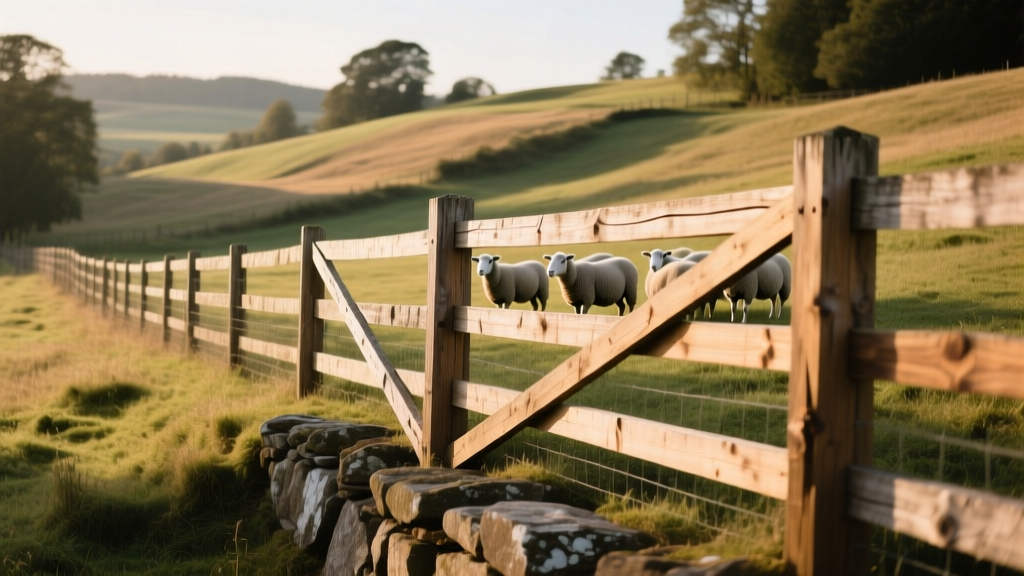
The Anatomy of a Cedar Split Rail Fence
Unlike milled lumber used in privacy or picket fencing, a cedar split rail fence relies on rustic, hand-split or machine-split timber. The rails are not uniform; they are tapered at the ends to fit into mortised holes cut directly into the vertical posts. Standard rails measure 10 feet in nominal length, but actual usable length is typically 98 to 104 inches to allow for a 2-to-4-inch overlap at the post mortise. Posts are generally 5 to 6 inches in diameter and range from 6 to 8 feet in length, depending on the number of rails and the required burial depth.
The primary material used is Western Red Cedar (Thuja plicata), prized for its high tannin content and natural decay resistance. According to the USDA Forest Products Laboratory Wood Handbook, Western Red Cedar heartwood ranks among the most durable domestic softwoods, capable of lasting 15 to 25 years in direct ground contact without chemical pressure treatment. Alaskan Yellow Cedar is a premium, denser alternative that offers superior impact resistance but commands a 30% to 40% price premium.
Scenario Matching: Where Cedar Split Rail Excels
Split rail is not a universal fencing solution. Its open architecture and specific structural limitations make it highly specialized. Evaluate your property against these ideal use cases.
Large Acreage and Perimeter Bordering
For properties exceeding 2 acres, split rail is highly cost-efficient. Because the rails span 10 feet (compared to the standard 8-foot spans of privacy fencing), you require fewer posts and less digging per linear foot. In 2026, material costs for #1 grade Western Red Cedar split rail average $8.50 to $13.00 per linear foot, making it significantly cheaper than vinyl or cedar privacy alternatives for marking vast property lines where wind-load and privacy are not concerns.
Equestrian and Large Livestock Containment
Horses and cattle respond well to the high visibility and substantial physical profile of a 3-rail or 4-rail cedar fence. The thick rails (typically 3x5 inches at the thickest point) provide a clear visual barrier that prevents large animals from accidentally walking into the fence line. Furthermore, if a horse kicks or leans on the rail, the wood will break rather than causing severe lacerations, a common risk with high-tensile wire or barbed wire.
Sloped and Uneven Terrain
While split rail cannot be "racked" (tilted to follow a grade like chain-link), it excels on rolling hills when installed using the step-down method. The independent nature of the mortised joints allows installers to easily adjust the vertical drop between posts without custom-cutting angled rails.
Scenario Mismatch: When to Avoid Split Rail
- Small Pet Containment: Gaps between rails and the ground, plus the rail overlaps, allow dogs under 40 lbs and cats to escape. You must staple 14-gauge welded wire mesh to the interior to contain small animals.
- HOA and Suburban Front Yards: Many Homeowner Associations explicitly ban split rail due to its agricultural aesthetic, favoring aluminum, vinyl, or milled cedar picket.
- High-Security or Privacy Needs: Split rail offers 0% visual privacy and can be easily dismantled by hand, making it useless for deterring human trespassers.
Material Grade & Sizing Decision Matrix
Selecting the right rail count and wood grade dictates both the functionality and the budget of your project. Use this matrix to match your specific scenario.
| Configuration | Height | Best Application | 2026 Material Cost (per LF) |
|---|---|---|---|
| 2-Rail (#2 Grade) | 36 inches | Decorative borders, garden edging, light pathway guidance. | $7.00 - $9.50 |
| 3-Rail (#1 Grade) | 48 inches | Horse paddocks, large dog containment, primary property lines. | $10.50 - $14.00 |
| 4-Rail (#1 Grade) | 60 inches | Cattle, bulls, elk, or properties bordering busy highways. | $14.50 - $18.00 |
Note: #1 Grade cedar consists primarily of heartwood with minimal knots and wane (bark edges). #2 Grade includes more sapwood, which is highly susceptible to rot when exposed to soil moisture.
Installation Realities: The Step-Down Method for Slopes
Installing a cedar split rail fence on a slope requires the step-down technique. Because the rails are rigid and the mortise holes are pre-cut horizontally, you cannot angle the rails to follow the ground contour.
- Establish the Drop: Measure the total elevation change over a 10-foot span. If the ground drops 6 inches over 10 feet, the next post must be set 6 inches higher out of the ground than the previous post to maintain a level top rail.
- Manage the Gaps: Stepping creates a triangular gap under the lower rail on the downhill side. For livestock containment, this gap must be filled with a vertical kicker board or blocked with wire mesh to prevent animals from crawling underneath.
- Post Depth Adjustment: On steep grades, the downhill post will require a deeper hole to maintain the required 1/3 burial ratio for structural stability. A 7-foot post may need to be buried 30 inches deep on a severe slope, leaving only 54 inches above grade, which might necessitate upgrading to an 8-foot post.
Post Setting and Frost Heave Mitigation
The most common failure point in split rail fencing is post rot at the groundline and frost heave. Never set cedar split rail posts in solid concrete. Concrete traps moisture against the wood and creates a frost-susceptible bulb that pushes the post upward during freeze-thaw cycles.
According to agricultural fencing guidelines from the University of Minnesota Extension, proper drainage is critical for wooden post longevity. The correct installation method involves:
- Digging the hole 6 inches deeper than the required burial depth.
- Filling the bottom 6 inches with crushed angular gravel for drainage.
- Setting the post and backfilling with a 50/50 mix of native soil and crushed gravel, tamping every 4 inches.
- Mounding the topsoil slightly away from the post to shed surface water.
Long-Term Maintenance and Weathering
Cedar split rail fences are designed to be low-maintenance, but they are not zero-maintenance. The ultraviolet radiation from the sun will break down the lignin in the wood surface, causing the cedar to transition from its warm amber hue to a silvery-gray patina within 12 to 18 months. This is purely cosmetic and does not affect the structural integrity of the heartwood.
Do not apply polyurethane, standard deck sealers, or paint to split rail. These film-forming finishes trap internal moisture, accelerating rot from the inside out, and will peel rapidly due to the rough, porous surface of split timber. If you wish to slow the graying process, apply a single coat of a penetrating, oil-based, semi-transparent stain formulated specifically for rough-sawn cedar, and reapply every 3 to 4 years. However, allowing the wood to weather naturally remains the most cost-effective and traditional approach.
Sourcing and Drying Considerations
When purchasing materials, specify "green" or "unseasoned" cedar for the posts, but request "kiln-dried" or "air-dried" rails if available. Green posts are heavier and easier to drive into the ground or set in soil, while dried rails are lighter, easier to carry across large acreage, and less prone to severe twisting as they acclimate to the local humidity. Always inspect the bundle for rails with excessive "shake" (longitudinal cracks running through the center of the timber), as these will splinter and fail when wedged into tight mortise joints.