PetSafe Wireless Dog Fence: 2026 Yard Fit & Scenario Matching Guide
Evaluate if a PetSafe wireless dog fence fits your property. We analyze terrain limits, signal interference, model specs, and real-world scenario matching.
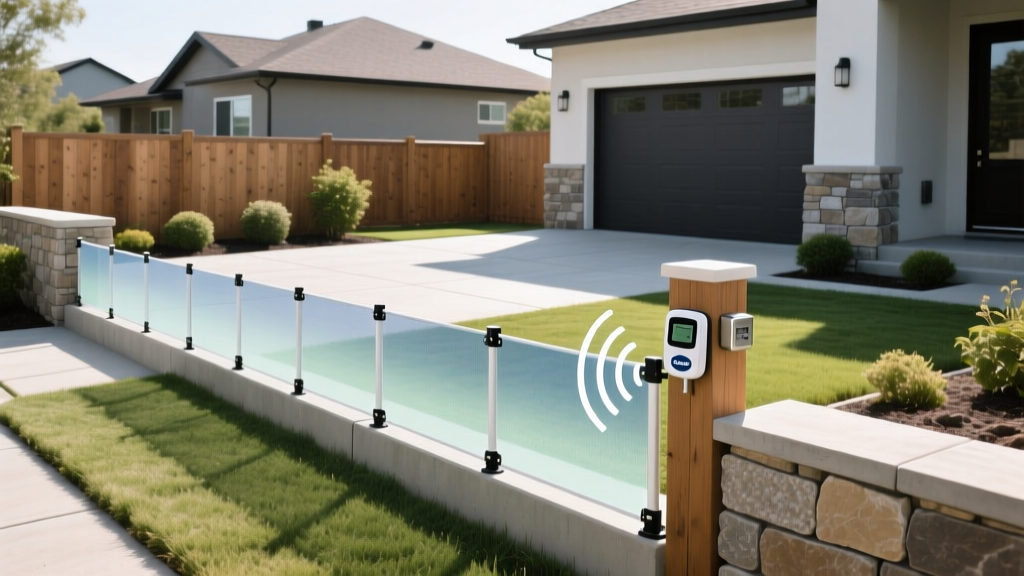
The Physics of Wireless Containment Boundaries
Unlike physical barriers that rely on tensile strength, structural depth, and material durability, a PetSafe wireless dog fence operates entirely on radio frequency (RF) geometry. The central transmitter emits a continuous 17.5 kHz radio signal, creating a spherical or dome-shaped containment zone. When the receiver collar enters the outer edge of this signal field, it first triggers a warning tone, followed by a static correction if the dog continues forward.
Understanding this RF geometry is critical for application-fit. Because the signal radiates outward in a dome from the transmitter, the boundary is not a flat cylinder. If the transmitter is placed on the second floor of a home, the boundary will extend further into the yard on the second-floor level but shrink significantly at ground level. This three-dimensional signal behavior dictates exactly which property topographies are viable for wireless containment and which will result in erratic boundary lines and false corrections.
Ideal Property Scenarios for Wireless Systems
Wireless containment is not a universal replacement for physical fencing materials like cedar, vinyl, or chain-link. It excels in specific, highly constrained scenarios where traditional fencing is either prohibited or physically unfeasible.
- Strict HOA and Historical Districts: Many residential covenants explicitly ban physical fences or restrict them to specific rear-yard setbacks. A wireless system leaves no visual footprint, bypassing aesthetic compliance issues entirely.
- Leased Properties and Temporary Setups: For renters or owners in temporary housing, digging post holes and pouring concrete footings is a breach of lease terms. The PetSafe wireless system requires only a standard 120V indoor outlet and can be relocated in under 10 minutes.
- Flat, Unobstructed Terrain: Lots with less than a 10% grade and minimal dense foliage allow the 17.5 kHz signal to propagate cleanly, resulting in a predictable boundary drift of less than 1.5 feet.
- Supplemental Containment: Using a wireless boundary to keep dogs away from specific interior hazards (e.g., swimming pools, gardens, or front roads) while a physical fence secures the wider perimeter.
Signal Killers and Environmental Dealbreakers
The most common failure point for invisible fencing is environmental interference. Before purchasing a system, you must audit your property for the following RF signal killers.
If your home or an adjacent large shed has a metal roof, a wireless fence will not function correctly. Metal acts as a Faraday cage, reflecting the RF signal back toward the transmitter. This creates a 'dome collapse' where the boundary drops straight down from the roofline rather than extending into the yard, or worse, causes random static corrections inside the home. According to PetSafe official installation guidelines, transmitters must be placed at least 3 feet away from any large metal objects, including appliances and HVAC units.
Topography and Foliage Limitations
Steep slopes severely distort the spherical signal. If your yard features a drop-off or incline greater than 15%, the boundary line will shift unpredictably as the signal intersects the ground plane at an angle. Furthermore, dense, wet foliage (such as thick clusters of pine trees or heavy shrubbery) absorbs and scatters the 17.5 kHz frequency. During heavy rain or winter snow accumulation, the boundary can shrink inward by 2 to 4 feet, effectively reducing your dog's usable yard space.
Application-Fit Decision Matrix
Use this matrix to determine if your specific property profile aligns with the operational limits of a wireless containment system.
| Property Feature | Signal Impact | Verdict |
|---|---|---|
| Flat lot, single-story wood/vinyl home | Optimal propagation; minimal drift. | Highly Recommended |
| Metal roof or aluminum siding | Signal reflection; indoor false triggers. | Do Not Use |
| Moderate slope (10% - 15% grade) | Boundary shifts; uneven coverage. | Use with Caution |
| Heavily wooded lot (dense pine/oak) | Signal attenuation; boundary shrinks in rain. | Hybrid Approach Needed |
| Multi-story home (transmitter on 2nd floor) | Ground-level boundary shrinks by 30-50%. | Relocate Transmitter |
Hardware Breakdown: PIF-300 vs. Stay & Play
PetSafe currently dominates the wireless market with two primary models. Choosing the correct hardware depends on your dog's size and your required coverage area. The American Kennel Club notes that proper collar fit and weight are critical for preventing neck irritation and ensuring consistent contact with the skin.
| Specification | PIF-300 (Original Wireless) | Stay & Play (PIWF00-13664) |
|---|---|---|
| Maximum Coverage | 1/2 Acre (210 ft diameter) | 3/4 Acre (210 ft diameter / expanded) |
| Minimum Dog Weight | 8 lbs | 5 lbs |
| Collar Weight | 2.8 oz (Bulkier) | 1.1 oz (Compact) |
| Static Correction Levels | 5 Levels + Tone | 5 Levels + Tone |
| Average 2026 Retail Price | $250 - $290 | $350 - $390 |
Calibration Protocol for Signal Stability
Simply plugging in the transmitter and putting the collar on your dog is a recipe for containment failure. Proper calibration ensures the boundary is exactly where you intend it to be. Follow this exact sequence:
- Transmitter Placement: Mount the transmitter on an interior wall, exactly 3 to 5 feet above the floor. Ensure it is at least 3 feet away from large metal appliances, breaker boxes, and exterior metal siding.
- Initial Dial Setting: Set the boundary dial to 8 (the midpoint). Do not start at the maximum setting, as this maximizes signal bleed into neighboring properties.
- The Walk-Test: Hold the included boundary tester (or the collar itself) at the exact height of your dog's neck. Walk slowly toward the property edge until you hear the warning beep. Mark this spot with a physical boundary flag.
- Adjust and Re-Test: If the beep triggers too early, lower the dial by one increment. If it triggers too close to the street, raise it by one increment. Repeat the walk-test in a full 360-degree circle around the transmitter.
- Environmental Stress Test: Test the boundary during heavy rain or when the ground is saturated. Water increases soil conductivity and can alter the RF ground-plane reflection. Adjust the dial to compensate for wet-weather shrinkage if necessary.
Total Cost of Ownership vs. Physical Fencing
When budgeting for property containment, the upfront hardware cost of a PetSafe wireless dog fence is a fraction of traditional materials, but long-term maintenance costs must be factored in.
A standard 150-linear-foot pressure-treated pine fence costs between $4,500 and $6,500 installed in 2026, factoring in lumber fluctuations and labor. A 6-foot vinyl privacy fence pushes that figure to $7,500+. In contrast, the PetSafe Stay & Play system retails for roughly $380, with additional receiver collars costing $110 each for multi-dog households.
However, wireless systems carry recurring operational costs. The proprietary PetSafe RFA-67 batteries in the receiver collars must be replaced every 1 to 3 months, depending on how often the dog tests the boundary. At $8 per two-pack, annual battery maintenance runs $30 to $60 per dog. Furthermore, if the collar is lost or damaged by chewing, a replacement collar represents a 30% hardware replacement cost. For high-prey-drive breeds (e.g., Huskies, Greyhounds, Coonhounds) that are prone to chasing wildlife through the static correction zone, the wireless fence may ultimately fail, forcing the owner to invest in a physical fence anyway. Match the containment method to the dog's temperament and the property's physical reality, not just the initial price tag.