How Much Does It Cost to Build a Fence? 2026 Pricing Breakdown
Discover how much it costs to build a fence in 2026. Get detailed pricing for wood, vinyl, aluminum, and composite, plus labor rates and hidden fees.

Core Cost Baselines for 2026
The national average cost to build a standard 150-linear-foot backyard fence ranges from $3,400 to $7,200, with most homeowners paying approximately $4,800. However, quoting a fence based purely on national averages leads to severe budget miscalculations. The final price is dictated by material grade, soil composition, local labor rates, and municipal permit requirements.
Base Cost = (Linear Footage × Material Cost per LF) + (Linear Footage × Labor Cost per LF) + Gate Hardware + Permit Fees + Old Fence Removal.
According to industry data tracked by Angi and HomeGuide, material prices have stabilized in 2026 following the supply chain fluctuations of previous years, but specialized labor for post-setting and terrain grading continues to push installation costs upward.
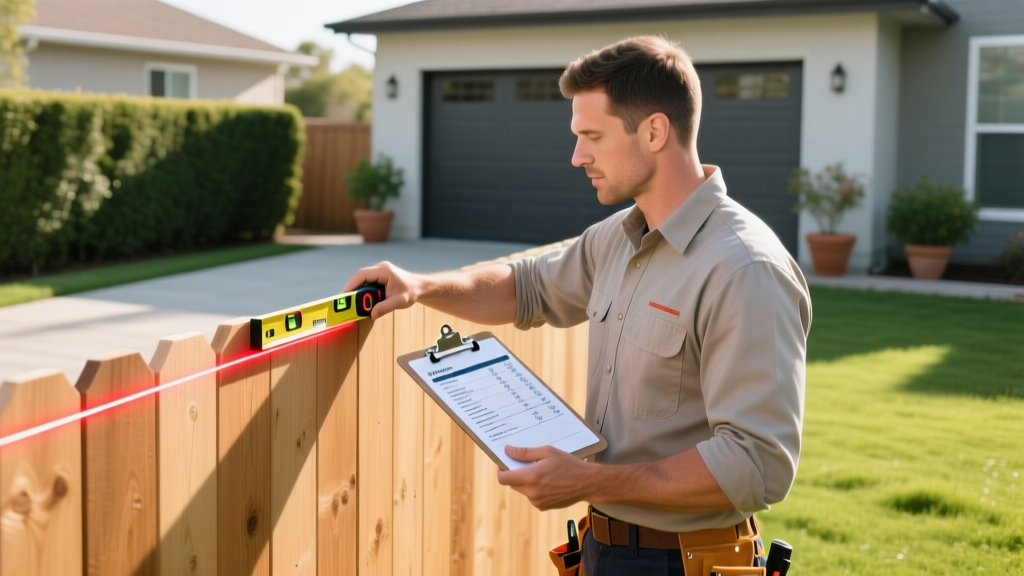
Material Cost Matrix: Price Per Linear Foot
The material you select accounts for 40% to 60% of your total budget. Below is the 2026 pricing breakdown for the most common residential fencing materials, measured per linear foot (LF).
| Material Type | Material Only (per LF) | Installed Cost (per LF) | Expected Lifespan |
|---|---|---|---|
| Pressure-Treated Pine | $12 - $18 | $22 - $32 | 15 - 20 Years |
| Western Red Cedar | $22 - $35 | $35 - $55 | 20 - 30 Years |
| PVC Vinyl (Solid Core) | $28 - $45 | $40 - $65 | 30 - 50 Years |
| Ornamental Aluminum | $30 - $50 | $45 - $75 | 50+ Years |
| Composite (e.g., Trex Seclusions) | $50 - $75 | $75 - $110 | 25 - 30 Years |
Pro-Tip on Wood Selection
Do not default to standard pressure-treated pine if your soil has high clay content or poor drainage. The constant moisture will accelerate rot at the post base. Upgrade to Black Locust or heart-grade Red Cedar for posts, even if you use pine for the pickets and rails, to extend the structural lifespan by a decade.
Labor, Terrain, and Post-Setting Methods
Labor typically costs between $18 and $40 per linear foot, or $45 to $85 per hour. However, the method your contractor uses to set the posts—and the ground they are setting them into—will drastically alter the final invoice.
Concrete vs. Polyurethane Post Foam
Traditionally, fence posts are set in 1.5 bags of fast-setting concrete (like Quikrete) per hole. In 2026, many contractors have shifted to two-part expanding polyurethane foams (such as Sika Post Mix). While the foam material costs roughly $22 per post compared to $8 for concrete, it cures in 15 minutes rather than 45 minutes. This cuts labor time by up to 40%, often making the total installed cost cheaper despite the higher material price.
Terrain Surcharges
- Flat, Clear Terrain: Base labor rate.
- Root-Heavy or Rocky Soil: Add $10 to $25 per post hole. Contractors must use auger extensions or rock bars, and may need to switch to core drilling if bedrock is hit.
- Sloped Yards (Racking vs. Stepping): Racking (following the contour) adds 10% to labor. Stepping (stair-stepping the panels) requires custom cutting and routing, adding 20% to 30% to labor costs.
Hidden Variables: Permits, Removal, and Utilities
First-time fence buyers frequently blow their budgets by ignoring the ancillary costs required before the first post is dug.
Federal law requires you to call 811 before any digging. While the utility marking service is free, if a contractor hits an unmarked shallow irrigation line or private sewer lateral that wasn't mapped by the city, you are liable for the repair. Always budget $300-$500 for a private utility locator if you have undocumented underground landscaping.
- Old Fence Demolition and Haul-Away: Tearing down an existing wood fence costs $3 to $7 per linear foot. Disposal fees at local landfills have risen, often adding a flat $250 to $500 dump fee per truckload.
- Municipal Permits: Most municipalities require a fence permit for structures over 6 feet tall, though many require them for any new boundary fence. Expect to pay $60 to $250. HOA approvals are free but can delay your project by 30 to 45 days.
- Property Line Surveys: If your existing property pins are missing, a licensed surveyor will charge $400 to $800 to mark the exact boundaries. Building even two inches over your property line can result in a forced teardown at your expense.
Gate and Hardware Multipliers
Gates are the most mechanically stressed components of a fence and require specialized hardware. A standard 36-inch walk gate adds $150 to $350 to your project. A 10-foot to 12-foot double drive gate adds $600 to $1,500.
Do not use standard butt hinges for double drive gates or heavy composite gates. Specify heavy-duty strap hinges or adjustable ball-bearing hinges (like those from LokkLatch or D&D Technologies) which cost $80 to $150 per set but prevent gate sag over time. Furthermore, automated gate openers (such as the Mighty Mule FM500 or LiftMaster LA500) require running dedicated 110V electrical lines or installing solar arrays, adding $1,200 to $3,500 to the total project cost.
DIY vs. Professional Installation
Building your own fence saves the $18-$40 per linear foot labor cost, but requires specific tools and physical endurance. A DIY install for a 150-foot fence will cost roughly $2,500 in materials and tool rentals (post hole auger, concrete mixer, laser level).
However, professional contractors carry liability insurance and offer warranties on post-setting. If a DIY post heaves out of the ground due to improper frost-line depth calculation, the replacement cost falls entirely on you. For vinyl and composite materials, professional installation is highly recommended, as manufacturer warranties (like Trex's 25-year limited warranty) are often voided if the product is not installed by a certified contractor.
Fence Cost FAQs
Does adding a fence increase property value?
A well-maintained privacy fence typically yields a 50% to 75% return on investment at resale. However, ornamental aluminum or high-end composite fencing in upscale neighborhoods can yield up to an 85% ROI by boosting curb appeal and matching neighborhood standards.
What is the cheapest fence to build for privacy?
A 4-foot chain-link fence with woven privacy slats is the cheapest option, costing $14 to $22 per linear foot installed. For solid wood, a board-on-board pressure-treated pine fence is the most economical true privacy barrier, though it requires annual sealing to maintain its lifespan.
How deep do fence posts need to be?
Post holes must be dug below the local frost line to prevent winter frost heave. In southern states, 24 inches is often sufficient. In northern climates, holes must be 36 to 48 inches deep. The general rule of thumb is that one-third of the post's total length must be buried underground (e.g., a 9-foot post for a 6-foot fence requires a 3-foot hole).
Written by
Sarah WhitfieldSarah Whitfield is a chartered quantity surveyor (MRICS) and construction cost analyst with 15 years of experience in material pricing, procurement strategy, and project budgeting. She earned her degree in Construction Management from the University of Reading (UK) and has worked on projects ranging from $2M custom homes to $180M mixed-use developments across North America and Europe. Sarah currently leads cost estimating for BuildMat Insight, maintaining a proprietary database of 4,000+ material price points updated quarterly. She is a frequent contributor to RSMeans cost data panels and has presented at the International Cost Engineering Council (ICEC) congress. Based in Denver, CO, Sarah is an avid trail runner and volunteer mentor for Women in Construction.
More from Sarah Whitfield
View all
Wood & Lumber
What Are the Different Types of Wood? A Builder's Guide
Compare structural softwoods, finish hardwoods, and engineered lumber. Analyze Janka ratings, MOE values, and 2026 pricing for construction.
Aug 4, 2026

Walls & Panels
Steel Framing vs Wood Framing: Corrosion and Moisture Defense
Compare steel framing vs wood framing for moisture resistance. Learn about galvanized coatings, condensation risks, and corrosion protection strategies.
Jul 21, 2026

Stone & Masonry
How to Cut Stone Veneer: Wet Saw vs Grinder Comparison
Compare the best tools for cutting stone veneer. We review wet saws, angle grinders, and chop saws to help you achieve clean, chip-free cuts.
Jul 21, 2026