Top Bamboo Fence Brands: Product Lines & 2026 Durability Costs
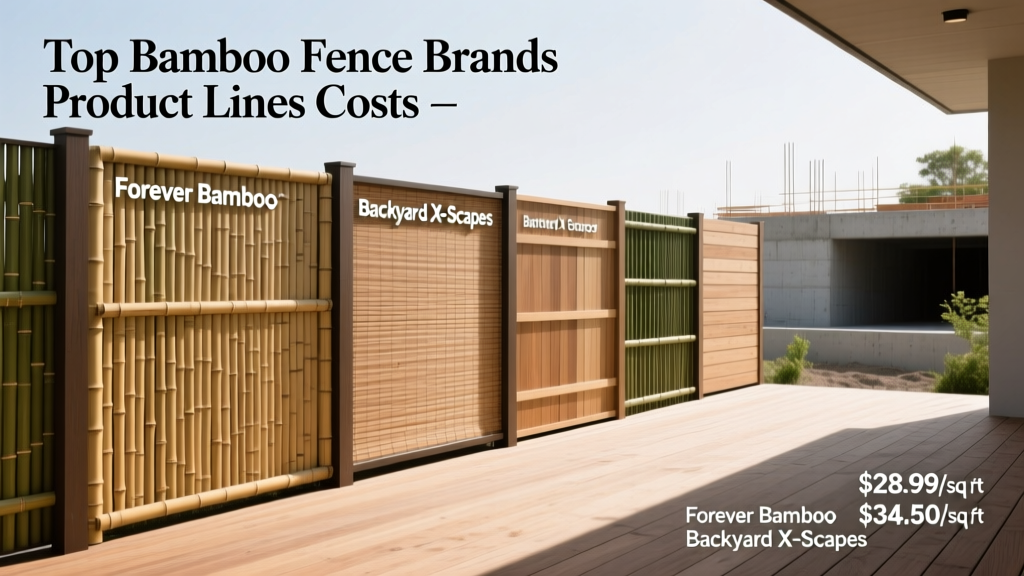
Compare top bamboo fence brands like Forever Bamboo and Backyard X-Scapes. Explore product lines, exact pricing, treatment specs, and installation gotchas.
The Material Science of Fencing Bamboo
Bamboo fencing bridges the gap between rapid-renewability and high-end privacy screening, but treating all bamboo products as identical is a critical error. The structural integrity and lifespan of a bamboo fence depend entirely on the species harvested and the post-harvest treatment protocols. According to the American Bamboo Society, the three primary species used in commercial fencing are Arundinaria amabilis (Tonkin cane), Phyllostachys edulis (Moso), and Guadua angustifolia. Tonkin cane offers the highest density and natural split-resistance, making it the premium choice for rolled fencing. Moso provides thicker culms ideal for architectural panels, while Guadua is reserved for heavy-duty structural poles.
Raw bamboo contains high levels of starch and sugars, making it a primary target for powderpost beetles (Lyctinae) and fungal decay. Premium brands mitigate this through kiln-drying and borate salt treatments. The USDA Forest Products Laboratory notes that while borate treatments effectively prevent insect infestation, they do not protect against moisture-induced rot if the bamboo is placed in direct ground contact. Understanding these material limitations is the first step in selecting the right brand and product line for your specific climate and project scope.
Brand Profile: Forever Bamboo (Rolled & Panel Lines)
Forever Bamboo dominates the residential rolled bamboo market, offering both natural and carbonized product lines. Their manufacturing process involves harvesting mature culms (typically 3 to 5 years old), splitting or keeping them whole, and treating them in a borax/boric acid solution. Their "Carbonized" line undergoes a steaming process at approximately 130°C. This caramelizes the internal sugars, darkening the bamboo to a rich amber hue and deterring insects, but it reduces the modulus of rupture (MOR) by roughly 10-15% compared to their natural line.
Forever Bamboo Product Matrix & 2026 Pricing
| Product Line | Species / Style | Dimensions | Avg. Cost (2026) | Best Application |
|---|---|---|---|---|
| Natural Rolled | Tonkin Cane (Whole) | 6ft H x 8ft L | $145 - $165 | Standard privacy, garden borders |
| Carbonized Rolled | Tonkin Cane (Steamed) | 6ft H x 8ft L | $160 - $185 | Aesthetic privacy, low-insect zones |
| Moso Fencing Panels | Moso (Half-Round) | 6ft H x 4ft W | $190 - $220 | Modern horizontal/vertical screens |
| Willow/Bamboo Blend | Mixed Weave | 4ft H x 8ft L | $95 - $115 | Decorative trellis, light screening |
Brand Profile: Backyard X-Scapes (Architectural Panels)
For commercial projects and high-end residential builds requiring rigid, modular systems, Backyard X-Scapes offers architectural bamboo panels. Unlike rolled fencing, which relies on wire or nylon binding, these panels feature individual bamboo slats resinated and mechanically fastened to a rigid backing frame. Their "Tarrazu" and "Moso" architectural lines use a specialized UV-inhibiting polyurethane sealant applied at the factory, extending the UV-degradation timeline by 3 to 5 years compared to unsealed natural bamboo.
When installing Backyard X-Scapes architectural panels, never use standard galvanized or zinc-plated screws. Bamboo contains high levels of silica and tannins. When exposed to moisture, zinc reacts with these compounds, causing permanent black weeping streaks down the face of the bamboo. Always specify 304-grade stainless steel fasteners for inland projects, and 316 marine-grade stainless steel for coastal installations within 5 miles of saltwater.
Brand Profile: Bamboo Garden (Live & Harvested Pole Systems)
Bamboo Garden approaches fencing from a dual perspective: harvested dead-pole fences and live privacy screens. For clients seeking a permanent, living fence, Bamboo Garden supplies clumping (non-invasive) species like Bambusa multiplex 'Alphonse Karr' and Bambusa oldhamii. These live screens require a 24-inch trench, heavy compost amendment, and a drip irrigation system, pushing initial installation costs to $85-$120 per linear foot. However, they offer unparalleled wind-breaking properties and carbon sequestration.
For their harvested pole lines, Bamboo Garden specializes in large-diameter Guadua and Madake poles (2 to 4 inches thick). These are sold individually rather than in rolls, requiring custom carpentry to build the horizontal rails and joinery. This approach yields a highly customized, artisanal fence but demands significant labor.
Comparative Failure Modes & Mitigation Protocols
According to material durability analyses featured on BuildingGreen, natural bio-based materials require specific design details to achieve their maximum lifespan. Bamboo has no natural rot-resistant heartwood like Western Red Cedar. Therefore, the failure mode is almost always moisture-related.
| Failure Mode | Primary Cause | Visual Symptom | Expert Mitigation Strategy |
|---|---|---|---|
| Basal Rot | Wicking moisture from soil/concrete | Soft, black, crumbling base | Elevate bamboo 2" above grade using aluminum post-base elevators; never set directly in concrete. |
| UV Checking | Sun exposure drying outer layer | Vertical micro-cracks (checking) | Apply penetrating tung oil or specialized bamboo UV-sealant every 24 months; avoid film-forming polyurethanes. |
| Powderpost Beetles | Residual starches in raw bamboo | Fine sawdust frass at base | Verify brand uses borate-dip treatment; reject unbranded, uncertified imported rolls. |
| Binding Failure | Nylon/wire degradation in rolls | Sagging, detached culms | Re-tie rolled bamboo to horizontal rails using 16-gauge galvanized wire or UV-rated zip ties every 12 inches. |
2026 Installation & Cost Realities
The national average cost to install a professional-grade natural bamboo fence in 2026 ranges from $22 to $38 per linear foot, fully installed. This assumes standard 6-foot height, pressure-treated pine or steel T-posts for the structural framework, and the attachment of premium rolled bamboo or modular panels.
Labor accounts for roughly 55% of this cost. Because bamboo rolls are heavy (a 6x8 roll of Tonkin cane weighs approximately 65 lbs) and require meticulous tensioning to prevent sagging, it is not a rapid-install material like pre-assembled vinyl. Contractors must build a robust internal frame first. If you are opting for architectural panels from Backyard X-Scapes, the material cost jumps to $45-$65 per linear foot, but labor decreases slightly due to the rigid, modular nature of the panels.
Decision Framework: Which Line Fits Your Project?
- Choose Forever Bamboo (Rolled) if you need a cost-effective, fast privacy screen for a residential backyard and plan to maintain it with annual sealant applications.
- Choose Backyard X-Scapes (Architectural) if you are building a modern commercial property, a rooftop garden, or a high-end residence where rigid modularity and factory-applied UV sealants are non-negotiable.
- Choose Bamboo Garden (Live Clumping) if your primary goal is ecological integration, wind-breaking, and you have the budget for landscape-grade trenching and irrigation installation.
"Bamboo is not a 'set it and forget it' material like aluminum or vinyl. It is an organic product that requires an architectural approach to water management. If you design the fence to shed water and breathe, a high-quality Tonkin cane fence will easily outlast a decade of harsh weather."
Expert Verdict
When specifying a bamboo fence, the brand you choose dictates the post-harvest treatment your material receives. Avoid unbranded, big-box store rolled bamboo, which frequently bypasses kiln-drying and borate treatments, leading to catastrophic insect and rot failures within 24 months. Invest in certified lines from Forever Bamboo for traditional applications, or Backyard X-Scapes for architectural rigidity. By pairing premium, properly treated bamboo with stainless steel hardware and elevated ground-clearance details, you secure a highly sustainable, visually striking boundary that performs reliably in modern exterior environments.