Top Horizontal Fence Brands and Product Lines for 2026
Deep-dive into the best horizontal fence brands for 2026, comparing FenceTrac, Fortress, and Trex systems with exact costs and structural specs.
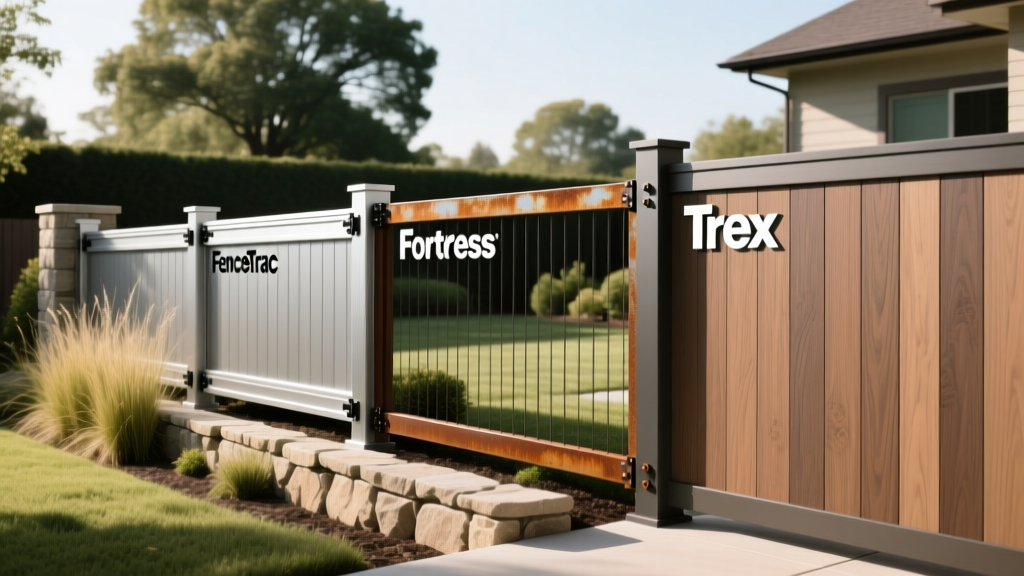
Architectural Shift: Why Horizontal Fencing Demands Specialized Systems
The surge in modern and mid-century architectural styles has made the horizontal fence a dominant design choice for high-end residential and commercial properties. However, rotating standard fence pickets 90 degrees introduces severe structural vulnerabilities. Horizontal boards act as sails under wind load, and gravity exacerbates sagging across long spans. In 2026, off-the-shelf vertical fence kits are entirely inadequate for horizontal applications. Builders and property owners must rely on engineered modular framing, specialized aluminum privacy panels, or custom composite workarounds to achieve clean sightlines without compromising structural integrity.
This deep-dive examines the leading brands and specific product lines dominating the horizontal fencing market, breaking down exact material specifications, thermal expansion tolerances, and installed costs.
Modular Steel Framing: FenceTrac Pro System Deep-Dive
FenceTrac revolutionized the fencing industry by separating the structural frame from the infill material. Their FenceTrac Pro line utilizes 14-gauge galvanized steel U-channel posts and rails, creating a rigid skeleton that can accept horizontal wood, metal, or composite infill.
Engineering and Installation Specs
For a horizontal fence application, contractors utilize the FenceTrac steel posts paired with custom aluminum C-channels (often sourced from architectural extruders) to hold the horizontal boards. This prevents the wood from bearing any structural load.
- Post Dimensions: 2.5" x 2.5" square steel tube, 14-gauge (0.075" wall thickness).
- Infill Capacity: Accepts standard 1x6 (actual 0.75" x 5.5") or 5/4x6 composite boards.
- Thermal Expansion Management: The U-channel design allows for a 1/4" gap at the ends of horizontal wood pickets, accommodating seasonal moisture expansion without buckling the frame.
- Span Limits: Maximum 8-foot center-to-center post spacing for horizontal 1x6 cedar or redwood to prevent mid-span deflection.
Aluminum Privacy Panels: Fortress Oahu vs. Alumi-Guard Horizon
For clients who want the horizontal aesthetic without the maintenance of wood or composite, extruded aluminum privacy panels are the premium standard. These systems feature interlocking horizontal rails that slide into routed aluminum posts, creating a seamless, fastener-free face.
Head-to-Head Comparison Matrix
| Feature | Fortress Oahu Horizontal | Alumi-Guard Horizon Series |
|---|---|---|
| Profile Design | Flat-face interlocking planks (5.5" visible) | Slight bevel-face interlocking (6" visible) |
| Alloy Grade | 6061-T6 Aluminum | 6063-T5 Aluminum |
| Powder Coat Standard | AAMA 2604 (Super Durable) | AAMA 2604 (Super Durable) |
| Wind Load Rating | 110 mph (Miami-Dade NOA approved) | 100 mph (Standard residential) |
| Material Cost (per lin. ft.) | $65 - $82 | $58 - $74 |
Both systems utilize powder coatings that meet AAMA 2604 specifications, which is critical for horizontal applications. Horizontal top rails receive direct, prolonged UV exposure and pooling rainwater; standard AAMA 2603 coatings will chalk and fade within five years under these conditions.
The Composite Workaround: Engineering a Horizontal Trex Fence
A common misconception in the landscaping industry is that Trex manufactures a dedicated horizontal fence kit. They do not. The Trex Fencing division produces the Seclusions system, which is strictly vertical. However, high-end contractors routinely build horizontal composite fences using Trex decking boards and architectural metal framing.
Step-by-Step Custom Build Protocol
- Select the Right Board: Use Trex Enhance Naturals 5.5" grooved decking boards. Do not use standard Trex fence pickets, as they lack the internal ribbing required to span horizontally without sagging.
- Install Steel Posts: Set 3"x3" steel posts (minimum 11-gauge) in concrete, spaced exactly 72 inches on-center.
- Attach Aluminum C-Channel: Screw 1"x1" aluminum C-channel vertically to the sides of the steel posts. This creates a track for the composite boards to slide into.
- Manage Thermal Expansion: Composite materials expand and contract significantly with temperature shifts. In a 72-inch span, Trex boards can fluctuate up to 1/8". Cut boards 1/4" short of the full channel depth to allow for summer expansion without bowing.
- Block the Gaps: Insert 1/2" aluminum square tubing between each horizontal board to maintain uniform spacing and prevent the boards from resting on one another, which traps moisture.
Wind Load Engineering and Code Compliance
A solid horizontal fence has a drag coefficient (Cd) of approximately 1.2 to 1.4, meaning it catches nearly all the wind that hits it. According to structural guidelines mapped by the ATC Wind Speed Tool based on ASCE 7-22 standards, a 6-foot solid fence in a 110 mph wind zone experiences roughly 22 pounds of lateral force per square foot. This translates to over 130 pounds of lateral shear force per linear foot of fence.
"Horizontal board orientations do not reduce wind load compared to vertical boards on a solid privacy fence. The structural failure point almost always occurs at the post-to-rail connection or the post base anchor, not the infill boards themselves."
To mitigate this, brands like Fortress and FenceTrac require posts to be embedded a minimum of 36 inches into undisturbed soil, encased in a 12-inch diameter concrete footing, or mounted using engineered base plates (like the Simpson Strong-Tie ABU44Z) bolted to a continuous concrete curb.
2026 Pricing and ROI Matrix
Understanding the true cost requires factoring in both materials and the specialized labor required for horizontal installations, which typically takes 30% longer than vertical fencing due to the precision required for leveling and track alignment.
| System / Brand | Material Cost (per ft) | Installed Cost (per ft) | Expected Lifespan |
|---|---|---|---|
| FenceTrac Pro (Cedar Infill) | $38 - $45 | $75 - $95 | 20-25 Years (Frame: Lifetime) |
| Fortress Oahu (Aluminum) | $65 - $82 | $110 - $140 | Lifetime |
| Custom Trex Enhance Build | $52 - $60 | $125 - $160 | 25-30 Years |
Decision Framework: Which System Fits Your Project?
Selecting the right horizontal fence system depends entirely on the project's environmental constraints and maintenance tolerance.
- Choose FenceTrac with Cedar if you are in a dry, moderate climate (like Colorado or Utah) and want the authentic warmth of real wood without the risk of the frame warping. Budget: Mid-tier.
- Choose Fortress Oahu Aluminum if the property is coastal, subject to salt spray, or located in a high-wind hurricane zone (Florida, Gulf Coast). The AAMA 2604 coating and Miami-Dade NOA certification make it the only viable zero-maintenance option for severe environments. Budget: Premium.
- Choose the Custom Trex Workaround if the client demands a composite material to match an existing Trex deck, and the local HOA prohibits metal fencing. Be prepared for the highest labor costs due to the custom channel fabrication required. Budget: Ultra-Premium.
By matching the specific engineering strengths of these 2026 product lines to the site's environmental loads, contractors can deliver horizontal fences that maintain their architectural precision for decades without sagging, buckling, or fading.