DIY White Vinegar Carpet Shampooer Mix & Safe Usage Guide
Learn the exact DIY white vinegar carpet shampooer recipe, safe dilution ratios, and machine-flushing steps to protect your cleaner.
The Chemistry of Vinegar in Carpet Extraction
Using a white vinegar carpet shampooer solution is one of the most effective methods for neutralizing alkaline residues left behind by commercial carpet cleaners and pet accidents. Standard household white vinegar contains 5% acetic acid, yielding a pH of approximately 2.4. When diluted in a carpet extractor's hot water tank, the pH rises to a safe 4.5–5.5 range, which is ideal for synthetic fibers.
Most commercial shampoos and detergents are highly alkaline (pH 8–10). If not thoroughly rinsed, this alkaline residue acts as a magnet for airborne soil, leading to rapid resoiling within weeks of a professional cleaning. Acetic acid chemically neutralizes these alkaline salts, restoring the carpet's pH balance and leaving fibers less prone to attracting dirt. According to the Carpet and Rug Institute (CRI), maintaining a near-neutral pH in carpet fibers is critical for extending the lifespan of the textile and preserving stain-resistant treatments.
Manufacturers like Bissell and Hoover explicitly state in their user manuals that using unauthorized chemicals, including undiluted acids, will void the machine's warranty. Acetic acid can degrade rubber O-rings, impeller pumps, and internal hoses over time. The machine preservation protocol detailed below is mandatory if you choose to use vinegar.
The Exact DIY White Vinegar Carpet Shampooer Recipe
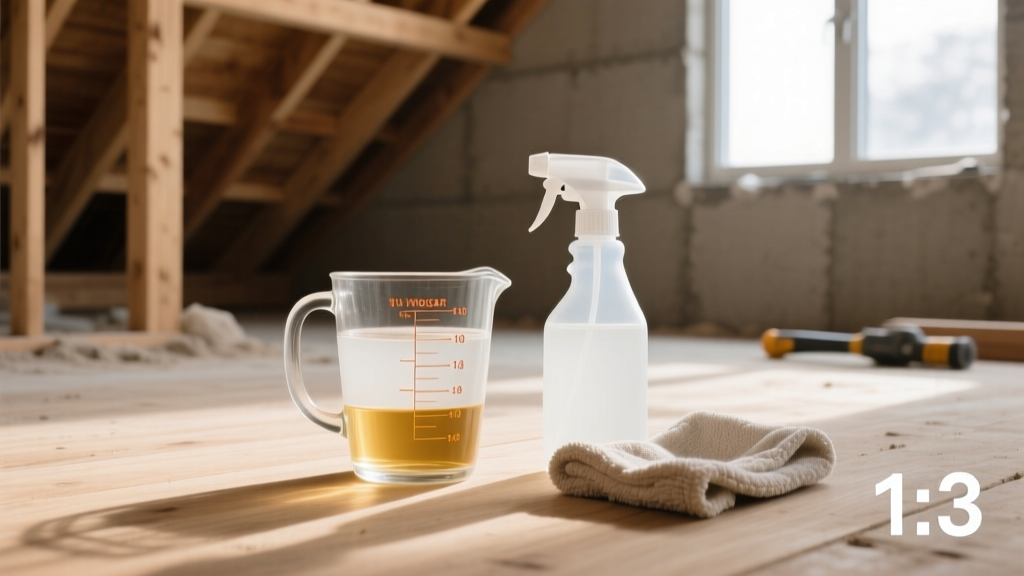
Do not pour straight vinegar into the clean water tank. The concentration must be carefully managed based on the soil level and the specific extraction machine you are using. Below is the precise formulation for standard consumer extractors (e.g., Bissell ProHeat 2X Revolution, Hoover PowerDash Pet).
| Soil Level | Water Volume | White Vinegar (5%) | Optional Surfactant |
|---|---|---|---|
| Light (Maintenance) | 1 Gallon (128 oz) | 1/2 Cup (4 oz) | None |
| Medium (Standard) | 1 Gallon (128 oz) | 1 Cup (8 oz) | 1 tsp Clear Dish Soap |
| Heavy (Pet/Alkaline) | 1 Gallon (128 oz) | 1.5 Cups (12 oz) | 2 tsp Clear Dish Soap |
Water Temperature: Use hot tap water between 120°F and 140°F. Boiling water will warp the plastic clean-water tank and melt internal adhesive seals. If your machine features an internal heat chamber (like the Bissell HeatWave technology), start with warm tap water and let the machine heat it to prevent plastic warping.
Surfactant Selection: If adding dish soap, it must be a clear, non-bleach, non-lotion formula (e.g., Dawn Ultra Original). Lotions leave oily residues, and bleach will destroy carpet dyes.
Machine Preservation: The Post-Clean Flush Protocol
The most common failure point when using a white vinegar carpet shampooer mix is the corrosion of the internal pump diaphragm. To prevent this and maintain your machine's operational integrity, you must execute a clear-water flush immediately after the cleaning session.
- Empty the Tanks: Dump any remaining vinegar solution from the clean water tank and empty the dirty water recovery tank.
- Rinse the Recovery Tank: Wash the dirty tank with plain water to remove acidic sludge and debris from the filter screen.
- Fill with Plain Water: Fill the clean water tank with 32 ounces of plain, warm tap water.
- Extract and Flush: Run the machine over a dry towel or a utility sink, pulling the trigger to spray the plain water and simultaneously engaging the suction. This forces plain water through the spray nozzles, internal hoses, and vacuum pathway, neutralizing and flushing out any lingering acetic acid.
- Air Dry: Leave both tanks unseated and the machine upright in a well-ventilated area for 24 hours to prevent internal mildew.
Fiber Compatibility Matrix
Acetic acid is highly effective on synthetic fibers but can cause irreversible chemical damage to natural protein fibers. Always check your carpet's manufacturer tag before deploying a vinegar-based extraction.
- Nylon (Type 6 and 6,6): SAFE. Nylon is highly resilient to mild acids. Vinegar actually helps restore the hydrogen bonds in nylon fibers that are flattened by heavy foot traffic.
- Polyester (PET): SAFE. Polyester is inherently stain-resistant and unaffected by 5% acetic acid dilutions.
- Olefin (Polypropylene): SAFE. Often used in basements and outdoor rugs, olefin is practically impervious to acidic solutions.
- Triexta (PTT): SAFE. Used in premium lines like Mohawk SmartStrand, triexta handles acidic pH levels without degrading.
- Wool: DANGER. Wool is a protein fiber. Acidic solutions below a pH of 4.5 cause hydrolysis of the peptide bonds in the keratin structure, leading to permanent fiber weakening, yellowing, and felting. Never use vinegar on wool.
- Silk: DANGER. Similar to wool, silk will degrade and lose its luster when exposed to acidic extractions.
Step-by-Step Extraction Playbook
For optimal results when tackling alkaline-based stains (pet urine, beer, coffee, or previous soap residue), follow this specific operational sequence.
Phase 1: Dry Soil Removal and Pretreatment
Vinegar is a rinse and neutralizer, not a primary soil suspender. You must remove dry particulate matter first. Vacuum the carpet thoroughly using a beater-bar vacuum in at least two directions (north-south, then east-west). For heavy traffic lanes, mist a light enzymatic pretreatment and allow it to dwell for 10 minutes. Do not use alkaline heavy-duty degreasers as pretreatments if you plan to use vinegar, as they will neutralize each other in the carpet pad.
Phase 2: The Extraction Pass
Fill the machine using the Medium Soil recipe. Make slow, overlapping forward passes while holding the trigger to inject the vinegar solution. On the backward pull, release the trigger and move slowly to maximize suction recovery. The goal is to extract as much moisture as possible. A properly functioning extractor should leave the carpet only slightly damp, not saturated.
Phase 3: Drying and Odor Neutralization
As the water evaporates, the acetic acid volatilizes, which can leave a temporary 'salad dressing' scent in the room. To accelerate drying and eliminate the odor:
- Set HVAC fans to 'ON' and lower the thermostat to 68°F to reduce ambient humidity.
- Place oscillating floor fans directly over the damp carpet, angled downward.
- Once the carpet is 100% dry (usually 4–6 hours), lightly broadcast baking soda over the fibers, let it sit for 30 minutes to absorb any residual volatile organic compounds (VOCs), and vacuum it up.
Troubleshooting Common Vinegar Extraction Issues
Why does my carpet feel sticky after cleaning?
Sticky carpet indicates that you either added too much dish soap to the vinegar mix, or you failed to extract enough moisture. The surfactant is trapping dirt. Run a second pass using only plain hot water in the clean tank to rinse the excess soap out of the fibers.
Can I use 'Cleaning Vinegar' (6% or 30% acidity)?
Standard 6% cleaning vinegar is acceptable if you reduce the volume by 20% in the recipe table above. However, never use 30% industrial horticultural vinegar in a consumer carpet shampooer. The extreme acidity will immediately cloud the plastic tanks, melt internal rubber gaskets, and severely burn synthetic carpet fibers. The EPA Safer Choice program recommends sticking to standard 5% culinary vinegar for indoor residential cleaning applications to maintain safe indoor air quality.
Will vinegar remove red wine or ketchup stains?
No. Vinegar is highly effective on alkaline stains, but red wine, ketchup, and berry juice are acidic stains. Applying an acid (vinegar) to an acid stain will set the stain permanently. For acidic stains, you must use an alkaline cleaner (like a dedicated oxygen-based carpet shampoo) before attempting a vinegar neutralization rinse.
A white vinegar carpet shampooer mix is an elite, low-cost tool for neutralizing alkaline residues and restoring synthetic carpet fibers. However, its success relies entirely on strict dilution ratios, proper fiber identification, and rigorous post-cleaning machine flushing. When executed correctly, it bridges the gap between expensive professional hot-water extraction and ineffective consumer foam cleaners.