Durable Kitchen Backsplash Ideas: Material Lifespan Guide
Analyze the durability, lifespan, and failure modes of top kitchen backsplash ideas. Compare porcelain, glass, quartz, and steel for 2026.
The Reality of Kitchen Backsplash Wear and Tear
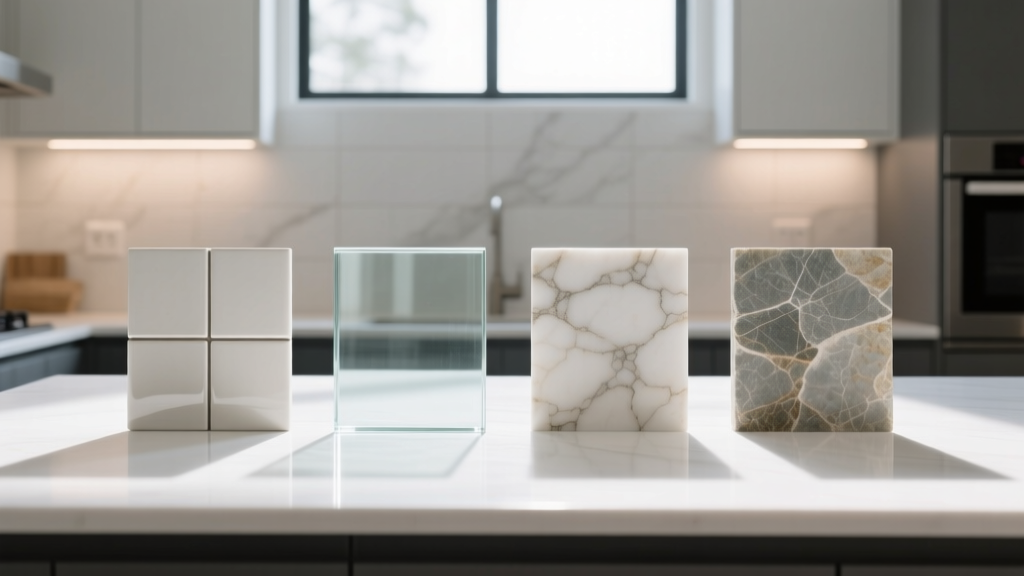
When evaluating kitchen backsplash ideas, aesthetics often overshadow performance. However, the backsplash is one of the most heavily abused vertical surfaces in a home. It endures thermal shock from gas burners, acidic splatters from tomato sauces, abrasive scrubbing, and constant grease aerosolization. A material that looks pristine on day one can degrade rapidly if its physical properties do not match the cooking environment. According to the National Kitchen & Bath Association (NKBA), backsplash replacement is rarely driven by structural failure; it is almost always triggered by irreversible staining, grout degradation, or surface scratching. This guide strips away design trends to analyze the hard data on material durability, Mohs hardness, thermal thresholds, and 10-year maintenance costs.
Material Lifespan Matrix: Top Durable Options
The following matrix compares the four most resilient materials used in modern kitchens. Data reflects 2026 installed costs and standard residential wear parameters.
| Material | Mohs Hardness | Expected Lifespan | Max Heat Tolerance | 2026 Installed Cost (per sq ft) |
|---|---|---|---|---|
| Porcelain Tile | 7.0 - 8.0 | 50+ Years | 1,000°F+ | $18 - $35 |
| Tempered Glass | 5.5 - 6.5 | 30 - 40 Years | 400°F (Thermal Shock) | $25 - $45 |
| Quartz Slab | 7.0 | 25 - 35 Years | 300°F (Resin Limit) | $40 - $75 |
| Stainless Steel | 5.5 | 40+ Years | 1,500°F+ | $30 - $55 |
1. Porcelain and Ceramic Tile: The Durability Standard
Porcelain remains the most bulletproof option among kitchen backsplash ideas, provided it is specified correctly. Unlike standard ceramic, porcelain is fired at temperatures exceeding 2,200°F, resulting in a water absorption rate of less than 0.5% as defined by the Tile Council of North America (TCNA). This near-zero porosity makes it impervious to grease penetration and acidic etching.
Critical Specification Details:
- PEI Rating: For a kitchen backsplash, select a Porcelain Enamel Institute (PEI) rating of Class 3 or higher. While Class 1 is technically sufficient for vertical walls, Class 3 ensures the glaze can withstand aggressive abrasive cleaning with Scotch-Brite pads without wearing through to the bisque.
- Edge Profile: Mandate 'rectified' edges. Rectification mechanically grinds the tile edges to exact 90-degree angles, allowing for tight 1/16-inch grout joints. This minimizes the exposed grout surface area, which is the primary failure point in any tiled installation.
- Grout Selection: Never use standard cementitious grout behind a stove. Specify a 100% epoxy grout (such as Laticrete SpectraLOCK or Mapei Kerapoxy). Epoxy grout costs roughly $12 to $15 more per square foot but eliminates the need for annual sealing and resists tomato-based staining indefinitely.
2. Tempered Glass Panels: Seamless but Thermally Sensitive
Back-painted glass panels offer a completely seamless surface, eliminating grout lines entirely. However, durability hinges entirely on the tempering process and the backing paint formulation.
Never install non-tempered (annealed) glass behind a high-BTU gas range. The rapid temperature differential between the burner heat and the cooler ambient kitchen air can cause annealed glass to shatter explosively. Always specify 3/8-inch or 1/2-inch thermally tempered glass, which is engineered to withstand temperature swings of up to 400°F.
Furthermore, verify that the manufacturer uses a heat-cured, ceramic-based backing paint rather than standard acrylics. Standard acrylic paints will blister and peel when exposed to sustained radiant heat above 180°F, leading to a mottled, degraded appearance within the first year of heavy cooking.
3. Quartz Slab Backsplashes: The Resin Vulnerability
Using a continuous slab of quartz (matching the countertops) is a highly sought-after design trend. While quartz is incredibly hard and non-porous, its durability is compromised by its binder. Engineered quartz consists of roughly 90% ground quartz aggregate and 10% polymer resins.
These polymer resins begin to degrade, discolor, and scorch at sustained temperatures exceeding 300°F. If your kitchen features a commercial-style gas range with open flames that lick the back wall, a quartz backsplash will eventually yellow or develop permanent scorch marks in the direct splash zone. For induction or electric cooktops, quartz is highly durable and requires zero sealing, making it a low-maintenance workhorse.
4. Stainless Steel Sheets: Industrial Resilience
Stainless steel is virtually indestructible regarding heat and moisture, but it is highly susceptible to cosmetic degradation if the wrong grade or finish is selected.
- Gauge Thickness: Avoid 22-gauge or 24-gauge sheets, which will dent if a cast-iron skillet is swung too close to the wall. Specify 16-gauge (0.0625 inches thick) or 18-gauge 304-grade stainless steel for structural rigidity.
- Finish Type: Do not use a mirror or matte finish. Mirror finishes show every fingerprint and water spot, while matte finishes trap grease in the micro-texture. Specify a '#4 Brushed Finish' (directional satin). The linear brushing pattern naturally camouflages micro-scratches from scrubbing and wipes clean effortlessly with a microfiber cloth and degreaser.
Critical Failure Points and Edge Cases
The area extending 18 inches horizontally from the center of your cooktop and 24 inches vertically is the 'Splash Zone.' This micro-environment experiences 80% of all backsplash abuse. If you are using a heat-sensitive material like quartz, or if you are using natural stone (which requires annual sealing and is prone to acid etching), you must install a secondary heat shield or transition to porcelain/stainless steel strictly within this 18-inch radius.
Another common failure point is the intersection where the backsplash meets the countertop. This joint must never be grouted with rigid epoxy or cement. Countertops and walls expand and contract at different rates due to thermal variance. This joint must be sealed with a 100% silicone caulk (color-matched to your grout) to prevent cracking and water infiltration into the cabinetry below.
Maintenance Cycles and 10-Year Cost of Ownership
Initial installation cost is only half the equation. When calculating the true cost of kitchen backsplash ideas, factor in the maintenance cycle over a decade.
| Material | 10-Year Maintenance Requirements | Estimated 10-Year Upkeep Cost |
|---|---|---|
| Porcelain (with Epoxy Grout) | Standard degreasing. No sealing required. | $0 - $50 (Cleaning supplies) |
| Tempered Glass | Standard glass cleaner. No sealing required. | $0 - $30 (Cleaning supplies) |
| Quartz Slab | Mild soap and water. Avoid abrasive pads. | $0 - $40 (Cleaning supplies) |
| Stainless Steel (#4 Finish) | Stainless steel cleaner/oil to maintain luster. | $50 - $80 (Specialty cleaners) |
| Natural Stone (Marble/Travertine) | Annual penetrating sealer, specialized pH-neutral cleaners. | $150 - $250 (Sealants & cleaners) |
Expert Verdict: Matching Material to Cooking Frequency
Selecting the most durable backsplash requires an honest assessment of your culinary habits. Use this decision framework to finalize your material choice:
- The Heavy Sear & Wok Chef: If you frequently use high-BTU gas burners, sear meats at high heat, or utilize woks that generate significant splatter and radiant heat, 16-gauge Stainless Steel or Porcelain Tile with epoxy grout are your only viable options. Quartz and glass will fail cosmetically or structurally in this environment.
- The Everyday Simmer & Bake Cook: If your cooking relies heavily on induction cooktops, slow cookers, and ovens, with minimal aggressive stovetop splatter, Quartz Slabs or Tempered Glass offer superior seamless aesthetics with zero risk of thermal shock or resin scorching.
- The Low-Maintenance Purist: If you refuse to scrub grout lines and want a surface that can be wiped down with a single swipe of a sponge, Back-painted Tempered Glass is the undisputed champion of low-friction maintenance, provided it is properly tempered.
By prioritizing material science over fleeting visual trends, you ensure your kitchen backsplash remains structurally intact and visually flawless for decades, ultimately protecting your remodeling investment.