Floral Carpet Rug Guide: Matching Patterns to Specific Room Scenarios
Discover how to match a floral carpet rug to specific room scenarios. Learn pile height, fiber, and pattern scale tips for high-traffic and formal spaces.
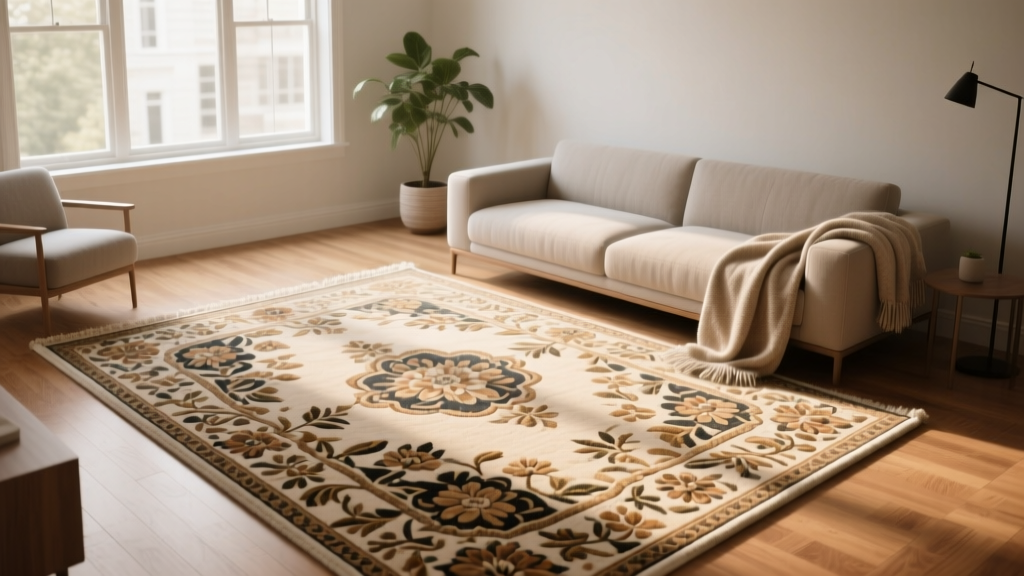
The Technical Reality of Botanical Flooring
The resurgence of maximalist and biophilic interior design has firmly reestablished the floral carpet rug as a staple in modern residential architecture. However, selecting a botanical motif is not merely an aesthetic exercise; it is a structural and material decision. A rug’s pile height, fiber composition, and pattern repeat scale must align precisely with the mechanical and environmental demands of its designated room. Misaligning these variables leads to rapid pile crushing, dye migration, and visual disproportion. This guide provides a scenario-based framework for specifying the exact floral rug parameters required for distinct architectural environments.
Pattern Scale and Spatial Proportion Matrix
The most frequent error in floral rug specification is ignoring the relationship between the room’s square footage and the pattern’s repeat scale. A macro-floral pattern in a confined space creates visual claustrophobia, while a micro-floral pattern in a vast great room dissolves into visual noise. Use the matrix below to match motif scale to spatial volume.
| Room Scenario | Square Footage | Ideal Floral Scale | Motif Repeat Size | Visual Effect |
|---|---|---|---|---|
| Intimate Study / Reading Nook | Under 100 sq ft | Micro-Floral (Persian Heriz, William Morris) | 6" - 12" repeats | Creates dense, textured grounding without overwhelming narrow walls. |
| Standard Bedroom / Dining | 120 - 200 sq ft | Meso-Floral (Traditional Savonnerie) | 18" - 36" repeats | Balances furniture footprint; allows full pattern cycles to be visible. |
| Great Room / Open Plan Living | 300+ sq ft | Macro-Floral (Oversized Oushak, Abstract Botanical) | 48" - 72" repeats | Acts as a primary architectural anchor; prevents pattern from looking like static. |
Material and Pile Specification by Traffic Scenario
Fiber selection dictates the lifecycle of a floral rug. Natural fibers react differently to abrasion, moisture, and UV exposure. Below are the exact specifications for three distinct room scenarios.
Scenario A: The Formal Dining Room (High Stain Risk, Low Abrasion)
Dining rooms subject rugs to concentrated compressive loads (chair legs) and high risks of tannin-based spills (red wine, coffee).
- Required Pile Height: Maximum 0.25 inches (1/4"). Anything higher will cause chair casters to catch, leading to tripping hazards and pile tearing.
- Optimal Fiber: 100% New Zealand wool or solution-dyed nylon. Wool contains natural lanolin, which temporarily repels liquid spills, giving you a 15-minute window to blot before the dye penetrates the cortex.
- Fibers to Avoid: Viscose, Tencel, or bamboo silk. These cellulosic fibers are highly hydrophilic; a single water spot will permanently distort the pile and leave a dark halo.
- Density Metric: Look for a minimum of 100,000 knots per square meter to ensure the floral pattern remains crisp under table compression.
Scenario B: The High-Traffic Family Living Room (High Abrasion, Moderate Stain Risk)
Living rooms require resilience against foot traffic, pet claws, and prolonged UV exposure from large windows.
- Required Pile Height: 0.375 to 0.5 inches. This provides acoustic dampening and underfoot comfort without trapping excessive debris.
- Optimal Fiber: A wool-nylon blend (80/20 split). The nylon adds structural memory, allowing the pile to spring back after heavy foot traffic, while the wool maintains the rich, matte texture necessary for traditional floral dyes.
- UV Consideration: If the rug sits in direct sunlight, specify solution-dyed synthetic fibers or ensure the wool is treated with a UV-inhibitor finish. Natural madder and indigo dyes used in high-end floral rugs will fade up to 20% within 18 months under direct southern exposure.
Scenario C: The Primary Bedroom Suite (Low Abrasion, High Comfort Demand)
Bedrooms prioritize tactile comfort and acoustic absorption over heavy-duty stain resistance.
- Required Pile Height: 0.5 to 0.75 inches. A deeper pile sinks the feet and dampens sound transmission to floors below.
- Optimal Fiber: Wool-silk blends or high-grade Tencel. The bedroom is the ideal environment for cellulosic fibers, as the lack of food/drink traffic eliminates water-spot risks, allowing the floral motifs to catch the light with a luxurious, reflective sheen.
Most traditional floral rugs utilize acid-dye mordants. If you must clean a spill, never use alkaline carpet shampoos (pH above 8.0). Alkaline solutions will strip the mordant, causing the floral colors to bleed and permanently blur the pattern lines. Always use a neutral pH (7.0) cleaner or a 3:1 water-to-white-vinegar solution for tannin spills. For comprehensive fiber care standards, refer to the Carpet and Rug Institute (CRI) guidelines on spot removal.
The Hidden Variable: Rug Pads and Floor Finish Protection
The interaction between the rug backing, the rug pad, and the subfloor is a frequent point of failure. A beautiful floral carpet rug can permanently ruin a hardwood floor if the wrong pad is used.
According to the National Wood Flooring Association (NWFA), cheap PVC (polyvinyl chloride) rug pads contain plasticizers that chemically react with water-based polyurethane floor finishes. Over 12 to 18 months, this reaction causes the pad to melt into the finish, requiring a complete floor sanding and refinishing to remove.
Proper Pad Specification
- Material: Use only a 100% felt and natural rubber composite pad. The felt side faces up (gripping the rug), and the natural rubber side faces down (gripping the floor without chemical off-gassing).
- Thickness: For low-pile dining rugs (under 0.25"), use a 1/8-inch thick pad. For living room and bedroom rugs, use a 1/4-inch thick pad to provide adequate cushioning without creating a trip hazard at the rug edges.
- Sizing: The pad must be cut exactly 1.5 inches smaller than the rug perimeter on all sides. This prevents the pad from peeking out and ensures the rug's bound edges lay completely flat against the floor, preventing curling.
Color Anchoring and the 60-30-10 Framework
Integrating a multi-colored floral rug into a room requires strict color discipline to prevent visual chaos. Apply the 60-30-10 interior design rule, using the rug as the bridge.
- 60% (Dominant Room Color): The walls and large upholstery pieces should reflect the background color of the floral rug, not the motif colors.
- 30% (Secondary Color): Window treatments and secondary accent chairs should pull from the mid-tone botanical leaves or secondary vines in the pattern.
- 10% (Accent Color): Throw pillows, artwork, and small decor items should isolate the highest contrast color in the floral motif (e.g., the bright crimson center of a peony or the gold stamen of a lily).
"A floral rug should not match your sofa exactly. It should act as a complex neutral that contains your room's entire color palette within its motifs, allowing you to change accent colors simply by swapping textiles." — Principles of Textile Specification in Residential Design
Common Placement and Maintenance Failures
Avoid these specific edge-case failures when installing and maintaining botanical rugs:
- The 'Floating' Rug Error: In a living room scenario, the front legs of all seating furniture must rest on the rug. If the floral rug is too small and floats in the center of the room with no furniture anchoring it, the edges will curl and the pattern will look like an afterthought. For standard seating groups, a minimum 8x10 foot rug is mandatory.
- Vacuum Beater-Bar Damage: Never use a rotating beater-bar vacuum on high-pile floral rugs or rugs with silk/viscose blends. The mechanical agitation will fray the yarn tips, blurring the crisp lines of the floral pattern. Use a suction-only canister vacuum or turn off the beater-bar on upright models.
- Moisture Trapping in Entryways: Do not place natural fiber floral rugs in entryways where wet shoes are common. Trapped moisture between the rug and the floor pad will cause mildew and rot the cotton weft threads that hold the rug's structural grid together. Use indoor/outdoor PET polyester florals for these transition zones.
By treating the floral carpet rug as a highly engineered architectural material rather than a simple decorative accent, you ensure the installation performs flawlessly under the specific mechanical and environmental loads of its designated space.