Floor Scrubbers: How Scrubber Pads Impact Commercial Flooring Lifespan
Analyze how commercial floor scrubbers and scrubber pads impact flooring lifespan. Learn pad selection, RPM effects, and material-specific maintenance.
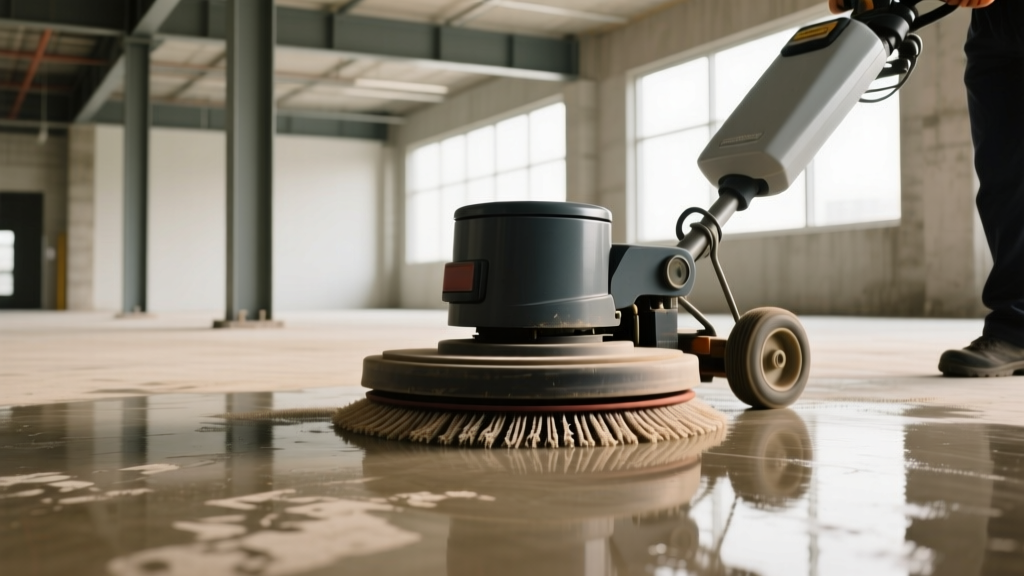
The Physics of Floor Scrubber Wear and Tear
When facility managers evaluate commercial floor scrubbers, the machine's mechanical output is only half the equation dictating flooring longevity. The true variable in flooring degradation is the intersection of scrubber downforce, rotational speed (RPM), and the abrasiveness of the scrubber pad attached to the deck. A standard walk-behind automatic scrubber, such as the Tennant T5 or Nilfisk SC500, typically operates between 130 and 200 RPM on a 20-inch disc deck. This generates roughly 0.5 to 1.2 pounds of downforce per square inch (PSI) across the pad surface.
While this PSI is sufficient to emulsify soil, pairing a high-RPM machine with an overly aggressive pad transforms a routine maintenance task into a destructive honing process. According to facility maintenance data published by CleanLink, improper pad selection accelerates the wear cycle of commercial floor finishes by up to 60%, forcing premature strip-and-wax cycles or concrete re-polishing that can cost between $2.50 and $4.50 per square foot.
Scrubber Pad Matrix: Aggressiveness vs. Flooring Type
The industry relies on a standardized color-coded system for synthetic floor pads (predominantly manufactured by 3M and Americraft). Understanding the grit-equivalent of these pads is critical for preserving the microscopic topography of your flooring.
| Pad Color | Grit Equivalent | Primary Function | Compatible Flooring | Lifespan Risk if Misused |
|---|---|---|---|---|
| Black | 100 - 150 | Heavy stripping | VCT, heavily soiled quarry tile | Destroys concrete polish; gouges epoxy |
| Green | 400 - 600 | Daily scrubbing | VCT, sealed concrete, ceramic | Dulls high-gloss terrazzo; scuffs urethane |
| Blue | 800 - 1000 | Light cleaning / spray buffing | Polished concrete, terrazzo, epoxy | Minimal risk; may leave micro-swirls on soft VCT |
| Red | 1500 - 2000 | Buffing / dry burnishing | Finished VCT, linoleum | Ineffective on unsealed porous stone |
| White | 3000+ | High-speed polishing | Polished concrete, marble, terrazzo | Zero abrasive risk; requires clean floor |
Chemical Interactions: When the Solution Becomes the Scrubber
The mechanical action of floor scrubbers is amplified—or neutralized—by the cleaning solution dispensed from the machine's tanks. The pH level of the chemical directly alters the surface tension and hardness of the flooring material during the scrubbing process.
The Alkalinity Trap
Many facility crews default to high-alkaline heavy-duty cleaners (pH 10 to 12) to cut through grease in warehouse environments. However, when an auto scrubber applies a pH 11 solution to a polished concrete floor, the alkalinity chemically softens the calcium silicate hydrate (C-S-H) bonds near the surface. The scrubber pad then physically removes this softened layer. For daily maintenance, the EPA's Safer Choice program and flooring manufacturers mandate neutral pH cleaners (pH 7.0 to 8.5) to prevent this chemical-mechanical degradation.
Never allow the scrubber's solution system to flood the floor ahead of the squeegee blade. If a highly alkaline solution is allowed to dwell on VCT or linoleum for more than 45 seconds before being vacuumed into the recovery tank, it will permanently etch the acrylic finish, requiring a complete strip and recoat.
Lifespan Degradation Case Studies by Material
Polished Concrete (Grit 800-3000)
Polished concrete relies on a dense, burnished surface layer created by metallic and resin-bonded diamonds during installation. Using a green or black scrubber pad on a 1500-grit polish will instantly introduce micro-scratches, dropping the Gloss Reading (GR) from a reflective 70+ down to a hazy 30. To maximize the 10-to-15-year lifespan of polished concrete, facility teams must use cylindrical floor scrubbers equipped with white or blue pads, paired with a neutral cleaner fortified with a silicate densifier. This not only cleans but continuously replenishes the surface hardness.
Vinyl Composition Tile (VCT)
VCT is highly porous and requires a thick acrylic finish build (typically 4 to 6 coats) to protect the tile. The lifespan of a VCT floor is entirely dependent on the integrity of this wear layer. The most common failure mode occurs when crews use cylindrical scrubbers—which apply up to 300% more downforce than disc scrubbers—fitted with green pads. The intense localized pressure cuts through the acrylic and bites into the vinyl itself. For VCT, standard disc scrubbers operating at 175 RPM with blue pads are the optimal configuration for extending the time between costly strip-and-wax cycles.
Terrazzo and Epoxy Overlays
Terrazzo is exceptionally durable, but the grout lines and resin binders are vulnerable to aggressive scrubbing. Epoxy overlays, commonly used in commercial kitchens and laboratories, have a high chemical resistance but a relatively low abrasion resistance. According to guidelines maintained by the International Sanitary Supply Association (ISSA), terrazzo and epoxy should never be subjected to black or green pads. Doing so will cause 'grout washout' in terrazzo and 'chalking' (a dull, white, oxidized appearance) in epoxy floors. Blue pads combined with an automated auto-scrubber's squeegee vacuum system provide the necessary soil removal without compromising the binder integrity.
The Preventative Maintenance Protocol for Facility Managers
To ensure your floor scrubbers extend rather than reduce flooring lifespan, implement the following operational framework:
- Audit the Pad Inventory: Remove all black and green pads from daily cleaning carts. Restrict these pads to the maintenance closet for scheduled, semi-annual deep stripping only.
- Calibrate Solution Flow: Adjust the scrubber's solution valve to output no more than 15 to 20 gallons per hour for a 20-inch deck. The floor should be damp, not flooded, immediately behind the pad.
- Implement a Pad Rinse Station: A scrubber pad loaded with embedded silica and grit acts like sandpaper. Install a high-pressure pad rinse station in the janitorial closet and mandate that pads are flushed after every 10,000 square feet of coverage.
- Monitor Squeegee Wear: A worn squeegee blade fails to pick up the suspended soil, allowing abrasive grit to dry back onto the floor. Inspect the rubber blade weekly; if it shows uneven wear or tearing, replace it immediately to prevent dry-soil abrasion from foot traffic.
By aligning the mechanical variables of the scrubber with the precise material tolerances of the floor, facilities can routinely push flooring replacements out by 5 to 8 years, turning routine cleaning from a destructive liability into a preservative asset.