Kitchen Countertop Materials: The Ultimate Cleaning Playbook
Master the maintenance of all kitchen countertop materials. Expert cleaning playbooks, stain removal matrices, and sealing guides for stone, quartz, and wood.
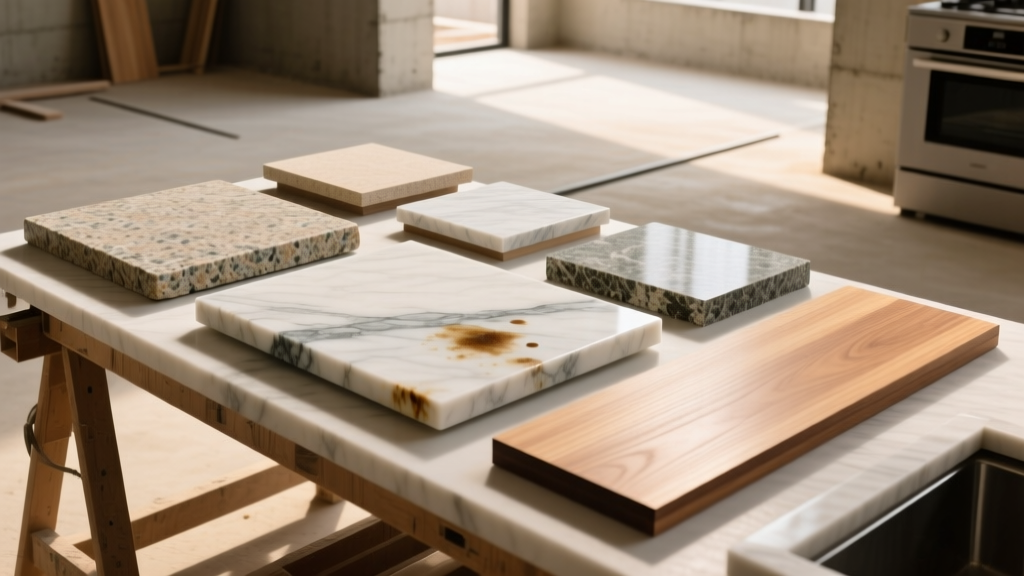
The Chemistry of Countertop Damage: Etching vs. Staining
Before applying any cleaner, you must understand the fundamental difference between staining and etching, as this dictates your entire maintenance strategy for various kitchen countertop materials. Staining occurs when a pigmented liquid (wine, coffee, tomato sauce) penetrates the microscopic pores of a material. Etching, however, is a chemical reaction where acidic substances (citrus juice, vinegar, harsh bathroom cleaners) dissolve the surface layer of calcium-based stones like marble or limestone, leaving a dull, rough spot that no amount of scrubbing will remove.
The Master Maintenance Matrix
Use this quick-reference matrix to identify the baseline care requirements for your specific surfaces. Always verify manufacturer guidelines, as proprietary manufacturing processes can alter material tolerances.
| Material | Porosity | Daily Cleaner | Strictly Avoid |
|---|---|---|---|
| Engineered Quartz | Non-porous | Mild dish soap + warm water | Melamine sponges, high heat, pH > 10 |
| Granite / Quartzite | Low (if sealed) | pH-neutral stone cleaner | Acidic cleaners, abrasive powders |
| Marble (Polished) | Medium | pH-neutral stone cleaner | ALL acids, vinegar, wine sitting |
| Solid Surface (Corian) | Non-porous | All-purpose spray or soapy water | Heat > 250°F, strong solvents |
| Butcher Block (Wood) | Highly porous | Damp cloth + mild soap | Standing water, raw meat directly |
Engineered Quartz: The Resin Threshold
Engineered quartz (brands like Caesarstone, Cambria, Silestone) is composed of roughly 90% crushed quartz aggregate bound by polymer resins. Because it lacks microscopic pores, it will not stain easily and never requires sealing. However, the resin binder introduces specific vulnerabilities that many homeowners overlook.
Heat and Chemical Degradation
The polymer resins used in quartz manufacturing begin to soften and discolor at temperatures exceeding 300°F (150°C). Placing a hot cast-iron skillet directly on the surface will cause permanent thermal shock, resulting in a cloudy, yellowed burn mark that cannot be buffed out. Furthermore, while quartz is highly stain-resistant, using highly alkaline cleaners (pH above 10) or oven cleaners will degrade the resin over time, leaving a permanent hazy film. For stubborn dried-on food, use a plastic putty knife to gently scrape the debris, then apply a specialized quartz degreaser like Weiman Quartz Clean & Shine.
Natural Stone: Sealing and Poultice Protocols
Natural stone requires a proactive defense strategy. According to the Natural Stone Institute, the porosity of stones like granite, marble, and quartzite dictates their susceptibility to liquid ingress. The industry standard for protection is an impregnating sealer, which penetrates the pores and creates a hydrophobic barrier below the surface.
The Water Drop Test
Do not seal your stone on an arbitrary annual schedule; test it first. Pour three tablespoons of water onto the most heavily used area of the counter (usually near the sink or prep zone) and let it sit for 15 minutes. If the stone darkens under the water, the pores are exposed, and it is time to reseal. If the water beads up or leaves no dark ring, your current sealer is intact. When resealing, use a fluorocarbon-based impregnating sealer rather than a topical acrylic coating, which can trap moisture and create a cloudy, peeling mess.
Drawing Out Oil Stains: The Poultice Method
If oil or grease penetrates unsealed or poorly sealed granite, surface cleaners will not reach it. You must use a chemical poultice to draw the stain out of the stone's capillary network.
- Mix the Poultice: Combine baking soda with acetone (for oil-based stains) or hydrogen peroxide (for organic stains like wine or coffee) until it forms a thick paste resembling peanut butter.
- Apply: Spread the paste over the stain to a thickness of about 1/4 inch, extending slightly beyond the stain's edges.
- Seal and Wait: Cover the paste with plastic wrap and tape down the edges with painter's tape. Poke a few small holes in the plastic to allow airflow.
- Dry and Remove: Let it sit for 24 to 48 hours until the paste is completely dry and cracked. Remove the plastic and gently scrape away the dried powder with a plastic scraper. The stain should be lifted into the baking soda.
Marble: Living with Etching
Marble is a metamorphic rock composed primarily of calcite (calcium carbonate). It is inherently reactive to acids. If you choose polished marble for a high-traffic kitchen, you must accept that etching is inevitable unless you are meticulously vigilant. For this reason, many designers and fabricators now recommend honed (matte) marble for kitchens. A honed finish does not eliminate etching, but it masks it; a dull etch mark on a matte surface is virtually invisible, whereas it stands out glaringly against a high-gloss polished background.
For minor etch marks on polished marble, you can restore the shine using a marble polishing powder containing tin oxide. Apply the powder with a damp, soft cloth and buff in circular motions until the light reflection returns to match the surrounding stone.
Butcher Block: Hydration and Sanitation
Wood countertops bring warmth but demand rigorous moisture management. According to USDA food safety guidelines, wooden surfaces must be properly maintained to prevent bacterial harboring in knife grooves.
The Hydration Playbook
Never use vegetable oils (olive, canola, corn) to condition butcher block. These are non-drying or semi-drying oils that will eventually oxidize, turn rancid, and emit a foul odor while leaving a sticky residue. Instead, use food-grade mineral oil blended with natural beeswax (such as Howard Butcher Block Conditioner). The mineral oil penetrates the wood fibers to prevent water absorption and warping, while the beeswax sits on the surface to provide a physical barrier against spills.
Apply the conditioner liberally, let it absorb for 20 minutes, and buff off the excess. Repeat this process monthly for the first six months, and quarterly thereafter. If deep knife gouges accumulate, sand the surface using a random orbital sander, progressing through 120-grit, 150-grit, and finishing with 220-grit sandpaper before re-oiling.
Solid Surface and Laminate: Scratch and Burn Recovery
Solid surface materials like Corian are homogeneous, meaning the color and pattern run through the entire thickness of the slab. This provides a massive maintenance advantage: surface damage can be sanded out. Light scratches can be removed by gently scrubbing with a damp Scotch-Brite pad in circular motions. For deeper gouges, a specialized abrasive kit (often starting at 220-grit and moving up to 400-grit) will seamlessly blend the repair. As noted in the Cambria Care Guide, while engineered stone resists scratching better, solid surface materials offer this unique reparability that quartz and granite cannot match.
Laminate countertops, while highly budget-friendly, cannot be sanded. Deep scratches or burns on laminate are permanent. To maintain laminate, avoid sliding heavy appliances across the surface, and use a cutting board to prevent micro-scratches that will eventually trap dirt and turn the surface gray over time.