Laminate Flooring Edging Options: Durability & Failure Analysis
Compare laminate flooring edging options by durability. Analyze MDF, PVC, wood, and metal transitions for impact, moisture, and lifespan.

The Hidden Failure Point in Floating Floor Systems
Laminate flooring operates as a floating system, requiring a continuous 3/8-inch to 1/2-inch expansion gap along all vertical obstructions. The laminate flooring edging options selected to conceal these gaps are not merely cosmetic; they are critical structural components that dictate the long-term survivability of the installation. When edging fails, the high-density fiberboard (HDF) core is exposed to ambient moisture, point-load impacts, and unregulated thermal expansion, leading to catastrophic edge swelling, peaking, and delamination.
According to installation standards published by the North American Laminate Flooring Association (NALFA), improper transition and edge profiling accounts for a significant percentage of post-installation warranty claims. This durability analysis evaluates the material science, stress tolerances, and failure modes of modern laminate edging profiles to help contractors and homeowners specify the correct components for high-traffic and moisture-prone environments.
Material Durability Matrix: Core Composition Analysis
The durability of any edge molding is fundamentally limited by its core substrate and wear-layer technology. While laminate planks utilize advanced aluminum-oxide wear layers, edging options often rely on cheaper manufacturing processes. Below is a comparative matrix of the four primary edging materials available in 2026.
| Material | Impact Resistance | Moisture Tolerance | Avg Cost (per LF) | Primary Failure Mode |
|---|---|---|---|---|
| HDF/MDF Core | Low-Medium | Poor (Swells if cut) | $1.50 - $3.00 | Core swelling at miter joints; wear layer chipping |
| Solid Hardwood | Medium (Dents) | Medium (Cupping) | $4.00 - $8.50 | Finish wear; seasonal gapping from floor movement |
| Rigid Core PVC | High (Flexible) | Excellent (Impervious) | $2.50 - $5.50 | UV fading; adhesive degradation under heat |
| Anodized Aluminum | Very High | Excellent | $9.00 - $16.00 | Surface scratching; mechanical track failure |
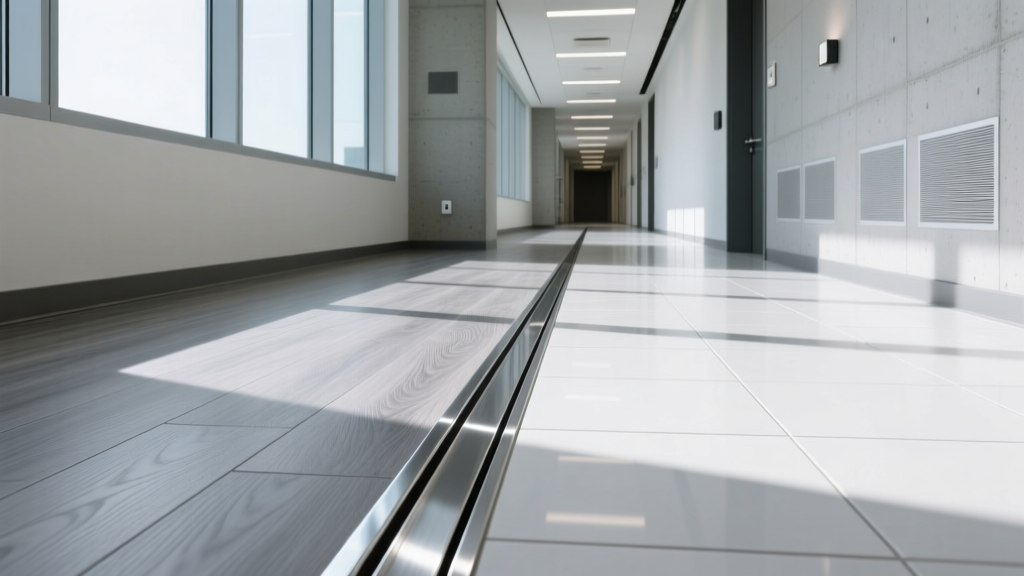
Profile-Specific Stress Testing and Lifespan
Different transition profiles endure distinct mechanical stresses. Selecting the right profile requires understanding the physics of the transition point.
T-Moldings and Reducers: The Point-Load Challenge
T-moldings bridge two hard surfaces of equal height, while reducers step down from laminate to a lower surface like vinyl or carpet. The primary durability threat to these profiles is point-load impact—the concentrated force exerted by stiletto heels, wheelchair casters, or heavy appliance dollies.
- MDF T-Moldings: Highly susceptible to snapping at the narrow 'stem' of the T-profile under rolling loads. The decorative foil often tears away from the HDF core upon impact.
- PVC and Aluminum Reducers: Rigid core PVC and extruded aluminum (such as Schluter Systems transition profiles) distribute point loads across a wider subfloor footprint, preventing structural failure. Aluminum reducers are mandatory for commercial applications or residential areas expecting wheelchair traffic.
Stair Nosing: The Highest Stress Junction
Stair nosings endure the highest dynamic stress in any flooring system, absorbing both downward impact and horizontal sheer forces from foot traffic. Laminate stair nosing options generally fall into two categories:
- Overlap Nosing: The laminate plank slides under the nosing lip. This accommodates expansion but creates a visible seam that traps dirt and can peel upward if the adhesive fails.
- Flush Nosing: The nosing and plank sit perfectly level. While vastly superior for durability and aesthetics, flush nosing requires precise milling and eliminates the expansion gap at the stair edge, meaning the floor must be securely pinned elsewhere to prevent buckling.
Quarter Round and Shoe Molding: Perimeter Containment
Perimeter moldings conceal the expansion gap against baseboards. Shoe molding (taller and thinner) is generally more durable than quarter round because its vertical profile allows it to flex with the floor's seasonal movement without detaching from the baseboard. Solid wood or PVC shoe molding outlasts MDF by decades, as it can withstand repeated impacts from vacuum cleaners and brooms without chipping.
Fastening Methods and Long-Term Adhesion
The most durable edging material will fail if the fastening method cannot withstand the continuous lateral thrust of a floating floor expanding and contracting. The World Floor Covering Association (WFCA) emphasizes that transition moldings must never pin the floating floor to the subfloor, as this restricts movement and causes the floor to peak or buckle.
Track Systems vs. Direct Glue
Many budget MDF and PVC transitions utilize a two-piece system: a plastic or metal track screwed to the subfloor, and a molding that snaps into the track.
Adhesive Selection for Wet Zones
In kitchens and bathrooms, standard acrylic adhesives break down when exposed to alkaline cleaning agents and standing water. For wet-zone edging, specify a 100% silicone or a silane-terminated polyether (STPE) adhesive. These remain flexible, maintaining a watertight seal even as the laminate floor shifts by up to 1/2 inch during seasonal humidity changes.
Moisture Ingress and Edge Sealing Protocols
When analyzing laminate flooring edging options, moisture management is paramount. Water does not typically destroy laminate from the top down; it enters through the unprotected expansion gaps at the perimeter and transitions.
For installations in moisture-prone areas, contractors must apply a continuous bead of 100% silicone sealant beneath the edging profile where it meets the laminate surface. This creates a hydrostatic barrier. Furthermore, the cut ends of any HDF-based transition molding must be painted with a polyurethane end-sealer before installation. Failure to seal the porous end-grain of a T-molding will result in the ends swelling to twice their original thickness within 48 hours of exposure to high humidity or wet mopping.
Expert Verdict: Matching Edging to Room Traffic
Specifying the correct edging requires balancing budget with the mechanical realities of the space. Use the following framework for 2026 installations:
- Low-Traffic / Dry Bedrooms: MDF or HDF color-matched moldings are cost-effective and sufficient. Use direct-glue application rather than tracks.
- High-Traffic / Living Areas & Hallways: Upgrade to solid hardwood or rigid-core PVC shoe moldings and T-moldings to resist impact scuffs and vacuum damage.
- Wet Zones / Bathrooms / Exterior Doors: Mandatory use of PVC or Aluminum transitions. All perimeter gaps must be sealed with 100% silicone, and no MDF products should cross the threshold.
- Commercial / Wheelchair Accessible: Anodized aluminum profiles mechanically fastened to the concrete or wood subfloor are the only options that meet ADA transition requirements and withstand heavy rolling loads without fracturing.
By prioritizing material density, adhesive chemistry, and profile geometry over simple color-matching, installers can eliminate the most common points of failure in laminate flooring systems, ensuring the edges remain as resilient as the floor itself.
Written by
Priya KapoorPriya Kapoor is a real estate market analyst and construction economics researcher with expertise in housing affordability, development feasibility, and infrastructure investment. She holds a Master of Regional Planning from Cornell University and previously worked as a senior analyst at CBRE's Investment Properties group, where she modeled returns for $4B in mixed-use development pipelines. Priya now runs an independent research practice advising developers, municipalities, and REITs on construction cost forecasting and market timing. She publishes the quarterly "BuildMat Market Pulse" report tracking material price indices across 12 commodity categories. Based in Austin, TX, Priya serves on the board of Habitat for Humanity Austin and is a marathon runner.
More from Priya Kapoor
View all
Construction Cost
Cost to Build a 1600 Sq Ft Home in 2026: Full Breakdown
Accurate 2026 cost to build a 1600 sq ft home—material, labor, and regional pricing breakdowns included. Plan your budget with real-time estimates.
Aug 11, 2026

Wood & Lumber
Name the Types of Wood for Pressure Treatment and Preservation
Learn how to name the types of wood best suited for pressure treatment. Compare species treatability, chemical retention levels, and 2026 preservation costs.
Aug 4, 2026

Stone & Masonry
Stone Veneer Suppliers Lindenhurst: 2026 Cost Analysis
Analyze 2026 stone veneer costs in Lindenhurst, NY. Compare local supplier pricing, delivery fees, and Suffolk County installation labor rates.
Aug 4, 2026