Laminate Flooring Installation Cost: 2026 Material Taxonomy Guide
Analyze 2026 laminate flooring installation costs by material taxonomy. Compare AC ratings, core types, and underlayment impacts on total labor and prep.
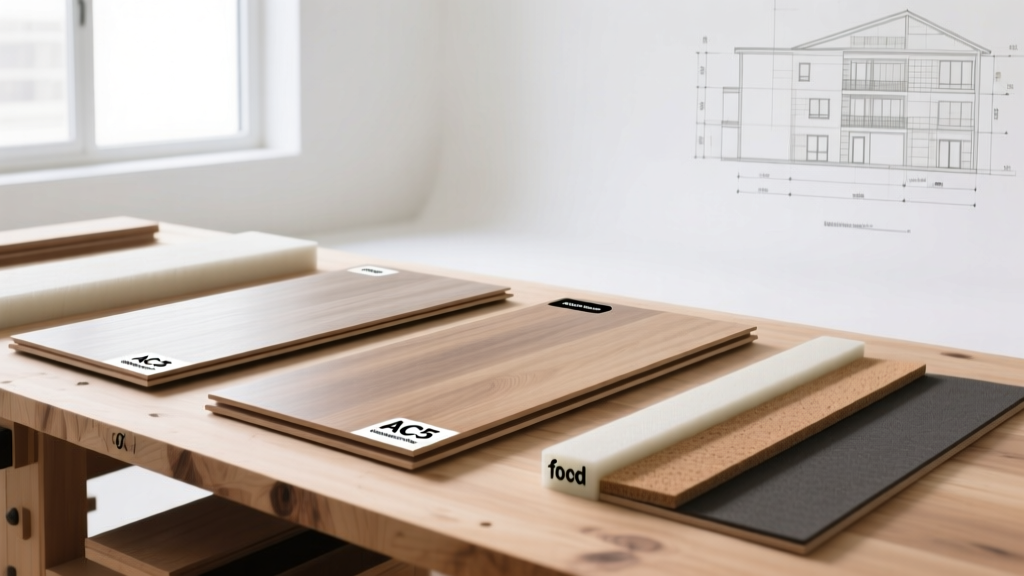
The 2026 Laminate Material Taxonomy & Cost Matrix
Calculating the true laminate flooring installation cost requires moving beyond basic square-footage estimates. In 2026, the material taxonomy of laminate—specifically its Abrasion Class (AC) rating, high-density fiberboard (HDF) core density, and plank thickness—directly dictates subfloor preparation requirements, acclimation timelines, and ultimate labor rates. A budget-friendly 7mm AC3 plank will incur vastly different hidden installation costs compared to a 12mm AC5 waterproof-core alternative.
According to the World Floor Covering Association (WFCA), understanding these material classifications is the first step in accurate project budgeting. Below is the 2026 cost matrix mapping material taxonomy to installation variables.
| Material Taxonomy | Thickness / AC Rating | Material Cost (per sq. ft.) | Labor & Prep Impact | Acclimation Time |
|---|---|---|---|---|
| Entry-Level Residential | 7mm - 8mm / AC3 | $1.50 - $2.80 | High prep cost; requires near-perfect subfloor (1/8' variance over 10ft). | 48 Hours |
| Standard Premium | 10mm / AC4 | $3.00 - $4.50 | Moderate prep; bridges minor subfloor imperfections efficiently. | 48 - 72 Hours |
| Heavy Commercial / Wet Area | 12mm / AC5 | $4.50 - $7.50 | Low prep cost; high rigidity. Requires specialized carbide saw blades. | 72 - 96 Hours |
| Moisture-Resistant Hybrid HDF | 10mm - 12mm / AC4 | $5.00 - $8.00 | Requires perimeter sealing with 100% silicone; adds $0.40/sq. ft. to labor. | 72 Hours |
How Core Composition and Thickness Alter Labor Costs
The most common miscalculation in laminate budgeting is assuming labor is a flat rate. Installers typically charge between $2.50 and $4.50 per square foot for standard floating installations, but core composition alters this baseline.
The 12mm vs. 8mm Subfloor Bridging Effect
Thicker laminate planks (12mm) feature a denser HDF core that provides superior structural rigidity. This rigidity allows the floor to bridge minor subfloor imperfections that would cause an 8mm plank to flex, squeak, or eventually unlock at the tongue-and-groove joints.
Moisture-Resistant Cores and Perimeter Sealing
Modern 'waterproof' laminates utilize hydrophobic resins and tighter click-lock mechanisms. However, to maintain the manufacturer's water warranty, installers must apply a continuous bead of 100% silicone sealant to the expansion gaps around the room's perimeter and at all pipe penetrations. This meticulous detail work adds approximately 15 to 20 minutes per 100 square feet to the labor timeline, increasing installation costs by roughly $0.40 to $0.60 per square foot.
Underlayment Selection: The Hidden Cost Multiplier
Laminate flooring requires an underlayment to provide acoustic dampening, thermal insulation, and minor moisture protection. The choice between attached-pad and loose-lay underlayment significantly shifts the cost structure.
- Attached Underlayment (Pre-attached Pad): Costs $0.00 extra in materials and saves roughly $0.30 per square foot in labor due to faster rollout times. However, it limits your ability to upgrade acoustic ratings for multi-family dwellings.
- Standard Foam (Loose-Lay): Costs $0.30 to $0.45 per square foot. Provides basic IIC (Impact Insulation Class) ratings of 65-70. Requires taping seams, adding minor labor time.
- Premium Acoustic/Cork Underlayment: Costs $0.80 to $1.50 per square foot. Delivers IIC ratings of 73+ and STC (Sound Transmission Class) ratings above 70. Mandatory for many HOA and commercial condo associations, as noted in Consumer Reports flooring guidelines.
HOA Warning: If you are installing laminate in a second-story condo, never select pre-attached underlayment without verifying the exact IIC/STC requirements with your HOA board. Failing an acoustic inspection will result in a complete tear-out, doubling your total installation cost.
Subfloor Preparation: Where Budgets Fail
The condition of the existing subfloor is the largest variable in any laminate flooring installation cost estimate. Laminate is a floating floor system; it does not adhere to the subfloor, meaning any moisture or structural instability will transfer directly to the planks.
Moisture Vapor Emission Rate (MVER) Testing
Before installation over concrete, a calcium chloride test or relative humidity (RH) probe test must be conducted. Laminate manufacturers strictly require an MVER of less than 3 to 5 lbs per 1,000 square feet per 24 hours.
Leveling and Flattening
The industry standard for subfloor flatness is no more than a 3/16-inch deviation over a 10-foot radius. For older homes with sagging joists or uneven OSB subfloors, installers must use floor patch, shims, or structural sistering. Budget $1.00 to $2.50 per square foot for minor leveling, and upwards of $5.00 per square foot for major structural correction before the first plank is laid.
Room-Specific Selection & Installation Framework
Selecting the right laminate taxonomy for specific environments prevents premature failure and optimizes installation spending. Use this decision framework to align material choice with room-specific installation costs.
- Kitchens & Powder Rooms: Select 10mm-12mm Moisture-Resistant HDF (AC4). Installation Adder: Factor in $0.50/sq. ft. for silicone seam sealing and specialized waterproof transition moldings at doorways.
- Living Areas & Bedrooms: Select 8mm-10mm Standard HDF (AC3 or AC4). Installation Adder: Standard labor rates apply. Focus budget on a high-quality acoustic underlayment if noise transfer is a concern.
- Basements (Below Grade): Select 12mm Moisture-Resistant HDF with a pre-attached closed-cell foam pad. Installation Adder: Mandatory 6-mil poly vapor barrier ($0.15/sq. ft.) and potential subfloor sleeper system if MVER is borderline.
- Full Bathrooms & Laundry Rooms: Do not install laminate. Even 'waterproof' laminates are susceptible to hydrostatic pressure and standing water at the seams. Pivot to Luxury Vinyl Plank (LVP) or porcelain tile for these zones.
Transitions, Moldings, and the 'Hidden' Trim Costs
Laminate flooring expands and contracts with seasonal humidity fluctuations. The Home Depot installation guidelines mandate expansion gaps of 1/4-inch to 3/8-inch at all vertical obstructions. Furthermore, any continuous run exceeding 30 feet in length or width requires a T-molding transition to break the floor into independent floating zones, preventing catastrophic buckling.
Transition moldings (T-moldings, reducers, stair noses) cost between $25 and $65 per piece, plus $15 to $30 in labor per installation point. A complex floor plan with multiple doorways, sliding glass doors, and staircases can easily add $300 to $600 in trim materials and labor to a seemingly straightforward 500-square-foot project.
FAQ: Laminate Installation Cost Nuances
Does removing old carpet add significantly to the installation cost?
Yes. Carpet removal and disposal typically cost $0.75 to $1.25 per square foot. If the carpet was glued down, or if tack strips and hundreds of staples must be extracted from a wood subfloor, labor rates for demo will push toward the higher end of that spectrum. Always budget for subfloor scraping and sweeping post-demo.
Can I save money by installing laminate diagonally?
Diagonal installations increase material waste from the standard 7-10% to roughly 15-20%. Additionally, installers charge a premium of $0.50 to $1.00 per square foot for diagonal layouts due to the increased complexity of cutting and maintaining straight sightlines. From a cost-efficiency standpoint, straight or staggered brick-pattern installations are vastly superior.
How do baseboards affect the final installation price?
Laminate requires an expansion gap that must be covered. You have two choices: install quarter-round/shoe molding over the existing baseboards (costs $1.50 - $2.50 per linear foot installed), or remove the existing baseboards, install the floor, and reinstall the baseboards (costs $3.00 - $5.00 per linear foot due to careful prying, caulking, and touch-up painting). Shoe molding is the more budget-friendly route.