Evaluating Kitchen Backsplash Tile Ideas: Performance Ratings and Specs
Discover how to evaluate kitchen backsplash tile ideas using ANSI and ASTM performance specs for water absorption, thermal shock, and chemical resistance.
The Hidden Metrics Behind Kitchen Backsplash Tile Ideas
When browsing kitchen backsplash tile ideas, most homeowners and designers prioritize color palettes, patterns, and architectural styles. However, the kitchen backsplash operates in one of the most hostile micro-environments in a residential build. It is subjected to extreme thermal cycling from gas burners, acidic splatters from food preparation, aggressive chemical degreasers, and constant moisture exposure from adjacent sinks. Evaluating materials purely on aesthetics often leads to premature failure, including glaze crazing, grout degradation, and permanent surface etching.
To ensure longevity, professionals must filter kitchen backsplash tile ideas through the lens of rigorous material science. By understanding the testing standards established by ASTM International and the installation guidelines from the Tile Council of North America (TCNA), you can predict exactly how a specific tile will perform over a decade of heavy culinary use.
Water Absorption (ASTM C373) and the Vitreous Threshold
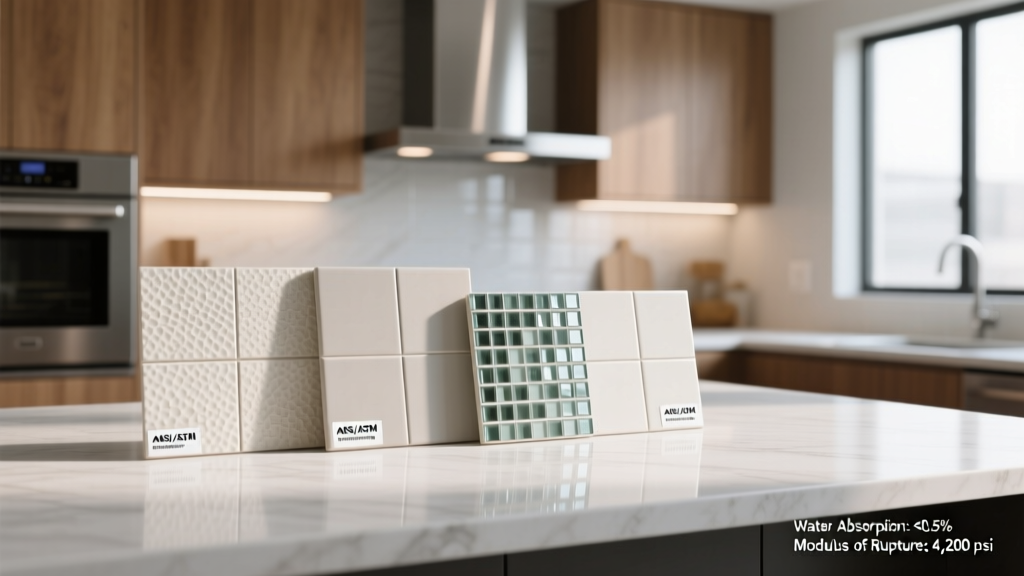
Water absorption is the single most critical metric for any tile installed in a wet zone. Governed by the ASTM C373 standard, this test measures the percentage of water a tile body absorbs when boiled and submerged. While wall tiles do not require the same impervious ratings as shower floors, the area immediately surrounding a kitchen sink demands strict moisture resistance to prevent mold growth behind the drywall and efflorescence in the grout joints.
| Classification | Absorption Rate | Common Materials | Backsplash Suitability |
|---|---|---|---|
| Impervious | < 0.5% | Porcelain, Sintered Stone | Excellent (Ideal for sink zones) |
| Vitreous | 0.5% - 3.0% | Standard Ceramic, Glass | Good (Standard wall applications) |
| Semi-Vitreous | 3.0% - 7.0% | Handmade Ceramic, Zellige | Fair (Requires high-performance sealers) |
| Non-Vitreous | > 7.0% | Unglazed Terra Cotta, Natural Stone | Poor (High risk of staining and bacterial growth) |
For 2026 kitchen designs, impervious porcelain remains the gold standard for high-splash zones. If your design concept relies on semi-vitreous handmade ceramics, you must specify a penetrating fluoropolymer sealer applied prior to grouting, and mandate the use of an epoxy or urethane grout to prevent moisture migration.
Thermal Shock and Crazing: The Gas Stove Problem
Thermal shock resistance is frequently overlooked when selecting kitchen backsplash tile ideas, yet it is the primary cause of glaze failure behind gas ranges. When a high-BTU gas burner is active, the tile directly above it can experience rapid temperature spikes of 100°F to 150°F within minutes. When the burner is turned off, the tile cools rapidly. This continuous expansion and contraction creates immense shear stress between the clay body and the glass glaze.
Handmade Zellige and artisan ceramic tiles often feature a high coefficient of thermal expansion mismatch between the bisque (clay body) and the glaze. When installed behind a gas stove without a thermal break or adequate ventilation hood, these tiles are highly susceptible to crazing—a network of microscopic cracks in the glaze. Once crazed, the tile will absorb cooking grease and stain permanently. Always verify the manufacturer's thermal shock rating (ISO 10545-9) before specifying handmade tiles behind high-heat appliances.
Chemical Resistance (ISO 10545-13) and Acidic Splatters
Kitchens are chemically aggressive environments. Tomato sauce, lemon juice, vinegar, and commercial degreasers routinely impact the backsplash. The ISO 10545-13 standard evaluates a tile's resistance to household chemicals, swimming pool salts, and acids. Tiles are graded from Class A (highest resistance) to Class C (lowest resistance).
The Etching Reality of Natural Stone
Many luxury kitchen designs feature marble, travertine, or limestone backsplashes. These natural stones are primarily composed of calcium carbonate, which reacts violently with acidic compounds. When lemon juice or tomato sauce splatters against marble, it causes etching—a chemical burn that physically dissolves the polished surface, leaving a dull, matte spot. No topical sealer can prevent etching; sealers only prevent liquid absorption. If a client insists on natural stone kitchen backsplash tile ideas, specify a honed or leathered finish to mask future etching, and educate the homeowner on the mandatory maintenance regimen.
Gauged Porcelain Tile Panels (GPTP): The Seamless Standard
A major shift in modern kitchen specifications is the adoption of Gauged Porcelain Tile Panels (GPTP), governed by the ANSI A137.3 standard. Available in massive formats (e.g., 1200x2400mm or larger), these ultra-thin (3mm to 6mm) porcelain slabs can cover an entire backsplash run from countertop to upper cabinets with zero grout lines.
Eliminating grout lines in the primary splash zone removes the most vulnerable point of failure in any tile installation. However, GPTP requires specialized installation protocols. According to the National Kitchen & Bath Association (NKBA) guidelines and TCNA manuals, GPTP must be installed using specific polymer-modified mortars (ANSI A118.4 or A118.15) and requires 100% mortar coverage achieved through back-buttering and the use of large-format suction cup systems to prevent air pockets that could lead to impact cracking.
Grout Specifications: ANSI A118.3 vs. ANSI A118.6
The tile itself is only half the equation; the grout matrix dictates the overall hygiene and durability of the backsplash. Traditional cementitious grout (ANSI A118.6) is porous, prone to shrinking, and highly susceptible to staining from cooking oils and coffee splatters.
- Standard Cementitious Grout (ANSI A118.6): Requires annual sealing. Not recommended for heavy cooking zones or behind deep fryers and espresso stations.
- High-Performance Cementitious Grout (ANSI A118.7): Features reduced water absorption and higher stain resistance. A viable mid-tier option for dry zones of the kitchen.
- Epoxy Grout (ANSI A118.3): The absolute specification requirement for the zone directly behind the stove and sink. Epoxy is virtually impervious to water, highly resistant to household chemicals, and will not harbor bacteria or mold. Modern epoxies feature UV stabilizers to prevent yellowing from sunlight and kitchen lighting.
Actionable Specification Checklist for Contractors and Designers
Before finalizing any material selection, run your kitchen backsplash tile ideas through this technical checklist to ensure the specification meets the demands of a modern culinary space:
- Verify Water Absorption: Ensure tiles in the sink zone meet the Vitreous (<3.0%) or Impervious (<0.5%) threshold per ASTM C373.
- Check Thermal Ratings: If installing behind a gas range, confirm the tile has passed ISO 10545-9 thermal shock testing, especially for artisan or glazed ceramics.
- Assess Chemical Resistance: Avoid polished calcium-carbonate stones in high-splash zones unless the client accepts the patina of etching.
- Mandate Epoxy Grout: Specify ANSI A118.3 epoxy grout for all joints within 36 inches of the primary cooking surface and sink basin.
- Confirm Mortar Compatibility: For large-format porcelain or glass tiles, specify a white, polymer-modified thin-set mortar (ANSI A118.4) to prevent shadowing and ensure adequate bond strength on vertical drywall or cement board substrates.
By prioritizing these performance ratings over fleeting visual trends, you ensure that the selected materials will maintain their structural integrity and aesthetic appeal, standing up to the rigorous demands of daily kitchen operations for decades.