Premium Tile Brand Backsplash Ideas for 2026 Kitchens
Explore premium backsplash ideas for 2026 with deep dives into Fireclay, Walker Zanger, and Ann Sacks tile lines, including costs and installation specs.
The Shift Toward Artisan and Sustainable Tile Lines
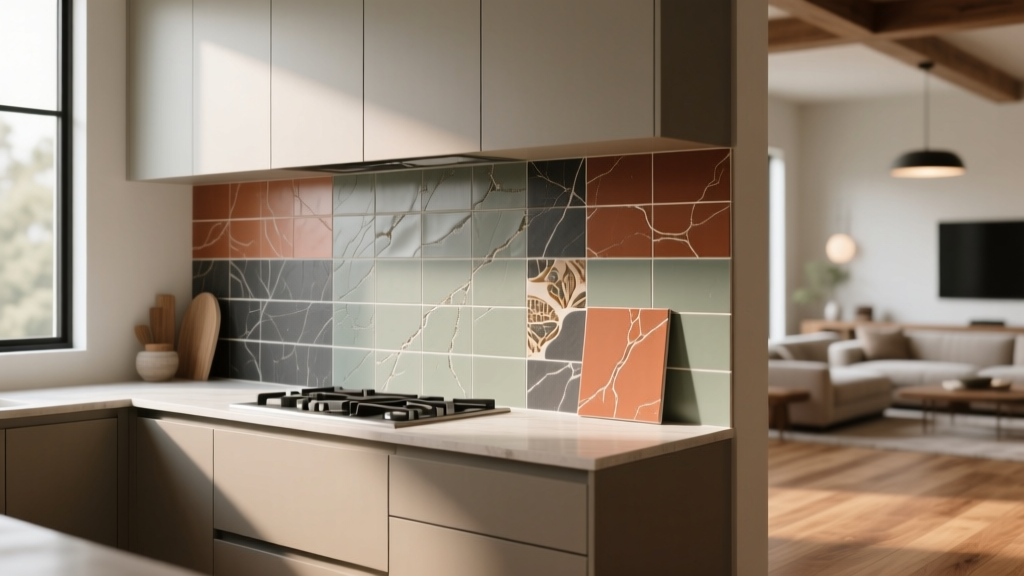
The kitchen backsplash has transitioned from a utilitarian splash guard to the primary focal point of modern residential design. In 2026, the most sought-after backsplash ideas pivot away from mass-produced, builder-grade ceramics toward artisan-crafted, sustainably sourced, and dimensionally textured product lines. Homeowners and designers are prioritizing tactile surfaces, reactive glazes, and natural stone blends that introduce architectural depth. This deep-dive analyzes three premium tile manufacturers—Fireclay Tile, Walker Zanger, and Ann Sacks—breaking down their flagship collections, exact pricing metrics, and the specific installation protocols required to ensure long-term performance.
Fireclay Tile: The Debris Series and Hand-Painted Artisans
Fireclay Tile has dominated the sustainable luxury market by manufacturing locally in San Jose, California. Their flagship Debris Series remains a top choice for eco-conscious backsplash ideas, utilizing a body composed of 70% recycled materials, including reclaimed local clay and post-consumer porcelain.
Product Specifications and Pricing
- Formats: 2x6, 3x12, 4x4, and 6x12 field tiles, alongside custom architectural trim (bullnose, mud caps).
- Glaze Technology: Reactive glazes like 'Sea Foam' and 'Ochre' exhibit high color variation (V3-V4 rating), meaning no two tiles look exactly alike.
- Cost: $28 to $36 per square foot, depending on the selected glaze and format.
- Lead Time: 4 to 6 weeks for standard glazes; 8 to 10 weeks for custom color matching.
Because Fireclay's Debris Series is handmade and features reactive glazes, dye-lot variation between production runs is significant. Always order a minimum of 15% overage. If a project requires a second order months later, matching the exact hue variance is nearly impossible.
Walker Zanger: The Mizu and Studio Collections
Walker Zanger approaches backsplash design through the lens of high-end material blending. Their Mizu collection is a premier choice for contemporary backsplash ideas, seamlessly integrating Japanese-inspired glass elements with natural stone accents. This collection is specifically engineered for high-contrast kitchens featuring dark cabinetry and matte black hardware.
Material Composition and Application
The Mizu line features 12x12 interlocking sheets that combine polished Carrara marble, brushed brass inlays, and frosted architectural glass. The juxtaposition of porous stone and non-porous glass creates unique installation challenges that require specialized setting materials.
- Formats: 12x12 mesh-mounted mosaics, 3x12 subway glass, and large-format 12x24 porcelain slabs.
- Cost: $45 to $68 per square foot for the Mizu mosaic blends; $22 to $30 per square foot for standard Studio glass lines.
- Maintenance: Natural stone elements require pre-grout sealing with a penetrating impregnator (e.g., Miracle Sealants 511) to prevent grout haze from embedding into the marble pores.
Ann Sacks: Savoy and Dimensional Stone Lines
Ann Sacks, a Kohler company, bridges the gap between classic heritage designs and modern 3D texturing. For clients seeking timeless backsplash ideas with a subtle modern twist, the Savoy collection offers an elevated take on the traditional subway tile. Unlike standard extruded ceramics, Savoy tiles feature a hand-crafted, slightly undulating surface that catches light dynamically.
The Dimensional Stone Advantage
Beyond ceramics, Ann Sacks' Dimensional Stone line features CNC-milled natural stone (travertine, limestone, and marble) with raised geometric patterns. These 3D tiles project up to 1/2 inch from the wall, creating dramatic shadow lines under cabinet LED lighting.
When using Ann Sacks Dimensional Stone or any heavily textured backsplash, under-cabinet lighting must be positioned at the extreme front edge of the cabinet, shining straight down. If the LED strip is mounted too far back against the wall, it will cast harsh, elongated shadows across the countertop workspace, rendering the prep area dark.
Comparative Matrix: Premium Backsplash Lines at a Glance
| Brand / Collection | Price Range (per sq ft) | Primary Material | Best Application | Maintenance Level |
|---|---|---|---|---|
| Fireclay Debris Series | $28 - $36 | Recycled Ceramic | Farmhouse, Organic Modern | Low (Standard cleaning) |
| Walker Zanger Mizu | $45 - $68 | Glass / Marble Blend | Contemporary, High-Contrast | High (Annual stone sealing) |
| Ann Sacks Savoy | $22 - $30 | Artisan Ceramic | Transitional, Classic | Low (Standard cleaning) |
| Ann Sacks Dimensional | $55 - $85 | CNC-Milled Stone | Luxury, Statement Walls | High (Dusting crevices) |
Installation Realities: Substrates, Mortars, and Grouts
Premium tile requires premium installation. The Tile Council of North America (TCNA) handbook dictates strict tolerances for wall flatness, which become critically visible when installing elongated formats like 3x12 or 4x16 subway tiles. Any deviation in the substrate will result in lippage, which is magnified by the reflective nature of artisan glazes and glass.
Substrate Preparation
Standard drywall is acceptable in dry zones, but behind kitchen sinks and ranges, moisture-resistant substrates are mandatory. Instead of traditional cement backer board (which requires taping, mudding, and waterproofing membranes), top-tier installers are shifting to extruded polystyrene foam boards like Schluter-Kerdi-Board or Wedi Board. These panels are inherently waterproof, perfectly flat, and can be cut with a utility knife, reducing dust and installation time by up to 30%.
Setting Materials and Grout Selection
Choosing the wrong thin-set mortar is the most common failure point in high-end backsplash installations.
- For Ceramic and Stone (Fireclay, Ann Sacks): Use a high-performance, polymer-modified thin-set mortar meeting ANSI A118.4 standards. Laticrete 254 Platinum or Mapei Ultraflex 2 provide the necessary non-sag properties to hold heavy artisan tiles on vertical surfaces without mechanical fasteners.
- For Glass and Blends (Walker Zanger): You must use a bright white, glass-specific mortar. Gray thin-set will shadow through translucent glass, altering the perceived color of the tile. Furthermore, ensure the mortar is ANSI A118.4 and A118.15 compliant for extended open times.
- Grout: In high-splash zones, abandon traditional cementitious grout. Epoxy grouts (like Laticrete Spectralock PRO) or advanced single-component urethane grouts (like Custom Building Products CEG-Lite) are mandatory. They resist tomato sauce, turmeric, and grease stains indefinitely without requiring topical sealers.
Sourcing and Lead Time Strategies
When specifying these premium brands for a 2026 kitchen remodel, project managers must align their construction schedules with manufacturing realities. Handmade ceramic lines from Fireclay and Ann Sacks are often produced in small batches. If a specific glaze like 'Halite' or 'Tidewater' is out of stock, lead times can stretch to 12 weeks. Always finalize backsplash selections during the initial design phase, ordering the material before cabinetry installation begins, ensuring the tile is on-site and acclimated to the home's ambient temperature (minimum 60°F for 48 hours) prior to setting.