WeatherTech All Weather Floor Mats & TPE Garage Flooring Specs
Analyze WeatherTech all weather floor mats and TPE modular garage flooring specs, slip resistance, and load ratings for mudrooms and workshops.
Bridging Automotive Polymer Science to Architectural Flooring
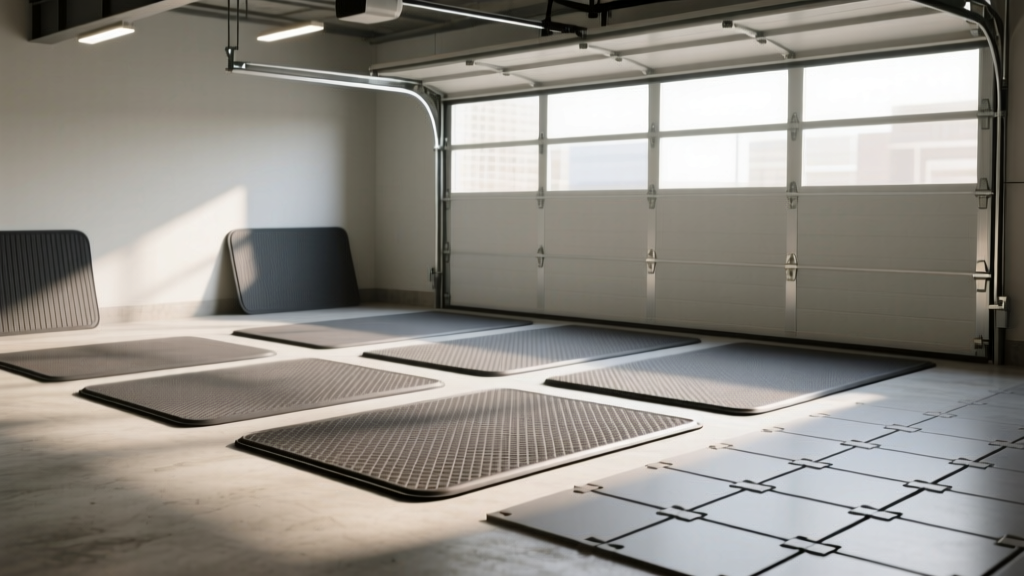
When architects, contractors, and high-end residential builders specify transition flooring for mudrooms, garages, and commercial vestibules, they increasingly look to the material science behind premium automotive liners. The advanced polymer formulations utilized in WeatherTech all weather floor mats—specifically proprietary Thermoplastic Elastomer (TPE) and High-Density Polyethylene (HDPE) blends—have established a new benchmark for modular architectural flooring in wet, high-traffic zones. While originally engineered to protect vehicle carpets from snow, mud, and road salts, the exact performance specifications of these TPE compounds translate directly to heavy-duty garage tiles, workshop matting, and commercial entryway systems.
This technical guide deconstructs the material specifications, load ratings, thermal tolerances, and installation parameters of TPE-based all-weather flooring systems, providing the exact data needed to specify these materials for residential and light-commercial construction projects in 2026.
Polymer Formulations: TPE vs. HDPE vs. Flexible PVC
The core performance of any all-weather matting system relies on its base polymer. Understanding the durometer hardness and molecular structure is critical for specifying the right material for specific architectural loads.
Thermoplastic Elastomer (TPE)
The material used in premium systems like WeatherTech all weather floor mats is typically a dynamically vulcanized TPE. This material bridges the gap between rigid plastics and flexible rubbers. TPE flooring generally registers a Shore A hardness between 75A and 85A. This specific durometer range provides exceptional acoustic dampening (reducing dropped-tool noise in workshops by up to 14 decibels) while maintaining enough rigidity to support heavy rolling loads without permanent deformation.
High-Density Polyethylene (HDPE)
HDPE is measured on the Shore D scale, typically rating between 60D and 70D. While HDPE offers superior tensile strength and chemical resistance, its rigidity makes it prone to brittle fracture in sub-zero temperatures. HDPE modular tiles are best reserved for heated garages or indoor commercial vestibules where extreme thermal cycling is not a factor.
Flexible PVC (Polyvinyl Chloride)
Budget modular garage tiles often use flexible PVC (Shore A 85-92). While cheaper ($1.50 to $2.50 per square foot compared to $4.50 to $7.00 for premium TPE), PVC contains plasticizers that can leach out over time, leading to tile shrinkage, hardening, and potential off-gassing of volatile organic compounds (VOCs). For enclosed spaces, TPE is the superior specification due to its inherent stability without added phthalate plasticizers.
Performance Ratings and Load Specifications Matrix
Specifying flooring for garage and mudroom transitions requires strict adherence to load and slip-resistance standards. The following matrix compares the performance profiles of premium TPE systems against standard architectural alternatives.
| Performance Metric | Premium TPE (WeatherTech-Style) | Rigid HDPE Tiles | Flexible PVC Tiles | Standard Ceramic Tile (Porcelain) |
|---|---|---|---|---|
| Shore Hardness | 75A - 85A | 60D - 70D | 85A - 92A | N/A (Mohs 7-8) |
| Rolling Load Capacity | 25,000 - 30,000 lbs | 40,000+ lbs | 15,000 - 20,000 lbs | 300+ lbs (Point Load) |
| Slip Resistance (DIN 51130) | R11 (High Grip) | R10 (Moderate Grip) | R10 (Moderate Grip) | R9 - R10 (Glazed) |
| Cold Weather Flexibility | Excellent (Down to -40°F) | Poor (Brittle below 10°F) | Moderate (Stiffens at 0°F) | N/A |
| Cost per Sq. Ft. (2026) | $4.50 - $7.00 | $3.00 - $4.50 | $1.50 - $2.50 | $5.00 - $12.00 (Installed) |
According to guidelines published by the Occupational Safety and Health Administration (OSHA), maintaining high slip resistance in transition zones is critical for fall prevention. TPE mats with deep, multi-directional drainage channels consistently achieve R11 ratings, making them ideal for mudrooms where wet footwear is common.
Thermal Expansion and Dimensional Stability
One of the most frequent failure modes in modular garage and mudroom flooring is buckling caused by unaccounted thermal expansion. TPE and HDPE polymers have a significantly higher Coefficient of Linear Thermal Expansion (CLTE) compared to concrete or wood substrates.
Critical Installation Warning: Thermal Buckling
A standard TPE modular tile has a CLTE of approximately 8 x 10^-5 in/in/°F. In a 24-foot long unheated garage that experiences a seasonal temperature swing from 20°F in winter to 100°F in summer (an 80°F delta), the flooring will expand by nearly 0.23 inches (almost 1/4 inch) in length. If installed wall-to-wall without a perimeter expansion gap, the center of the floor will tent and buckle under the compressive stress.
Specification Rule: Always mandate a minimum 1/2-inch perimeter gap around all fixed obstacles (walls, cabinets, pillars) when specifying floating TPE or HDPE modular systems. Cover this gap with a flexible TPE or rubber cove base.
Chemical Resistance and VOC Off-Gassing Profiles
Transition zones in residential and commercial buildings are exposed to harsh chemicals tracked in from the exterior. Premium TPE formulations, like those engineered for WeatherTech all weather floor mats, are highly resistant to aliphatic hydrocarbons, road salts (calcium chloride and magnesium chloride), and acidic battery fluids.
VOC and Indoor Air Quality
When specifying flooring for attached garages or enclosed mudrooms, indoor air quality (IAQ) is a primary concern. The Environmental Protection Agency (EPA) notes that VOCs from building materials can significantly degrade indoor air, causing respiratory irritation. Unlike cheap PVC tiles that rely on phthalate plasticizers and solvent-based adhesives, high-quality TPE modular tiles are manufactured using thermal interlocking or mechanical snap-together grids. They require zero adhesives for installation and typically emit VOC levels well below the strictest GREENGUARD Gold certification limits (under 0.5 mg/m³ total VOCs after 168 hours).
Subfloor Preparation and Moisture Tolerances
While TPE and HDPE mats are entirely impervious to water, the concrete subfloor beneath them is not. Installing an impermeable floating floor over a slab with high Moisture Vapor Emission Rates (MVER) can trap moisture, leading to subfloor degradation, efflorescence, and mold growth at the perimeter edges.
- Perform ASTM F1869 Calcium Chloride Testing: Before specifying a floating TPE floor, test the concrete slab. If the MVER exceeds 5 lbs per 1,000 square feet per 24 hours, a vapor retarder must be installed beneath the modular tiles.
- Evaluate Slab Slope: Garages are typically sloped at 1/8 inch per foot toward the overhead door. Modular TPE tiles will follow this contour. If the slope exceeds 1/4 inch per foot, the interlocking tabs may experience sheer stress. In these cases, specify a self-leveling underlayment to reduce the slope to a maximum of 1/8 inch per foot before laying the mats.
- Address Surface Spalling: If the concrete surface is heavily spalled or pitted, the point-load capacity of the TPE tiles is compromised. Grind the surface or apply a polymer-modified concrete patching compound to ensure a flat tolerance of 1/8 inch over a 10-foot radius.
"The most common error in modular garage flooring installation is ignoring the subfloor's moisture profile. The plastic tiles will survive the water, but the trapped moisture will eventually destroy the concrete slab from the top down through freeze-thaw spalling cycles." — Building Science Corporation guidelines on below-grade and slab-on-grade moisture management. (Reference: Building Science Corporation)
Maintenance Protocols and Edge Cases
TPE all-weather mats require minimal maintenance, but improper cleaning can degrade the polymer surface. Avoid using high-pH alkaline cleaners (pH > 10) or citrus-based degreasers, which can break down the surface tension of the TPE and cause it to become slick over time. A neutral pH cleaner (6.5 - 7.5) combined with a medium-bristle mechanical scrubber is the specified protocol for commercial vestibule applications.
UV Degradation in Sun-Exposed Zones
If the mudroom or garage features large, un-tinted south-facing windows, UV exposure will degrade standard TPE and HDPE over a 3-to-5-year period, causing chalking and loss of tensile strength. For these specific architectural edge cases, specify TPE tiles that include a minimum 2% carbon black additive or specialized UV-inhibitor packages (such as HALS - Hindered Amine Light Stabilizers) in the polymer masterbatch.
Final Specification Summary
When drafting architectural schedules for wet-zone transition flooring, specifying materials derived from the same polymer science as WeatherTech all weather floor mats ensures long-term durability. Mandate TPE formulations with a Shore A hardness of 75-85, verify DIN 51130 R11 slip ratings for wet environments, enforce strict 1/2-inch perimeter expansion gaps, and always validate the subfloor MVER prior to deployment. By adhering to these precise material and installation specifications, builders can deliver garage and mudroom flooring that withstands decades of heavy mechanical and chemical abuse.