Foundation Beam Repair Cost Analysis & Structural Guide 2026
Analyze foundation beam repair cost through a structural engineering lens. Compare 2026 pricing for epoxy, CFRP, and steel sistering interventions.
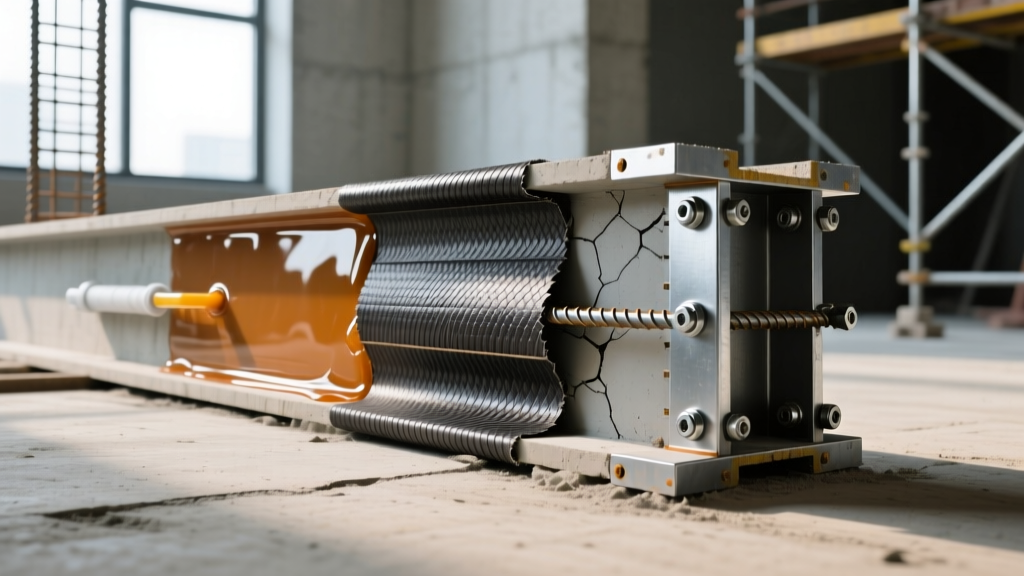
The Structural Mechanics of Foundation Beam Failure
Foundation beams—encompassing grade beams, stem walls, and structural tie beams—serve as the primary load-distributing elements transferring column and wall loads into the subgrade. When evaluating foundation beam repair cost, structural engineers do not merely look at the visible damage; they analyze the underlying failure mode. A flexural failure requires a fundamentally different, and often more expensive, intervention than a shear failure or localized spalling.
In 2026, the cost of structural remediation is heavily dictated by the load path complexity and the required restoration of the beam's moment capacity. Surface-level patching of a grade beam experiencing differential settlement will inevitably fail again, wasting capital. Accurate cost estimation requires correlating the specific structural deficiency with the engineered repair methodology.
Structural Principle: A grade beam in bending experiences tension at the bottom fibers and compression at the top. If the tensile reinforcement (rebar) yields or corrodes, flexural cracking occurs at the mid-span bottom. If the beam fails in shear, diagonal tension cracks form near the supports. Repair costs scale exponentially when shear capacity is compromised compared to simple flexural cracking.
Diagnostic Matrix: Failure Mode vs. Repair Method
Before soliciting contractor bids, a structural assessment must categorize the beam failure. The following matrix maps structural symptoms to the required engineering intervention and associated 2026 baseline costs.
| Failure Mode | Structural Symptom | Engineered Repair Method | Baseline Cost Range (2026) |
|---|---|---|---|
| Flexural Yielding | Horizontal cracking at mid-span bottom; rebar corrosion | Carbon Fiber Reinforced Polymer (CFRP) Wrap | $160 - $240 per sq. ft. |
| Shear Deficiency | Diagonal cracking near columns/piers; stirrup yielding | Steel Jacketing / U-Wrap Bonding | $130 - $190 per linear ft. |
| Differential Settlement | Beam rotation; top-flange crushing; soil voids beneath | Hydraulic Piering & Beam Needle Shoring | $1,400 - $2,800 per pier |
| Flexural Micro-Cracking | Cracks < 0.3mm width; no rebar yielding | Low-Viscosity Epoxy Injection | $45 - $75 per linear ft. |
| Concrete Spalling | Exposed rebar; chloride-induced corrosion; section loss | Form-and-Pour Micro-Concrete Overlay | $85 - $140 per linear ft. |
Foundation Beam Repair Cost Breakdown by Structural Intervention
The total foundation beam repair cost is rarely just the material price. Structural interventions require temporary load transfer (shoring), surface preparation to meet ICRI (International Concrete Repair Institute) guidelines, and specialized curing environments.
1. Carbon Fiber Reinforced Polymer (CFRP) Systems
When a grade beam lacks sufficient tensile reinforcement, engineers specify CFRP laminates (e.g., Simpson Strong-Tie CF systems or Sika SikaWrap). CFRP provides a tensile strength-to-weight ratio up to 10 times that of steel.
- Material Cost: $12 - $18 per square foot for unidirectional carbon fiber fabric and saturating epoxy.
- Labor & Prep: Concrete must be ground to a CSP-3 or CSP-4 profile. Edges must be chamfered to a minimum 0.5-inch radius to prevent stress concentrations that snap the fibers.
- Total Installed Cost: $160 to $240 per square foot. This method is highly cost-effective for restoring flexural capacity without adding dead load or reducing headroom in basements.
2. Steel Sistering and Jacketing
For beams suffering severe shear degradation or where fire-rating requirements prohibit exposed epoxy resins, steel sistering is mandated. This involves bolting or welding ASTM A992 steel channels or W-shapes to the existing concrete beam.
- Material Cost: Structural steel pricing in 2026 averages $1.10 to $1.45 per pound. A standard W8x10 beam weighs 10 lbs/ft, costing roughly $12 to $15 per linear foot for raw material.
- Labor & Fabrication: Requires temporary shoring, precise field measuring, and through-bolting with Hilti HAS-E or equivalent epoxy anchors.
- Total Installed Cost: $2,800 to $4,500 per 20-foot beam span. The high cost is driven by mobilization, heavy equipment for lifting steel in confined crawl spaces, and specialized welding/bolting labor.
3. Epoxy Injection for Structural Welding
For dormant cracks where the structural integrity of the concrete matrix must be restored to monolithic status, pressure injection of ASTM C881 Type I or IV epoxy is required. This is not a cosmetic seal; it structurally 'welds' the concrete back together, often achieving a bond strength exceeding the tensile strength of the parent concrete (typically 4,000+ PSI).
- Material Cost: High-modulus structural epoxies (e.g., Sikadur-52) cost $80 to $120 per gallon kit.
- Labor & Equipment: Requires drilling injection ports every 6 to 12 inches, sealing the surface with a paste, and pumping at 20 to 50 PSI until refusal.
- Total Installed Cost: $45 to $75 per linear foot. Highly economical, but only viable if the root cause of the cracking (e.g., soil settlement) has been permanently resolved.
Step-by-Step Structural Load Transfer During Repair
A major hidden variable in foundation beam repair cost is the shoring and load transfer phase. You cannot repair a load-bearing beam without temporarily redirecting the gravity loads. Improper shoring leads to catastrophic collapse or secondary cracking in the superstructure.
- Load Calculation: The structural engineer calculates the dead and live loads bearing on the compromised beam segment to determine the required jack capacity (typically 20-ton to 40-ton hydraulic jacks).
- Mudsill Installation: A temporary concrete pad or engineered timber mudsill (minimum 12x12 inches) is poured or placed on the subgrade to distribute the jack's point load and prevent punch-through into soft soils.
- Needle Beam Placement: A steel needle beam is placed perpendicular beneath the compromised foundation beam, padded with high-density elastomeric bearing pads to prevent concrete crushing.
- Hydraulic Lifting: Jacks are pumped in increments of 1/16th of an inch per day to slowly relieve stress without shocking the superstructure framing.
- Execution & Curing: The repair (e.g., form-and-pour or CFRP application) is executed. If pouring new concrete, the beam is cured for a minimum of 7 days before load transfer reversal.
Warning: Shoring Cost Escalation in Confined Spaces
When repairing grade beams in a standard 24-inch to 36-inch crawl space, standard hydraulic jacks and needle beams cannot be maneuvered. Contractors must utilize specialized low-clearance shoring systems or hand-excavate access pits. Expect shoring mobilization costs to increase by 35% to 50% in confined crawl spaces compared to open basement environments due to the intense manual labor required to move steel and soil.
When to Replace vs. Reinforce: A Structural Engineer’s Decision Tree
Determining whether to reinforce an existing beam or demolish and recast it requires a strict cost-benefit analysis rooted in structural viability. Use the following framework to evaluate your specific scenario:
Path A: Reinforce (CFRP, Steel, Epoxy)
- Condition: Concrete compressive strength remains above 2,500 PSI (verified via Schmidt hammer or core testing).
- Condition: Existing rebar corrosion is localized, with less than 20% cross-sectional loss.
- Condition: Beam geometry is adequate; shear demand does not exceed the maximum allowable limits defined by ACI 318.
- Cost Advantage: Reinforcement typically costs 40% to 60% less than full demolition and replacement, primarily by saving on debris removal, temporary structural supports, and concrete curing time.
Path B: Demolish and Recast
- Condition: Severe alkali-silica reaction (ASR) or delayed ettringite formation (DEF) has compromised the concrete matrix globally.
- Condition: Rebar corrosion has caused massive delamination, with over 30% section loss of the primary tensile steel.
- Condition: The original beam was undersized for current building codes, and adding CFRP or steel would reduce clearance below code-minimum headroom requirements.
- Cost Reality: Full replacement costs $150 to $250 per linear foot, but guarantees a 50+ year service life with modern epoxy-coated or GFRP reinforcement.
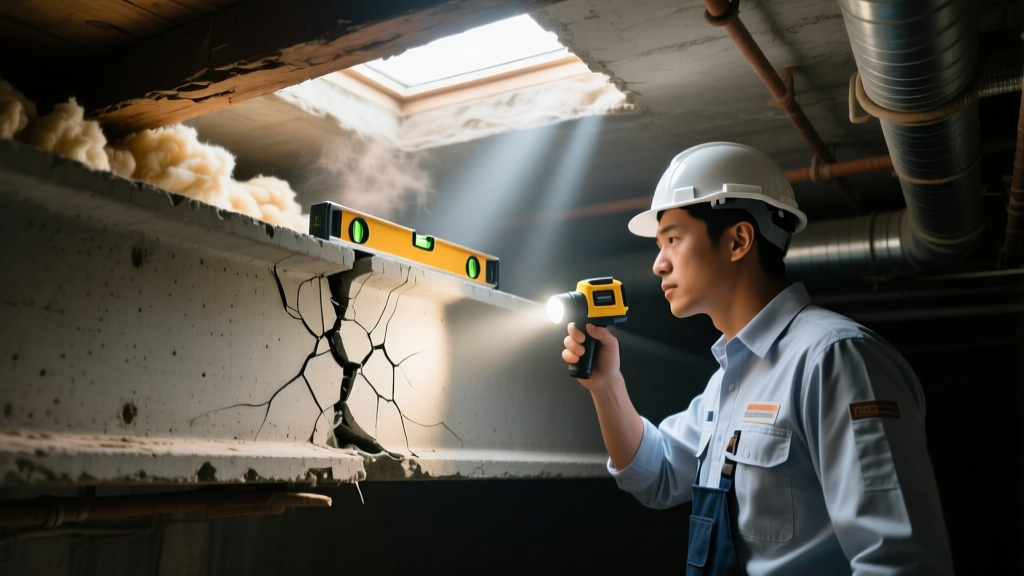
Sourcing, Code Compliance, and Industry Standards
All structural repairs to foundation beams must comply with local building codes, which are largely derived from the American Concrete Institute (ACI) standards, specifically ACI 562 (Code Requirements for Assessment, Repair, and Rehabilitation of Existing Concrete Structures). Engineers and contractors must ensure that specified materials meet the rigorous testing protocols outlined by the ACI and the American Society of Civil Engineers (ASCE).
When reviewing a contractor's proposal for foundation beam repair, verify that the specified epoxies meet ASTM C881, the carbon fiber systems possess ICC-ES evaluation reports, and the shoring plan is stamped by a licensed Professional Engineer (PE). Cutting corners on material certifications or bypassing the structural analysis phase will inevitably lead to recurring failures, rendering the initial repair investment entirely counterproductive.
Written by
Priya KapoorPriya Kapoor is a real estate market analyst and construction economics researcher with expertise in housing affordability, development feasibility, and infrastructure investment. She holds a Master of Regional Planning from Cornell University and previously worked as a senior analyst at CBRE's Investment Properties group, where she modeled returns for $4B in mixed-use development pipelines. Priya now runs an independent research practice advising developers, municipalities, and REITs on construction cost forecasting and market timing. She publishes the quarterly "BuildMat Market Pulse" report tracking material price indices across 12 commodity categories. Based in Austin, TX, Priya serves on the board of Habitat for Humanity Austin and is a marathon runner.
More from Priya Kapoor
View all
Construction Cost
Cost to Build a 1600 Sq Ft Home in 2026: Full Breakdown
Accurate 2026 cost to build a 1600 sq ft home—material, labor, and regional pricing breakdowns included. Plan your budget with real-time estimates.
Aug 11, 2026

Wood & Lumber
Name the Types of Wood for Pressure Treatment and Preservation
Learn how to name the types of wood best suited for pressure treatment. Compare species treatability, chemical retention levels, and 2026 preservation costs.
Aug 4, 2026

Stone & Masonry
Stone Veneer Suppliers Lindenhurst: 2026 Cost Analysis
Analyze 2026 stone veneer costs in Lindenhurst, NY. Compare local supplier pricing, delivery fees, and Suffolk County installation labor rates.
Aug 4, 2026