How Much Does Foundation Repair Cost? 2026 Pricing & Methods Guide
Discover how much foundation repair costs in 2026. Get detailed pricing breakdowns for piering, slabjacking, and crack sealing by damage severity.

The True Cost of Foundation Repair: 2026 Market Rates
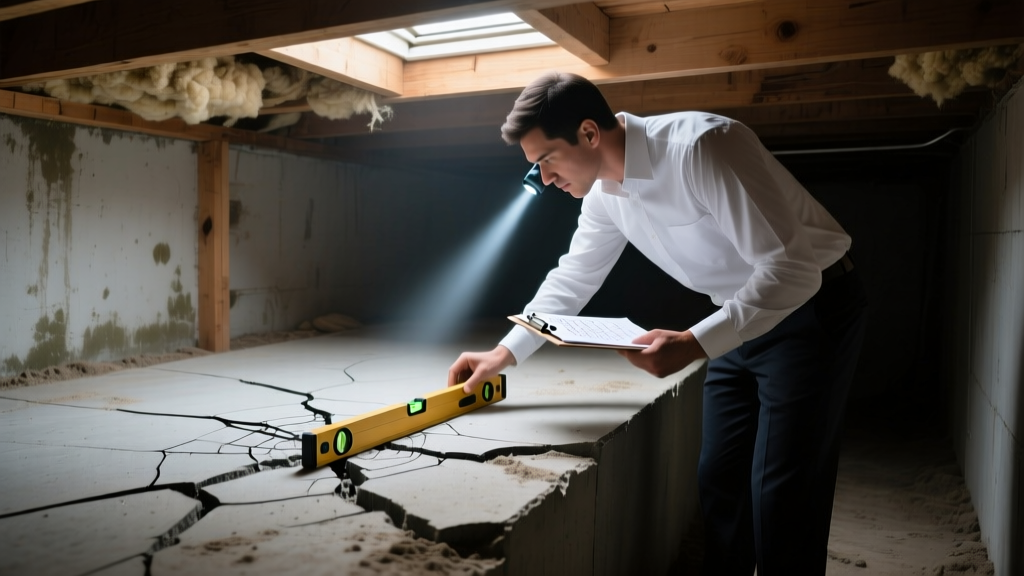
Determining exactly how much foundation repair costs requires moving past generic national averages and analyzing the specific structural mechanics of your property. In 2026, material costs for high-density polyurethane resins and galvanized steel piers have stabilized, but specialized labor and geotechnical engineering fees continue to drive up the total project cost. A minor epoxy crack injection might cost under $600, while severe differential settlement requiring deep foundation underpinning routinely exceeds $35,000.
Minor Repairs (Crack sealing, minor leveling): $500 – $2,500
Moderate Repairs (Slabjacking, localized piering): $4,000 – $12,000
Major Structural Underpinning (Full perimeter piers, basement rebuilding): $15,000 – $45,000+
According to industry data compiled by Angi's 2026 foundation cost guide, the average homeowner spends between $4,500 and $7,500 on structural stabilization. However, this average heavily skews toward moderate slab repairs and ignores the extreme high-end costs associated with deep basement excavations and expansive clay soil remediation.
Cost Breakdown by Repair Method and Technology
The repair method dictated by your structural engineer is the primary cost driver. Contractors do not simply 'fill holes'; they install engineered load-bearing systems. Below is the 2026 pricing matrix for the most common foundation repair technologies.
| Repair Method | Primary Application | 2026 Cost Range | Expected Lifespan |
|---|---|---|---|
| Polyurethane Foam Jacking | Sunken concrete slabs, driveway aprons, garage floors | $12 – $24 per sq. ft. | 10–20 years |
| Steel Push Piers | Heavy structural settlement, load-bearing perimeter walls | $1,800 – $3,200 per pier | Lifetime (50+ years) |
| Helical Piers | Light-to-medium loads, new construction, tension applications | $2,000 – $3,500 per pier | Lifetime (50+ years) |
| Carbon Fiber Straps | Bowing basement walls, shear reinforcement | $900 – $1,500 per strap | Lifetime (if movement stops) |
| Epoxy / Polyurethane Injection | Non-structural water leaks, hairline shrinkage cracks | $450 – $950 per crack | 5–15 years |
| Crawl Space Jack Posts | Sagging floors, failing wooden pier-and-beam supports | $600 – $1,200 per post | 20–30 years |
Deep Dive: Push Piers vs. Helical Piers
Homeowners often confuse push piers and helical piers. Push piers are driven hydraulically into the ground using the weight of the structure itself until they reach load-bearing strata or bedrock. They are the standard for heavy, multi-story homes experiencing severe settlement. Helical piers, featuring large steel 'screws', are torqued into the ground independently of the structure's weight. They are mandatory for lighter structures (like sunrooms or porches) where the building cannot provide the resistance needed to drive a push pier. According to the Foundation Repair Association, helical piers cost roughly 15% to 20% more due to the specialized hydraulic torque motors and higher steel mass required per unit.
Pricing Variables by Foundation Type
The architecture of your foundation dictates access, excavation requirements, and ultimately, the final invoice.
- Concrete Slab-on-Grade: Repairs here are generally the most straightforward. Contractors tunnel beneath the grade beam or drill directly through the interior slab to install piers. Expect to pay $1,500 to $2,500 per pier. Interior slab repairs require concrete cutting, jackhammering, and subsequent floor replacement, adding $15 to $30 per square foot in finish-work restoration.
- Crawl Space (Pier and Beam): Foundation repair in a crawl space usually involves replacing rotted wooden shims, installing supplemental steel jack posts, or pouring new concrete footings for failing masonry piers. Because access is confined, labor times increase. A full crawl space re-leveling typically ranges from $4,000 to $9,000.
- Full Basement: Basement repairs are the most expensive. If walls are bowing inward due to hydrostatic pressure, exterior excavation is often required to install waterproofing membranes and French drains before interior carbon fiber or steel I-beam braces can be applied. Exterior excavation alone can add $5,000 to $15,000 to the project due to heavy machinery and soil removal costs.
Hidden Cost Factors That Inflate Your Bill
When evaluating how much foundation repair costs, the contractor's initial quote rarely tells the whole story. Several peripheral expenses frequently catch homeowners off guard.
If your home exhibits severe differential settlement (uneven sinking), reputable contractors will refuse to bid the job without an independent Geotechnical Soil Report. This soil analysis costs between $1,500 and $3,500. It determines the exact depth of the load-bearing strata and the soil's plasticity index, which dictates the pier type and depth required. Never skip this step; guessing pier depth leads to catastrophic secondary failures.
Permitting and Municipal Inspections: Most municipalities require structural permits for underpinning and load-bearing modifications. Permit fees range from $150 to $800 depending on local jurisdiction, and the project timeline will be subject to municipal inspection schedules.
Landscaping and Hardscape Destruction: Installing exterior piers requires digging trenches directly against the foundation. This inevitably destroys adjacent flower beds, concrete walkways, and HVAC lines routed near the perimeter. Budget an additional 10% to 15% of the total repair cost for post-repair landscaping and concrete restoration.
Plumbing Rerouting: In slab foundations, severe settlement often shears cast-iron or PVC sewer lines. A pre-repair hydrostatic plumbing test ($250–$400) is mandatory to ensure you aren't lifting a house with active leaks underneath it, which would wash away the newly stabilized soil.
How to Evaluate a Contractor's Quote
The foundation repair industry is plagued by aggressive sales tactics and unlicensed operators. To protect your investment, scrutinize quotes for the following technical markers:
'A legitimate foundation repair proposal will explicitly list the ICC-ES (International Code Council Evaluation Service) report number for the piering or anchoring system being installed. If the contractor cannot provide an ESR (Evaluation Service Report) number for their proprietary hardware, walk away.'
Furthermore, examine the warranty. A 'lifetime warranty' is meaningless if it is not transferable to the next homeowner or if it requires you to pay an annual 'maintenance fee' to keep it valid. According to InterNACHI's guidelines on foundation defects, a reputable warranty should cover both the hardware and the labor required to re-adjust the system if minor seasonal soil fluctuation occurs, without hidden annual premiums.
Frequently Asked Questions
Does homeowners insurance cover foundation repair?
Almost never. Standard HO-3 policies explicitly exclude foundation damage caused by soil expansion, contraction, settling, or tree root intrusion. The only exception is if the foundation damage is the direct, immediate result of a covered peril, such as a sudden, accidental plumbing leak beneath the slab that washes away the supporting soil. Even then, insurance typically covers the cost to access and repair the pipe, not the comprehensive structural stabilization of the home.
Can I DIY foundation repair to save money?
You can DIY cosmetic repairs, such as injecting non-structural shrinkage cracks with two-part epoxy kits ($50–$150) or improving exterior grading and downspout extensions to manage surface water. You cannot DIY structural underpinning. Installing steel piers requires 10,000+ PSI hydraulic equipment, structural load calculations, and engineering permits. Attempting to jack up a settled foundation using consumer-grade bottle jacks and wooden blocks will result in cracked drywall, shattered windows, and compromised roof trusses.
How long does a typical foundation repair project take?
A standard 8-to-12 pier exterior installation takes 3 to 5 days for a professional crew. Interior slab repairs, which involve concrete demolition, soil treatment, and foam injection, usually take 2 to 4 days. However, the total project timeline from contract signing to completion is often 4 to 8 weeks, factoring in permit approvals, geotechnical reporting, and material lead times.
Written by
Elena RodriguezElena Rodriguez is a civil engineer and technical writer specializing in concrete technology, masonry systems, and ASTM/ACI compliance. She earned her B.S. in Civil Engineering from Texas A&M University and spent a decade at a materials testing laboratory, performing over 2,000 concrete compressive strength tests and masonry prism evaluations. Elena is an ACI-certified Field Testing Technician (Grade I) and a member of ASTM Committee C12 on Natural Building Stone. She currently consults on forensic engineering cases involving concrete failures and moisture intrusion. Based in San Antonio, TX, Elena is a proud member of the Society of Women Engineers (SWE) and coaches her daughter's FIRST Robotics team.
More from Elena Rodriguez
View all
Walls & Panels
Cost Analysis: Light Gauge Steel Framing Advantages and Disadvantages
Evaluate light gauge steel framing advantages and disadvantages through a strict cost analysis lens, comparing material, labor, and lifecycle expenses.
Aug 4, 2026

Walls & Panels
Gypsum Board Types: Exact Specifications, Thickness & Dimensions
Compare standard, Type X, and moisture-resistant gypsum board types. Get exact specifications, thicknesses, dimensions, and ASTM standards for your project.
Aug 4, 2026

Fire Resistance
Best Fire-Resistant Outdoor Decking Materials: 2026 Buyer Guide
Discover the best fire-resistant outdoor decking materials for 2026. Compare Class A PVC, aluminum, and hardwood options for WUI compliance and safety.
Aug 4, 2026