Fox Blocks ICF Systems for New Foundation Construction: A Deep Dive
A deep dive into Fox Blocks ICF product lines for new foundation construction, covering 2026 costs, structural specs, and installation best practices.
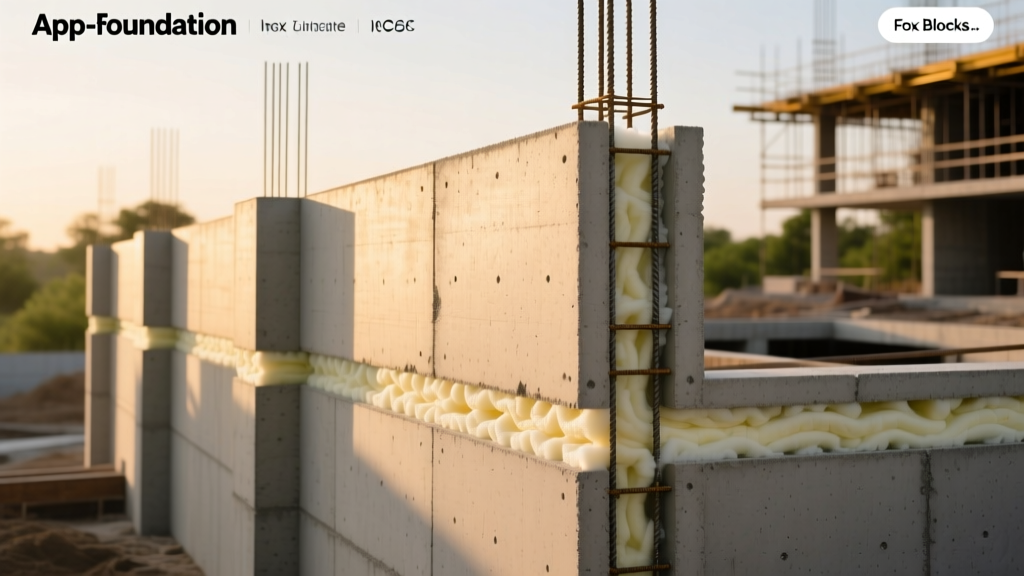
The Shift Toward ICF in New Foundation Construction
When planning new foundation construction, builders and homeowners are increasingly pivoting from traditional poured concrete or concrete masonry units (CMU) to Insulated Concrete Forms (ICF). Among the market leaders, Fox Blocks (manufactured by Airlite Plastics Co.) has established a dominant footprint due to its interlocking block design, integrated furring strips, and comprehensive technical support. According to the U.S. Department of Energy, ICF foundations can reduce below-grade heat loss by up to 40% compared to uninsulated concrete, while simultaneously providing a continuous air barrier that mitigates soil gas intrusion.
This deep dive evaluates the specific Fox Blocks product lines, analyzing their structural capacities, 2026 pricing realities, and the critical installation protocols required to prevent catastrophic job-site failures.
Decoding the Fox Blocks Product Line
Fox Blocks categorizes its straight and corner forms primarily by the thickness of the concrete core. Selecting the correct series is the first critical decision in new foundation construction, as it dictates the structural load capacity, thermal mass, and overall material yield.
| Series | Concrete Core | Total Wall Thickness | R-Value | Concrete Yield (per 10 sq ft) | Primary Application |
|---|---|---|---|---|---|
| 3300 | 6 inches | 11.25 inches | R-23 | 0.19 cu. yards | Light-load residential, walk-out basements, garage walls |
| 4400 | 8 inches | 13.25 inches | R-23 | 0.25 cu. yards | Standard residential foundations, retaining walls |
| 5500 | 10 inches | 15.25 inches | R-23 | 0.31 cu. yards | High-wind/seismic zones, multi-story commercial |
| 6600 | 12 inches | 17.25 inches | R-23 | 0.37 cu. yards | Heavy civil, deep basements, extreme lateral loads |
For standard new foundation construction in most North American residential markets, the 4400 Series (8-inch core) is the default specification. It accommodates standard #5 (5/8-inch) and #6 (3/4-inch) rebar grids while providing sufficient shear strength to resist lateral soil pressure. The 2.5-inch thick expanded polystyrene (EPS) panels on each side yield a continuous R-23 insulation value, which satisfies or exceeds the below-grade insulation requirements of the 2024 and 2027 International Residential Code (IRC) in nearly all climate zones.
2026 Cost Analysis: ICF vs. Traditional Poured Walls
Cost remains the primary friction point for ICF adoption. While the material cost of Fox Blocks is higher than bare concrete forms, the labor savings and elimination of secondary framing and insulation steps alter the financial equation.
2026 Pricing Baseline: 4400 Series Foundation
- ICF Block Material Only: $4.80 – $5.50 per sq. ft. of wall area.
- Rebar & Accessories (Bracing, ties): $2.10 – $2.80 per sq. ft.
- Concrete (Delivered & Pumped): $8.50 – $11.00 per sq. ft.
- Total Installed ICF Cost: $28.00 – $36.00 per sq. ft. of wall area.
- Comparison: Traditional 8-inch poured concrete (forms, labor, stripping, plus added rigid foam insulation to meet code) averages $24.00 – $31.00 per sq. ft.
Calculating Concrete Yield and Waste Factors
A common miscalculation in new foundation construction using ICF is underestimating concrete volume. The Fox Blocks 4400 series requires exactly 0.25 cubic yards of concrete per 10 square feet of wall area. However, contractors must factor in a waste and over-excavation allowance of 8% to 12%. Furthermore, concrete pump trucks (specifically boom pumps with 3-inch hoses) are mandatory for ICF; line pumps frequently clog due to the tight rebar spacing and the 8-inch core restriction. Ensure your concrete mix design specifies a 3/8-inch pea gravel aggregate and a high-slump (6 to 7 inches) or self-consolidating concrete (SCC) mix to ensure complete consolidation without excessive vibration.
Critical Installation Protocols to Prevent Blowouts
The most severe risk during an ICF foundation pour is a "blowout"—where the hydrostatic pressure of wet concrete ruptures the EPS forms, spilling concrete into the trench and compromising the wall's structural integrity. The Insulating Concrete Form Manufacturers Association (ICFMA) strictly outlines pour rate limitations to prevent this.
Never exceed a vertical pour rate of 4 feet per hour when using Fox Blocks. Pouring a full 9-foot basement wall in a single continuous lift will generate hydrostatic pressure exceeding the tensile strength of the interlocking plastic ties, resulting in catastrophic form failure. Always pour in 4-foot lifts, allowing the lower lift to achieve initial set (approximately 45-60 minutes depending on ambient temperature) before placing the next lift.
To ensure a successful pour, follow this strict job-site sequence:
- Rebar Placement: Install horizontal and vertical rebar according to engineered schedules. Maintain a minimum 1.5-inch concrete cover from the EPS face. Use plastic rebar chairs specifically designed for ICF to prevent the steel from resting against the foam.
- Bracing Installation: Install Fox Blocks turnbuckle bracing systems every 4 linear feet along the top of the wall. Cross-brace all corners and openings. Laser-level the bracing to ensure the foundation remains perfectly plumb.
- Corner Reinforcement: Fox Blocks corners are pre-molded, but they must be secured with 2-inch steel corner brackets or additional rebar pins to prevent separation during the pour.
- Vibration: Use a 1-inch diameter pencil vibrator. Insert the vibrator every 18 inches, but never let the vibrator head touch the EPS foam or the plastic web ties, as this will melt the foam or snap the structural connections.
Below-Grade Waterproofing Compatibility
EPS foam is highly susceptible to chemical degradation from petroleum-based solvents. Applying a standard asphalt-based foundation coating directly to Fox Blocks will melt the insulation, destroying the R-value and creating voids where water can channel directly to the concrete.
For new foundation construction using ICF, you must specify water-based or low-VOC waterproofing membranes. Industry-standard compatible products include Polyguard Underseal or Tremco Tuffseal. These peel-and-stick or fluid-applied membranes adhere aggressively to the EPS without chemical reaction. Additionally, a dimpled drainage board (such as Delta-MS) must be mechanically fastened or adhered over the waterproofing layer to protect the EPS from backfill abrasion and provide a capillary break for hydrostatic water management.
Engineering and Code Compliance
Fox Blocks foundations can be designed using the prescriptive path outlined in IRC Chapter 6 for standard residential geometries in low-seismic zones. However, for custom homes with complex footprints, large window buck openings, or sites in Seismic Design Categories D, E, or F, a site-specific engineered design is mandatory.
Engineers will typically specify increased vertical rebar doweling into the continuous concrete footing. Because ICF walls act as monolithic concrete shear walls, they offer superior resistance to lateral wind and seismic loads compared to CMU block, but the connection detailing at the sill plate and the footing interface must be meticulously executed. Anchor bolts must be set into the wet concrete using specialized ICF anchor bolt templates to ensure they align perfectly with the treated wood sill plate without crushing the top layer of EPS.
Final Verdict for Builders and Homeowners
For new foundation construction, Fox Blocks provides a highly refined, code-compliant system that bridges the gap between structural resilience and energy efficiency. While the upfront material cost and the requirement for specialized concrete mix designs and pump equipment introduce a slight learning curve, the elimination of post-pour insulation installation and the dramatic reduction in air infiltration make it a superior choice for high-performance residential builds. Builders transitioning to ICF should invest in manufacturer-certified training and strictly enforce pour-rate limits on-site to leverage the full structural and financial benefits of the system.