Foundation Repair Cost Per Square Foot: Breakdown by Method and Damage Type
Discover the true foundation repair cost per square foot in 2026. Compare pricing for piering, slabjacking, and crack sealing by damage type and method.
The Flaw in "Per Square Foot" Foundation Pricing
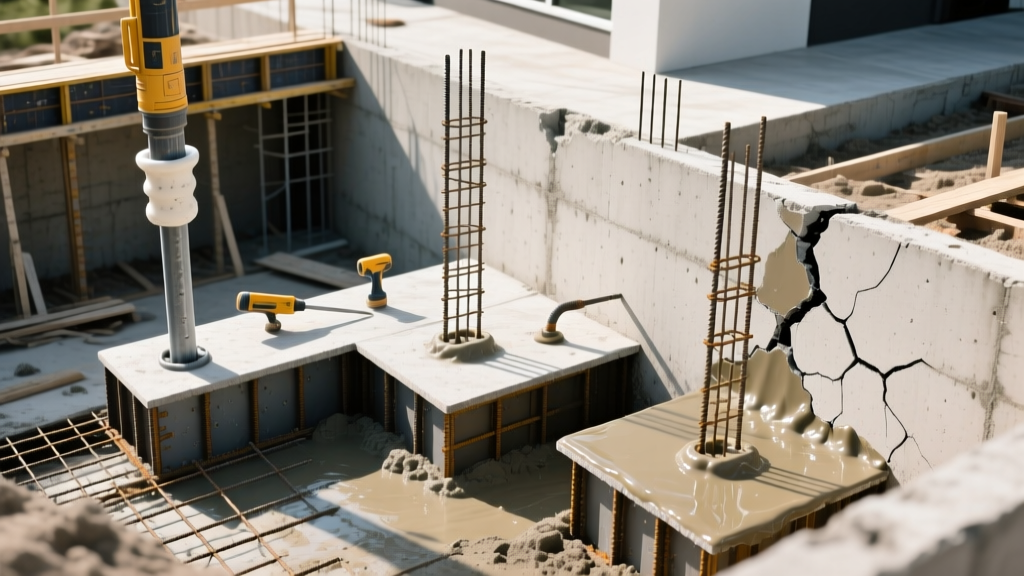
When homeowners begin researching structural stabilization, the most common search query is the foundation repair cost per square foot. However, applying a uniform square-footage metric to foundation repair is fundamentally flawed and often leads to severe budget miscalculations. While surface-level repairs like waterproofing or mudjacking can be calculated by area, deep structural stabilization is priced by linear depth, load-bearing strata, and individual pier placement.
According to guidelines referenced by the American Society of Home Inspectors (ASHI), foundation failures are localized. A 2,500-square-foot home may only require stabilization along a 40-linear-foot section of the perimeter. Pricing the entire footprint by square footage will result in massive overestimation, while attempting to average the localized repair cost across the whole house will yield a deceptively low number that contractors cannot honor.
Foundation Repair Cost Per Square Foot by Method (2026 Data)
To provide accurate budgeting, we must separate repairs into two categories: Area-Based Repairs (priced per square foot) and Point/Linear Repairs (priced per unit or linear foot). Below is the current 2026 national average pricing matrix for residential foundation stabilization.
| Repair Method | Pricing Metric | Average Cost Range | Best Application |
|---|---|---|---|
| Polyurethane Foam Jacking | Per Square Foot | $5 - $25 / sq ft | Slab void filling, minor settling, interior floors |
| Mudjacking (Slabjacking) | Per Square Foot | $3 - $8 / sq ft | Exterior flatwork, driveways, heavy patio slabs |
| Steel Push Piers | Per Pier (Depth dependent) | $1,500 - $3,200 / pier | Deep structural settlement, heavy load-bearing walls |
| Helical Piers | Per Pier | $1,800 - $3,800 / pier | Lighter structural loads, high water tables, new builds |
| Carbon Fiber Straps | Per Strap | $800 - $1,600 / strap | Bowing basement walls, horizontal shear cracks |
| Epoxy Crack Injection | Per Linear Foot | $25 - $60 / linear ft | Non-structural shrinkage cracks, water sealing |
Area-Based Repairs: Where Square Footage Actually Applies
If your foundation issue is limited to slab settlement without deep structural compromise, contractors will use the foundation repair cost per square foot metric. The two primary methods for this are polyurethane foam jacking and traditional mudjacking.
Polyurethane Foam Jacking (Deep Lift Technology)
High-density polyurethane resin (such as Alchemy-Spetec Deep Lift formulations) is injected through 5/8-inch drilled holes. The foam expands to 25 times its liquid volume, compacting loose soil and lifting the slab. In 2026, material costs for two-part closed-cell structural foams have stabilized, but the precision required for interior floor lifting keeps the installed cost between $12 and $25 per square foot. The primary advantage is the minimal weight added to the underlying soil (roughly 2-4 lbs per cubic foot cured) and the 15-minute cure time.
Traditional Mudjacking
Mudjacking pumps a slurry of topsoil, sand, and Portland cement beneath the slab. While the material cost is incredibly low, the process requires drilling 1.5-inch to 2-inch holes, and the slurry adds immense weight (up to 100+ lbs per cubic foot) to already failing soil. Expect to pay $3 to $8 per square foot. This method is largely restricted to exterior, non-structural slabs like sidewalks and driveways where aesthetic hole-patching is less critical.
Point and Linear Repairs: The True Cost of Structural Failure
When a perimeter beam drops, or a basement wall bows inward due to hydrostatic pressure, square footage becomes irrelevant. The National Association of Home Builders (NAHB) notes that structural remediation relies on localized load transfer.
Steel Push Piers vs. Helical Piers
Both systems bypass unstable topsoil to transfer the home's weight to bedrock or load-bearing strata. However, their pricing models differ based on soil mechanics:
- Steel Push Piers: Hydraulically driven into the ground using the weight of the house as resistance. Pricing is heavily dependent on depth. A pier driven 20 feet to bedrock may cost $1,500, while a pier requiring 50 feet of steel in expansive clay regions (like Texas or Colorado) can exceed $3,200 per pier. Standard spacing is one pier every 5 to 7 linear feet.
- Helical Piers: Screwed into the ground using hydraulic torque motors. Because they do not rely on the structure's weight for installation, they are ideal for lighter structures or proactive new construction. Pricing is dictated by the torque required to reach competent soil, typically averaging $2,200 per pier installed.
Bowing Wall Stabilization
For poured concrete or CMU (concrete masonry unit) basement walls experiencing lateral deflection, carbon fiber straps (e.g., Fortress Stabilization grids) are epoxied to the interior surface. These are priced per strap, typically spaced 4 feet apart. A 30-foot wall requiring 8 straps will cost between $6,400 and $12,800 total, entirely independent of the basement's square footage.
Step-by-Step: Calculating Your Specific Repair Estimate
To accurately forecast your budget before calling a contractor, follow this diagnostic framework:
- Identify the Failure Plane: Is the crack/sticking door isolated to an interior slab (Area-Based), or is it along the exterior perimeter/load-bearing wall (Point/Linear)?
- Measure the Linear Footage (For Perimeter Issues): Measure the length of the affected exterior wall. Divide by 6 (the average pier spacing). This gives you the estimated number of piers required.
- Estimate Soil Depth: Check local geological surveys or ask neighbors about their pier depths. Multiply the estimated pier count by the regional average cost per pier ($1,800 - $2,800).
- Calculate Square Footage (For Slab Issues): Measure the length and width of the sunken interior floor area. Multiply by $15 (the median polyurethane foam cost per square foot).
- Add the Hidden Multipliers: Factor in a 15% contingency for concrete breakout/replacement, landscaping restoration, and local municipal permitting fees, which average $250-$600 depending on jurisdiction.
"The most expensive foundation repair is the one that addresses the symptom but ignores the soil hydrology. Spending $10,000 on piers without installing French drains to manage the clay expansion cycle will result in secondary failure within five years."
— Structural Engineering Forensic Guidelines, 2025 Edition
Frequently Asked Questions
Does home insurance cover foundation repair costs?
Standard HO-3 homeowner's insurance policies explicitly exclude foundation settlement caused by soil expansion, contraction, or poor drainage. Coverage is typically only triggered if the foundation damage is the direct result of a covered peril, such as a sudden plumbing leak beneath the slab or a vehicle striking the structure. Always review your policy's "earth movement" exclusion clause.
Is polyurethane foam jacking a permanent fix?
High-density structural polyurethane foam does not degrade, retain moisture, or lose compressive strength over time, effectively making the foam itself permanent. However, if the underlying cause of the soil erosion or clay shrinkage (e.g., a broken sewer line or lack of perimeter soaker hoses) is not corrected, the soil around the foam will continue to shift, potentially causing new settlement adjacent to the repaired zone.
How do I verify if a contractor's per-square-foot quote is legitimate?
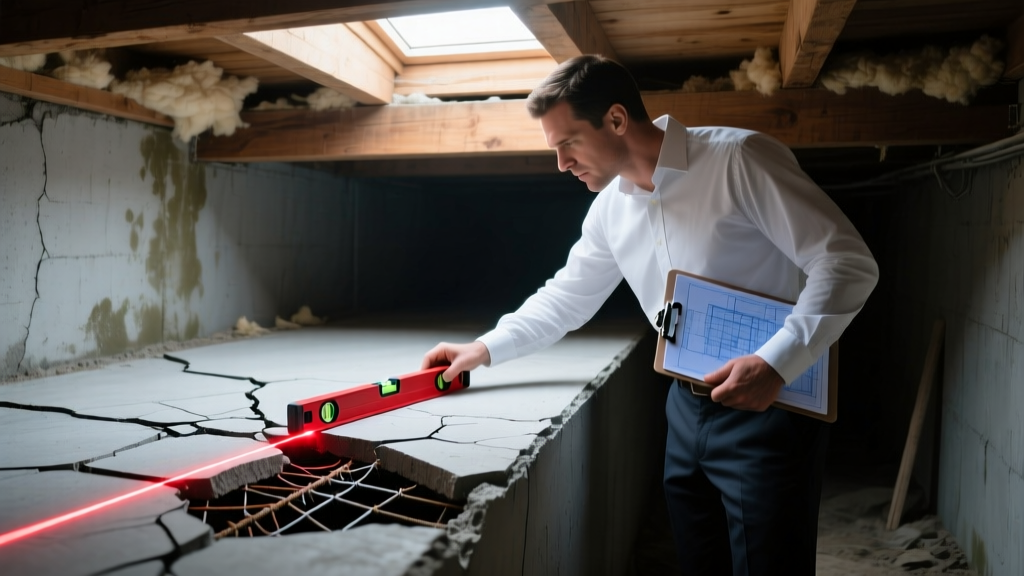
Request the engineering report. Legitimate foundation repair companies in most states must base their proposals on a report generated by an independent, licensed Professional Engineer (P.E.). If the contractor's salesperson generated the square-footage quote without a P.E.'s structural load calculation and soil analysis, the quote is speculative and legally precarious.
Written by
Elena RodriguezElena Rodriguez is a civil engineer and technical writer specializing in concrete technology, masonry systems, and ASTM/ACI compliance. She earned her B.S. in Civil Engineering from Texas A&M University and spent a decade at a materials testing laboratory, performing over 2,000 concrete compressive strength tests and masonry prism evaluations. Elena is an ACI-certified Field Testing Technician (Grade I) and a member of ASTM Committee C12 on Natural Building Stone. She currently consults on forensic engineering cases involving concrete failures and moisture intrusion. Based in San Antonio, TX, Elena is a proud member of the Society of Women Engineers (SWE) and coaches her daughter's FIRST Robotics team.
More from Elena Rodriguez
View all
Walls & Panels
Cost Analysis: Light Gauge Steel Framing Advantages and Disadvantages
Evaluate light gauge steel framing advantages and disadvantages through a strict cost analysis lens, comparing material, labor, and lifecycle expenses.
Aug 4, 2026

Walls & Panels
Gypsum Board Types: Exact Specifications, Thickness & Dimensions
Compare standard, Type X, and moisture-resistant gypsum board types. Get exact specifications, thicknesses, dimensions, and ASTM standards for your project.
Aug 4, 2026

Fire Resistance
Best Fire-Resistant Outdoor Decking Materials: 2026 Buyer Guide
Discover the best fire-resistant outdoor decking materials for 2026. Compare Class A PVC, aluminum, and hardwood options for WUI compliance and safety.
Aug 4, 2026