Foundation Repair Costs in Texas: 2026 Complete Guide
Explore 2026 foundation repair costs in Texas. Compare pricing for pressed concrete piers, steel piers, and foam jacking for expansive clay soils.

The Texas Soil Factor: Why Foundations Fail Here
Understanding foundation repair costs in Texas requires first understanding the geology beneath the slab. The state is infamous for its highly expansive clay soils, particularly in the Blackland Prairie region (stretching from Dallas down to San Antonio) and the Gulf Coast clay belts around Houston. According to soil profiles published by Texas A&M AgriLife Extension, these montmorillonite-rich clays possess a massive shrink-swell potential. During severe droughts, the soil loses moisture and shrinks, causing the foundation to drop. During heavy rainfall, the clay absorbs water and expands, pushing the slab upward. This constant differential movement leads to severe tensile stress on post-tensioned and conventionally reinforced concrete slabs.
In Texas, large shade trees like Live Oaks and Pecans planted within 15 feet of a foundation can extract up to 150 gallons of water per day from the soil. This localized drying creates asymmetric settlement that standard gutter maintenance cannot fix, often necessitating mechanical root barriers alongside structural piers.
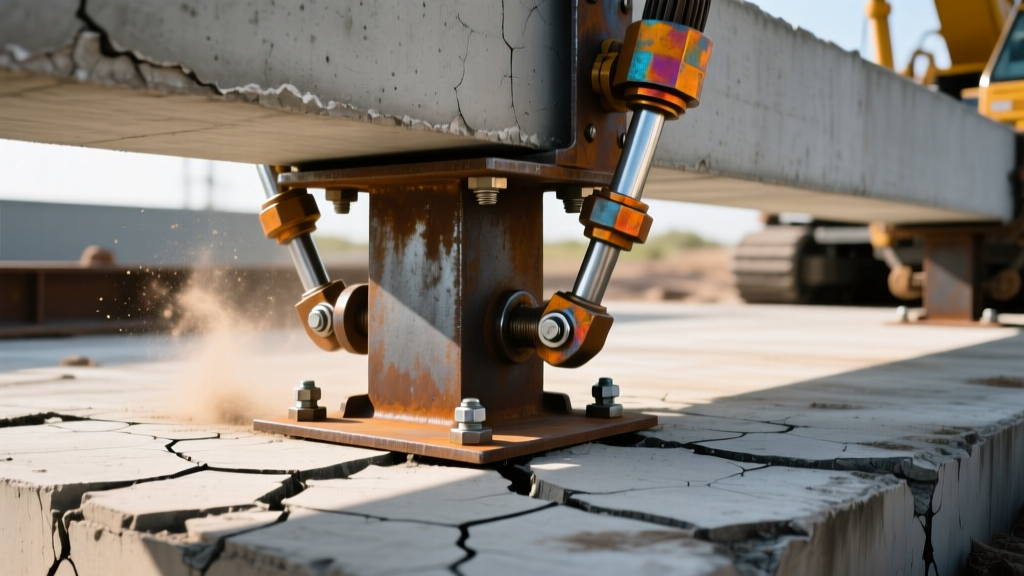
2026 Breakdown of Foundation Repair Costs in Texas
In 2026, material costs for structural steel and polyurethane chemicals have largely stabilized, but specialized labor rates in high-demand metros like Austin, Dallas, and Houston continue to influence final project totals. The average Texas homeowner spends between $5,200 and $11,500 for a standard slab foundation repair, though severe structural overhauls utilizing deep steel piers can exceed $25,000.
| Repair Method | 2026 Unit Cost | Best Application |
|---|---|---|
| Pressed Concrete Piers | $160 - $240 per pier | Standard slab settlement in stable clay layers |
| Steel Push Piers | $280 - $450 per pier | Deep bedrock anchoring; severe structural failure |
| Helical Piers | $300 - $500 per pier | Lightweight structures, porches, and new construction |
| Mudjacking (Slabjacking) | $4 - $7 per sq. ft. | Lifting sunken exterior flatwork and non-structural slabs |
| Polyurethane Foam Jacking | $12 - $22 per sq. ft. | Precision interior slab lifting; water-saturated soils |
| Mechanical Root Barriers | $65 - $90 per linear ft. | Preventing tree-induced moisture depletion near grade beams |
Deep Dive: Piering Methods for Texas Slab Foundations
When a Texas home experiences differential settlement exceeding 1.5 inches, cosmetic patching is insufficient. The foundation must be mechanically underpinned. The two dominant methods in the state are pressed concrete and steel push piers.
Pressed Concrete Piers (Friction Piers)
This is the most common and cost-effective method in Texas. Contractors excavate a 2-foot square working hole beneath the grade beam. They then stack 6-inch diameter by 12-inch long solid concrete cylinders, using a 20-ton hydraulic ram to press them into the ground. The process stops when the hydraulic pressure reaches a specific refusal point (usually around 8,000 to 10,000 PSI), indicating the pier has hit a load-bearing clay stratum.
- Pros: Lower upfront cost; utilizes the friction of expansive clay to hold the pier in place; widely available.
- Cons: Susceptible to lateral shifting if the surrounding clay dries out and shrinks away from the cylinder; rarely reaches true bedrock.
Steel Push Piers (End-Bearing Piers)
For homes in Houston or coastal areas where stable clay is exceptionally deep, steel push piers are the gold standard. Sections of 2.875-inch outer-diameter galvanized steel pipe are hydraulically driven through the unstable topsoil until they refuse on bedrock or a highly compacted load-bearing stratum, often 25 to 45 feet below the surface.
- Pros: Immune to lateral soil shrinkage; permanently anchors the home to stable geology; allows for higher lifting capacities.
- Cons: Significantly higher cost per pier; requires heavier equipment and more extensive landscaping disruption.
Slab Lifting: Mudjacking vs. Polyurethane Foam
Not all foundation issues require deep underpinning. If an interior slab or exterior patio has simply settled uniformly without structural beam failure, slab lifting is the appropriate intervention.
Mudjacking (Slurry)
Material: Topsoil, sand, water, and Portland cement.
Weight: ~100 lbs per cubic foot.
Drill Holes: 1.5 to 2 inches in diameter.
Verdict: Best for heavy exterior flatwork like driveways. The heavy slurry can cause further sinking in highly compressible Gulf Coast clays.
Polyurethane Foam Jacking
Material: Two-part high-density structural polymer.
Weight: 2.5 to 4.0 lbs per cubic foot.
Drill Holes: 5/8 inch (dime-sized).
Verdict: Superior for interior Texas slab foundations. The hydrophobic foam displaces water, cures in 15 minutes, and adds negligible weight to the underlying soil.
Hidden Costs: Engineering, Permits, and Landscaping
When budgeting for foundation repair costs in Texas, homeowners frequently overlook the ancillary expenses required to execute the project legally and safely. The American Society of Civil Engineers strongly recommends that any structural underpinning be guided by an independent third-party structural engineer, not just the repair contractor's salesperson.
- Independent Engineering Report ($500 - $900): A licensed Texas P.E. (Professional Engineer) will perform a manometer survey, map the slab elevation, and specify the exact number, depth, and type of piers required. This prevents contractors from over-selling unnecessary piers.
- Municipal Permits ($150 - $600): Permitting requirements vary wildly. The City of Austin strictly regulates foundation repairs and requires engineered plans and multiple inspections. Conversely, unincorporated areas in Harris or Montgomery counties may require no permits at all. Always verify local municipal codes.
- Plumbing and Landscaping Restoration ($1,000 - $4,000): Lifting a slab can shear cast-iron sewer lines or PVC water mains. A hydrostatic pressure test by a licensed plumber is mandatory before and after lifting. Furthermore, contractors will cut through concrete patios, decks, and landscaping to dig working holes; restoring these is rarely included in the base repair quote.
Decision Framework: Repair vs. Walk Away
For real estate investors and homebuyers evaluating a Texas property with active foundation distress, use this framework to determine if the deal is viable:
- Check the Plumbing First: If the home has original cast-iron drain lines (pre-1980s) and the slab has dropped more than 2 inches, lifting the foundation will likely shatter the underground plumbing. Factor in $8,000 to $15,000 for a complete under-slab plumbing reroute (tunneling or breaking concrete) before proceeding.
- Evaluate the Roof and Framing: Foundation settlement transfers stress upward. If you see diagonal drywall cracks radiating from door frames, or if the roof ridge line is visibly sagging, the structural damage extends beyond the slab. Repairing the foundation will not automatically fix severed roof trusses or racked wall studs.
- Review the Transferable Warranty: If the seller already repaired the foundation, demand the original engineering report and the lifetime warranty documentation. According to consumer protection guidelines monitored by the Texas Department of Insurance, warranties are only valid if they are backed by a third-party insurance program, not just the contractor's promise. If the contractor went out of business, the warranty is worthless.
By understanding the specific soil mechanics, accurate 2026 pricing metrics, and the critical hidden costs associated with Texas foundations, homeowners and buyers can make highly informed, financially sound structural decisions.
Written by
James ThorntonJames Thornton is a construction industry veteran with 25 years of hands-on experience in wood framing, lumber grading, and residential building codes. He started as a framing carpenter in rural Oregon, earned his ICC Residential Building Inspector certification, and eventually became a senior plan reviewer for the City of Portland Bureau of Development Services. James holds a B.S. in Wood Science & Technology from Oregon State University and is a certified lumber grader through the West Coast Lumber Inspection Bureau (WCLIB). He has inspected over 3,000 residential construction sites and authored the city's internal guide on advanced framing techniques (2x6 at 24" O.C.). James lives in Bend, OR, where he builds custom timber-frame cabins and competes in lumberjack sports.
More from James Thornton
View all
Insulation
Best Home Insulation Materials: Complete 2026 Guide
Compare top home insulation materials for 2026. Find R-values, installed costs per square foot, and best uses for fiberglass, spray foam, and mineral wool.
Aug 4, 2026

Sustainable Building
Certify Your Green Building Material for LEED and WELL
Step-by-step guide to certifying a green building material for LEED v5 and WELL v2. Master EPDs, HPDs, and VOC limits for 2026 project specifications.
Aug 4, 2026

Stone & Masonry
Veneer Stacked Stone Panels: Interior Design & Style Showcase
Discover how veneer stacked stone panels transform interiors. Explore modern design profiles, material pairings, and technical installation specs.
Aug 4, 2026