Roof Installation Specs: Decoding Wind, Fire, and Impact Ratings
Master roof installation specs with our guide to wind uplift, fire resistance, and impact ratings. Learn how to choose code-compliant materials.
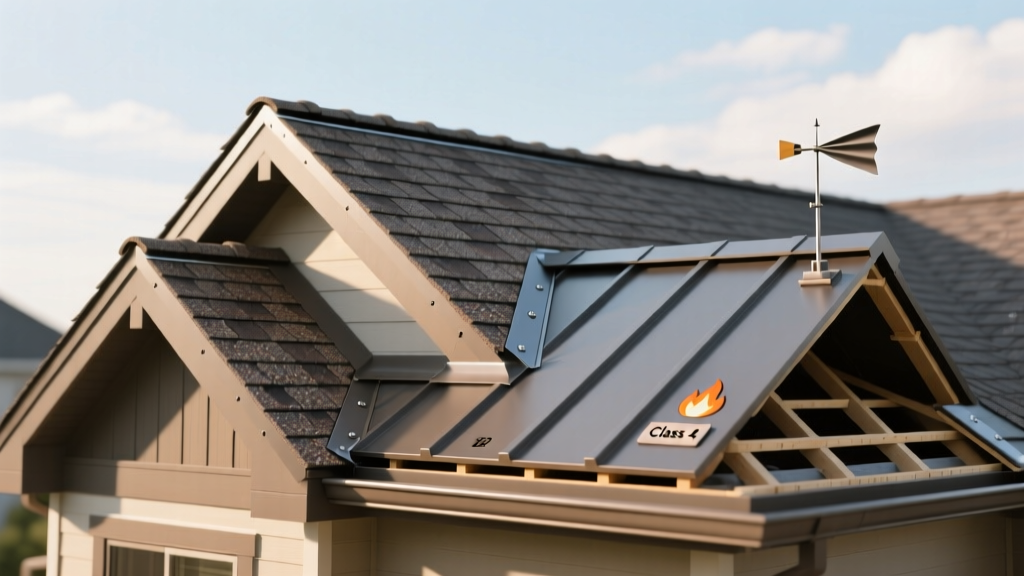
The Anatomy of Roofing Performance Standards
A successful roof installation relies on more than just aesthetic material selection; it requires strict adherence to engineered performance specifications. Building codes and insurance underwriters evaluate roofing assemblies based on standardized laboratory tests that simulate extreme environmental stressors. Understanding these metrics is critical for contractors and homeowners to ensure the installed system will survive localized climate hazards without catastrophic failure.
- UL (Underwriters Laboratories): Focuses on fire resistance (UL 790), wind uplift (UL 580), and impact (UL 2218).
- FM (Factory Mutual): Specializes in commercial and severe weather standards, notably simulated hail (FM 4473) and wind uplift (FM 4474).
- ASTM International: Develops baseline material testing protocols, including wind resistance for asphalt shingles (ASTM D3161) and fire testing (ASTM E108).
Wind Uplift and Tear-Through Specifications
Wind damage is the leading cause of roofing insurance claims. The resistance of a roof installation to wind events is measured by its ability to resist both uplift (suction forces on the leeward side) and tear-through (shear forces on the fasteners).
Decoding ASTM D3161 Wind Classes
For steep-slope asphalt shingles, ASTM D3161 categorizes wind resistance into distinct classes based on fan-induced wind tunnel testing. Selecting the correct class dictates the required fastener pattern during installation.
| Wind Class | Test Velocity (MPH) | Required Nail Pattern | Typical Application Zone |
|---|---|---|---|
| Class A | 60 mph | 4 nails per shingle | Inland, low-wind regions (rarely permitted in modern codes) |
| Class D | 90 mph | 4 nails per shingle | Standard residential baseline |
| Class F | 110 mph | 6 nails per shingle | High-wind regions, coastal perimeters |
| Class H | 150 mph | 6 nails + sealed tabs | HVHZ (High-Velocity Hurricane Zones) |
Real-World Failure Mode: A common installation error occurs when contractors use Class F rated shingles but apply them using a standard 4-nail pattern. In winds exceeding 90 mph, the reduced fastener count concentrates shear stress on the remaining nails, leading to tear-through at the nail head. To achieve Class F or H performance, the roof installation must strictly utilize 11 or 12-gauge hot-dipped galvanized roofing nails with 3/8-inch heads, driven flush (not over-driven) into the designated 6-nail nailing strip.
Fire Resistance Ratings and WUI Compliance
Fire ratings evaluate the entire roofing assembly—including the deck, underlayment, and exterior covering—not just the visible surface material. The standard test, UL 790 (equivalent to ASTM E108), exposes the roof to a spreading flame, an intermittent flame, and a burning brand.
The Class A Burning Brand Test
To achieve a Class A rating, the assembly must withstand a 12-inch by 12-inch wood lattice burning brand weighing 2,000 grams. This simulates large, wind-blown embers from a wildfire. As of 2026, municipalities in the Wildland-Urban Interface (WUI) strictly mandate Class A assemblies.
Expert Insight: Installing a Class A rated shingle over a standard synthetic underlayment on an OSB deck may still fail a WUI inspection if the underlayment is not specifically rated for fire resistance. For maximum protection in ember-prone zones, specify a heavy-weight fiberglass mat underlayment or an ASTM D1970 compliant self-adhering ice and water shield over the entire deck, not just the eaves.
Impact and Hail Resistance: UL 2218 vs. FM 4473
Not all impact tests are created equal. Understanding the distinction between UL and FM testing protocols is vital for roof installations in hail-prone corridors like the Midwest and Great Plains.
The Steel Ball Drop Test (UL 2218)
UL 2218 Class 4 requires dropping a 2-inch diameter steel ball from a height of 20 feet onto the roofing material twice in the same spot. While this proves blunt-force durability, it does not accurately simulate the kinetic energy and localized fracturing caused by actual ice spheres.
Simulated Hail (FM 4473)
FM 4473 fires actual ice spheres at the roofing material using a pneumatic cannon, simulating realistic terminal velocities. For severe hail zones, insurance underwriters increasingly prefer FM 4473 ratings. When specifying impact-resistant shingles, look for products utilizing SBS (Styrene-Butadiene-Styrene) modified asphalt, which provides rubberized elasticity that allows the shingle to absorb and dissipate kinetic energy without fracturing the fiberglass mat.
Thermal Emittance and Solar Reflectance Index (SRI)
Thermal performance specifications dictate the roof's ability to reject solar heat, measured by the Solar Reflectance Index (SRI). The Cool Roof Rating Council (CRRC) maintains the database for these values.
- Standard Asphalt Shingles: SRI 10 to 15 (Absorbs high heat, increases cooling loads).
- Cool Roof Asphalt Shingles: SRI 20+ (Features specialized IR-reflective granules).
- Standing Seam Metal (Unpainted): SRI 40+.
- Highly Reflective TPO/PVC Membranes: SRI 100+.
In jurisdictions enforcing strict energy codes, such as California's Title 24, steep-slope roof installations must meet a minimum aged SRI of 16, while low-slope commercial roofs require an aged SRI of 32. Always verify the aged SRI value (calculated after 3 years of weathering), not the initial out-of-the-box value.
Decision Matrix: Matching Specs to Climate Hazards
Use this framework to align material specifications with localized environmental threats during the planning phase of your roof installation.
| Primary Climate Hazard | Critical Specification | Recommended Material / Assembly |
|---|---|---|
| Hurricane / Extreme Wind | ASTM D3161 Class H; UL 580 Class 90 | Architectural shingles with 6-nail pattern + sealed tabs, or mechanically seamed standing seam metal. |
| WUI / Wildfire Embers | UL 790 Class A Assembly | Class A shingles or metal over fire-rated gypsum board or heavy fiberglass underlayment. |
| Severe Hail (>1.75 inch) | FM 4473 Class 3 or 4; UL 2218 Class 4 | SBS modified asphalt shingles, thick synthetic slate, or 24-gauge steel panels. |
| High Heat / Urban Heat Island | CRRC Aged SRI > 25 | IR-reflective cool roof shingles, light-colored metal, or white TPO membranes. |
Verifying Certifications Before Installation
Never rely solely on manufacturer marketing brochures. Before finalizing a roof installation, verify the specific product's active certifications through independent databases. The Insurance Institute for Business & Home Security (IBHS) provides the FORTIFIED Home standard, which offers rigorous, field-tested installation guidelines that exceed minimum building codes, particularly for wind and water intrusion resistance.
For commercial and high-performance residential projects, cross-reference your material selections with FM Global's RoofNav database to ensure the exact combination of deck, fastener, insulation, and membrane holds an active FM Approval for your specific building geometry and wind zone. By anchoring your roof installation in verified, quantifiable performance data, you eliminate guesswork and guarantee a system engineered to withstand the specific extremes of its environment.