Roof Material Composition: A Selection Framework Guide
Master roof material composition with our selection framework. Compare asphalt, metal, and single-ply chemical makeups to maximize lifespan and ROI.

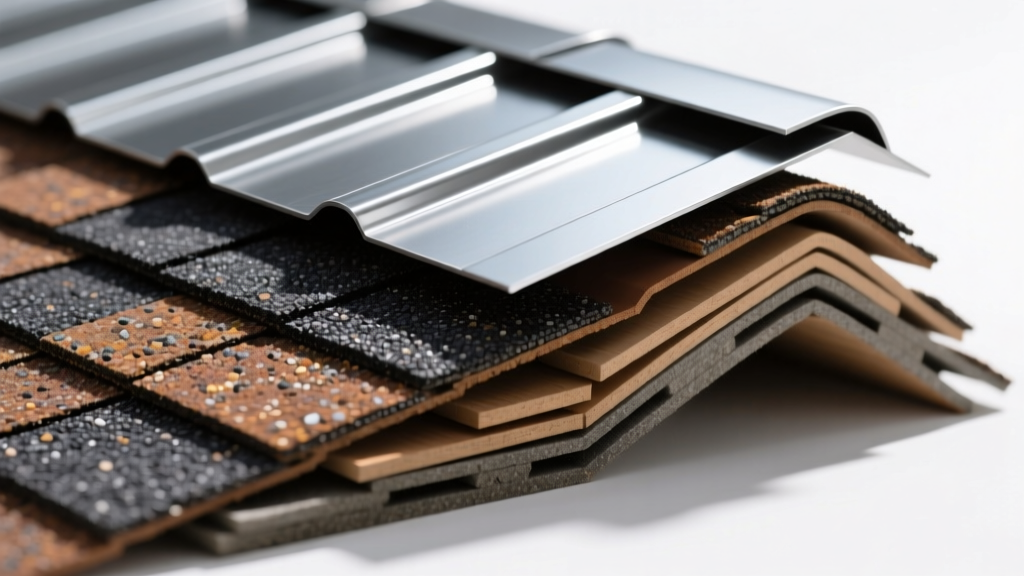
Selecting a roofing system based solely on aesthetics or upfront cost ignores the fundamental driver of longevity: roof material composition. The chemical makeup, substrate alloys, and polymer structures dictate how a roof withstands thermal shock, UV degradation, and mechanical impact. This selection framework bypasses marketing terminology to evaluate the exact compositional layers of asphalt, metal, and single-ply membranes, enabling precise specification for residential and commercial projects.
The Asphalt Matrix: Mat Weight and Polymer Modification
Standard asphalt shingles are not uniform slabs of tar. Their structural integrity relies on a three-part composite: a reinforcing mat, a bitumen coating, and a ceramic granule surface. When evaluating asphalt roofing systems, the critical compositional variables are mat density and polymer modification.
Fiberglass Mat Density
The fiberglass mat acts as the tensile backbone of the shingle. Standard 3-tab shingles utilize lightweight mats (approximately 70–80 g/m²), making them prone to tearing under high wind loads. Premium architectural shingles increase this density to 110–130 g/m². For installations in high-wind zones (110+ mph), specifying a heavyweight mat (130+ g/m²) combined with a 6-nail fastening pattern is mandatory to prevent delamination.
Standard oxidized asphalt becomes brittle in freezing temperatures. Always specify polymer-modified shingles for extreme climates:
• SBS (Styrene-Butadiene-Styrene): Adds rubber-like elasticity. Ideal for freeze-thaw cycles and hail resistance (ASTM D3468).
• APP (Atactic Polypropylene): Adds plastic-like rigidity and high-temperature stability. Better suited for extreme heat and high UV exposure.
Ceramic Granule Composition
Granules are not just for color; they are crushed natural stone (typically basalt or slag) coated with ceramic silicates to reflect UV rays. In 2026, cool-roof asphalt shingles utilize specialized infrared-reflective granule compositions that increase solar reflectance (SR) from a standard 0.05 to over 0.25, significantly reducing cooling loads without sacrificing the shingle's fire rating.
Metallurgy and Coatings: Decoding Metal Roofing
Metal roofing longevity is entirely dependent on the substrate alloy and the chemical composition of the paint system. A panel's gauge (thickness) matters less than its protective chemistry.
Substrate Alloys: Galvalume vs. Galvanized
Never specify bare steel for exterior roofing. The industry standard is Galvalume (ASTM A792), an aluminum-zinc alloy coating (55% aluminum, 43.4% zinc, 1.6% silicon) applied to a steel core. The aluminum provides long-term barrier protection and heat reflectivity, while the zinc offers galvanic sacrificial protection at the cut edges. Standard coatings are AZ50 (0.50 oz/sq ft) or AZ55. Galvanized steel (pure zinc) is cheaper but degrades up to four times faster in coastal or high-humidity environments.
| Coating System | Chemical Composition | UV Resistance | Chalk Fade Rate | Estimated Cost (Installed) |
|---|---|---|---|---|
| SMP (Silicone Modified Polyester) | Polyester resin + silicone additives | Moderate (5-10 yrs) | High (fades visibly) | $7.50 - $10.00 / sq ft |
| PVDF (Kynar 500® / Hylar®) | 70% PVDF resin + 30% acrylic | Exceptional (30+ yrs) | Negligible (Delta E < 5) | $11.00 - $16.00 / sq ft |
For any project requiring a 30-year color warranty, the specification must explicitly demand a PVDF (Polyvinylidene Fluoride) paint system containing a minimum of 70% Kynar 500 or Hylar 5000 resin. SMP coatings will chalk and fade significantly within a decade, regardless of the metal substrate quality.
Single-Ply Membrane Chemistry: TPO, PVC, and EPDM
Commercial low-slope roofs rely on single-ply membranes, where the molecular structure determines chemical resistance, weldability, and lifespan. According to the Department of Energy's guidelines on cool roofs, membrane composition directly impacts a building's thermal efficiency and urban heat island footprint.
TPO (Thermoplastic Polyolefin)
TPO is a blend of polypropylene and ethylene-propylene rubber, reinforced with a polyester scrim. It contains no plasticizers, meaning it will not become brittle as plasticizers leach out over time. However, early-generation TPO formulations struggled with thermal shock. Modern 2026 TPO formulations utilize advanced UV stabilizers and thicker top plies. Always specify a minimum 60-mil thickness (preferably 80-mil for high-traffic roofs) with a reinforced scrim to prevent puncture and shrinkage.
PVC (Polyvinyl Chloride)
PVC membranes rely on plasticizers for flexibility and are inherently fire-resistant due to their chlorine content. PVC is the mandatory choice for roofs exposed to animal fats, oils, or chemical exhaust (e.g., restaurants), as these substances will dissolve the seams of TPO and EPDM. Modern PVC formulations utilize phthalate-free, polymeric plasticizers that resist migration, extending the membrane's flexible lifespan to 30+ years.
EPDM (Ethylene Propylene Diene Monomer)
EPDM is a thermoset rubber. Unlike TPO and PVC, its seams cannot be heat-welded; they must be glued or taped, which remains the primary failure point of the system. EPDM excels in extreme cold and high-altitude UV exposure but absorbs significant heat in its standard black form. If specifying black EPDM, factor in increased HVAC costs, or opt for white-coated EPDM, though the coating will require reapplication every 10 to 15 years.
The Composition-to-Climate Selection Matrix
Use this decision framework to align material composition with specific environmental stressors. Matching the chemical traits of the material to the local climate prevents premature system failure.
If your project is within 1,500 feet of a saltwater coastline, standard Galvalume metal panels will experience rapid edge-creep corrosion. You must specify an AZ55 Galvalume substrate with a heavy-duty PVDF coating, or transition to a non-ferrous option like 0.032" aluminum standing seam, which forms a self-protecting oxide layer.
- High Hail / Freeze-Thaw Zones (Midwest/Mountain): SBS-modified asphalt shingles (Class 4 impact rating) or 24-gauge steel with a PVDF coating. Avoid standard TPO, which can shatter under severe hail impact in sub-freezing temperatures.
- High Heat / Intense UV (Southwest): APP-modified asphalt, clay/concrete tile, or highly reflective white TPO/PVC (60+ mil). Avoid black EPDM and SMP-coated metals, which will suffer rapid thermal degradation and aesthetic fading.
- High Wind / Hurricane Prone (Coastal): Mechanically fastened standing seam metal (concealed clips) or heavy-mat architectural shingles rated for ASTM D3161 Class F (150 mph). Avoid fully adhered single-ply membranes if the substrate deck is prone to uplift.
- Chemical / Grease Exhaust (Commercial Food Service): PVC membranes with heat-welded seams. TPO and EPDM will degrade rapidly when exposed to lipid-rich exhaust.
Verifying Material Specs: Reading the Data Sheet
Manufacturers often use proprietary names to obscure material composition. To verify what you are actually purchasing, cross-reference the product data sheet with established Metal Construction Association and ASTM standards.
Never accept a bid that simply lists 'Architectural Metal Roofing' or 'Commercial TPO.' The specification must explicitly state the substrate alloy (e.g., AZ55), the paint resin percentage (e.g., 70% PVDF), or the membrane reinforcement type (e.g., polyester scrim-reinforced 60-mil TPO).
By shifting your evaluation from superficial product categories to the underlying roof material composition, you eliminate the guesswork from roofing selection. This framework ensures that the chemical and physical properties of the installed system are perfectly calibrated to the structural demands and environmental realities of your specific building.
Written by
David NakamuraDavid Nakamura is a licensed architect (AIA) and construction technology writer focused on sustainable building methods, mass timber engineering, and high-performance building envelopes. He holds a Master of Architecture from the University of Washington and is a certified Passive House Consultant (CPHC). David spent eight years at the Seattle firm Mithun, where he led the design of three LEED Platinum projects, before founding his own practice specializing in net-zero residential design. He serves on the editorial advisory board of GreenBuilder Magazine and has authored peer-reviewed papers on cross-laminated timber (CLT) connections for the Journal of Structural Engineering. In his spare time, David teaches woodworking at Pratt Fine Arts Center and kayaks the Puget Sound.
More from David Nakamura
View all
Construction Cost
Labor Cost to Build a Deck Per Sq Ft: 2026 Installation Guide
Discover the exact labor cost to build a deck per sq ft in 2026. This installation guide breaks down contractor rates, complexity factors, and hidden fees.
Aug 4, 2026

Construction Cost
How Much Does It Cost to Build a 3 Bedroom House? Financing Guide
Learn exactly how much it costs to build a 3 bedroom house and explore 2026 financing options, construction loan types, and budget frameworks for your build.
Aug 4, 2026

Construction Cost
Cost to Build a Tennis Court: 2026 Guide
How much does it cost to build a tennis court in 2026? Breakdowns for asphalt, concrete, and synthetic surfaces plus fencing and lighting.
Jul 30, 2026