2026 Rubberized Roofing Material Cost & Installation Guide
Detailed 2026 cost breakdown for rubberized roofing material. Compare EPDM, TPO, and modified bitumen prices, labor rates, and hidden installation fees.

The Economics of Rubberized Roofing Systems
When evaluating low-slope and flat roof options, rubberized roofing material remains the dominant choice for commercial, industrial, and modern residential applications. However, the term 'rubberized roofing' encompasses several distinct chemical formulations—primarily EPDM (ethylene propylene diene monomer), TPO (thermoplastic polyolefin), PVC (polyvinyl chloride), and rubberized asphalt (modified bitumen). Each system carries a vastly different pricing structure, lifespan, and installation methodology.
As of 2026, material costs have stabilized following the supply chain volatility of the early 2020s, but labor rates and insulation requirements driven by updated energy codes have shifted the total installed cost upward. This guide provides a granular cost breakdown, moving beyond basic square-foot averages to expose the hidden variables that dictate your final invoice.
Material Cost Matrix: EPDM vs. TPO vs. Modified Bitumen
The base material cost is only the starting point. The table below outlines the 2026 market rates for the most common rubberized roofing membranes, comparing material-only costs against fully installed averages for a standard 10,000-square-foot commercial roof.
| Membrane Type | Material Cost (Per Sq.Ft.) | Total Installed Cost (Per Sq.Ft.) | Expected Lifespan | Best Application |
|---|---|---|---|---|
| EPDM (Black, 60-mil) | $1.60 - $2.40 | $4.80 - $8.50 | 25 - 30+ Years | Unobstructed flat roofs, cold climates |
| TPO (White, 60-mil) | $1.80 - $2.90 | $5.50 - $9.80 | 20 - 25 Years | Sunbelt regions, energy-efficient builds |
| PVC (White, 50-mil) | $2.60 - $4.20 | $7.00 - $12.50 | 25 - 30 Years | Restaurants, chemical exposure areas |
| Modified Bitumen (SBS) | $2.10 - $3.50 | $6.00 - $10.50 | 15 - 20 Years | High foot traffic, complex roof geometries |
Installation Methods and Labor Premiums
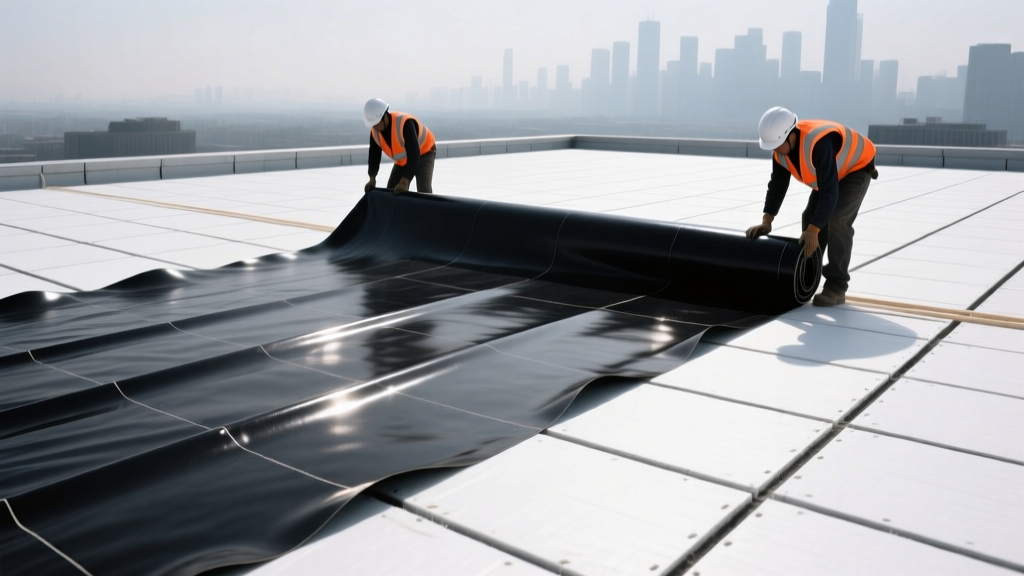
The single largest variable in your labor quote is the attachment method. Rubberized membranes can be secured to the roof deck using three primary techniques, each with distinct cost and structural implications.
Attachment Method Cost Multipliers
- Mechanically Attached (Baseline): The membrane is fastened to the deck using barbed plates and screws. This is the fastest and most cost-effective method, serving as the baseline for labor quotes.
- Fully Adhered (+$1.50 to $2.50 per sq.ft.): The membrane is glued directly to the insulation using specialized solvent-based or water-based adhesives. This method provides superior wind uplift resistance (often required in coastal or high-wind zones) and eliminates the 'billowing' effect seen in mechanically attached roofs.
- Ballasted (+$0.80 to $1.20 per sq.ft. for stone, plus structural costs): The membrane is laid loose and weighed down by river stone or pavers. While labor is cheap, you must pay for the ballast material and potentially pay a structural engineer to verify the building can support the added dead load (10-15 lbs per sq.ft.).
Hidden Costs: Code Compliance, Tear-Off, and Flashing
Contractor estimates often highlight the membrane cost while burying the preparatory and finishing work in line-item add-ons. To budget accurately for a 2026 installation, you must account for the following structural and regulatory requirements.
1. Insulation and IECC Compliance
You cannot install a new rubberized membrane directly over a bare deck in most jurisdictions. The 2024 and 2026 updates to the International Energy Conservation Code (IECC) require significantly higher R-values for commercial roofs, often mandating R-30 to R-38 depending on your climate zone.
Polyisocyanurate (polyiso) insulation is the industry standard. In 2026, expect to pay between $1.35 and $1.85 per square foot per inch of thickness. Achieving an R-30 rating typically requires about 5 inches of polyiso, adding $6.75 to $9.25 per square foot to your total project cost before the membrane is even unrolled.
2. Tear-Off and Disposal
If you are replacing an existing roof, the old material must be removed. Tear-off costs range from $1.00 to $2.50 per square foot, heavily dependent on the number of existing layers, the presence of hazardous materials (like legacy asbestos flashing), and local landfill tipping fees. Opting for a 'recover' (installing new insulation and membrane over the old roof) can save $1.50+ per square foot, but voids many manufacturer warranties and hides underlying deck rot.
3. Edge Metal and Flashing Details
The field of the roof rarely fails; the perimeters and penetrations do. Budget $12 to $22 per linear foot for galvanized or aluminum edge metal, copings, and pipe flashings. Complex roofs with numerous HVAC curbs, skylights, and parapet walls will push your flashing budget to the higher end of this spectrum.
Membrane Thickness: The 45-Mil vs. 60-Mil vs. 90-Mil Dilemma
Rubberized roofing materials are measured in 'mils' (one-thousandth of an inch). Selecting the correct thickness is a direct trade-off between upfront capital expenditure and long-term puncture resistance.
Expert Warning: Never install a 45-mil mechanically attached TPO or EPDM membrane on a roof that will experience regular maintenance foot traffic. The fastener plates will eventually telegraph through the thin membrane, causing micro-tears and premature leaks. Always specify a minimum of 60-mil for commercial applications.
- 45-Mil: The budget option. Costs roughly $0.40 less per square foot than 60-mil. Suitable only for fully adhered residential applications or non-critical storage facilities with zero roof traffic.
- 60-Mil: The commercial standard. Offers the optimal balance of cost and durability. Most major manufacturers, such as GAF with their EverGuard TPO line, base their standard 20-year commercial warranties on 60-mil membranes.
- 80-Mil to 90-Mil: The premium tier. Costs $0.80 to $1.20 more per square foot than 60-mil. Mandatory in regions with severe hail histories (like the US Great Plains) or for roofs supporting heavy solar panel arrays.
Long-Term ROI and Energy Efficiency Analysis
The initial installation cost of rubberized roofing material must be weighed against operational energy savings and maintenance cycles. The color and chemical makeup of the membrane play a massive role in this equation.
White TPO and PVC membranes are highly reflective. According to the U.S. Department of Energy, cool roofs can reduce peak cooling demand by 10% to 15%, significantly lowering HVAC operational costs in southern climates. Furthermore, the Environmental Protection Agency notes that widespread adoption of reflective rubberized membranes mitigates the urban heat island effect, which is increasingly factored into municipal building codes and green building certifications like LEED.
Conversely, black EPDM absorbs heat. While this is a disadvantage in Texas or Florida, it provides a passive heating benefit in northern climates like Minnesota or Maine, reducing winter heating loads. However, black EPDM is highly susceptible to UV degradation over decades and may require a silicone or acrylic reflective coating after 15 years, adding $2.00 to $3.50 per square foot in mid-lifecycle maintenance costs.
Decision Framework: Matching Budget to Building Profile
To finalize your material selection, apply this practical decision framework based on your specific building profile and 2026 budget constraints:
- The Budget-Conscious Warehouse (Cold Climate): Choose 60-mil Black EPDM, mechanically attached. It offers the lowest upfront installed cost ($5.00 - $6.50/sq.ft.) and the longest baseline lifespan without requiring reflective coatings.
- The Energy-Efficient Office (Sunbelt Region): Choose 60-mil White TPO, fully adhered. The higher labor cost is offset by massive HVAC savings and utility rebates for cool roof installations. Expect an installed cost of $7.50 - $9.50/sq.ft.
- The Restaurant or Chemical Processing Plant: Choose 50-mil or 60-mil PVC. TPO and EPDM will degrade rapidly when exposed to animal fats, grease, or harsh chemical exhaust. PVC's heat-welded seams and chemical resistance justify its premium $9.00+ per square foot installed cost.
- The High-Traffic Retail Roof with Complex Penetrations: Choose SBS Modified Bitumen (Rubberized Asphalt). The torch-down or cold-adhesive application allows for seamless integration around dozens of HVAC curbs, and the granular surface withstands heavy foot traffic from maintenance crews.
By understanding the interplay between membrane chemistry, attachment methods, and local energy codes, you can accurately forecast the true cost of your rubberized roofing material project and avoid the change orders that plague poorly planned commercial installations.
Written by
James ThorntonJames Thornton is a construction industry veteran with 25 years of hands-on experience in wood framing, lumber grading, and residential building codes. He started as a framing carpenter in rural Oregon, earned his ICC Residential Building Inspector certification, and eventually became a senior plan reviewer for the City of Portland Bureau of Development Services. James holds a B.S. in Wood Science & Technology from Oregon State University and is a certified lumber grader through the West Coast Lumber Inspection Bureau (WCLIB). He has inspected over 3,000 residential construction sites and authored the city's internal guide on advanced framing techniques (2x6 at 24" O.C.). James lives in Bend, OR, where he builds custom timber-frame cabins and competes in lumberjack sports.
More from James Thornton
View all
Insulation
Best Home Insulation Materials: Complete 2026 Guide
Compare top home insulation materials for 2026. Find R-values, installed costs per square foot, and best uses for fiberglass, spray foam, and mineral wool.
Aug 4, 2026

Sustainable Building
Certify Your Green Building Material for LEED and WELL
Step-by-step guide to certifying a green building material for LEED v5 and WELL v2. Master EPDs, HPDs, and VOC limits for 2026 project specifications.
Aug 4, 2026

Stone & Masonry
Veneer Stacked Stone Panels: Interior Design & Style Showcase
Discover how veneer stacked stone panels transform interiors. Explore modern design profiles, material pairings, and technical installation specs.
Aug 4, 2026