Should I Upgrade Roof Material in Cumming GA? Installation Guide
Decide if you should upgrade your roof material in Cumming, GA. Explore local climate impacts, Forsyth County codes, and step-by-step installation.

The Cumming Microclimate Toll: When to Trigger an Upgrade
Homeowners in North Fulton and Forsyth County face a unique set of environmental stressors that accelerate roof degradation. If you are asking yourself, 'should I upgrade roof material in Cumming GA?', the answer often depends on how your current system is handling the local microclimate. Cumming experiences high ambient humidity, intense summer UV radiation, and frequent seasonal thunderstorms that produce wind-driven rain and occasional hail.
Standard 3-tab asphalt shingles typically fail in this region within 12 to 15 years due to thermal shock and UV embrittlement. Before committing to a full tear-off and installation, evaluate your existing roof against these localized failure indicators:
Cumming's dense pine forests create a persistent debris issue. Pine needles trap moisture against shingle surfaces and in valleys, accelerating algae growth (Gloeocapsa magma) and causing premature granule loss. If your current roof lacks copper or zinc-infused algae-resistant strips, an upgrade to a synthetic or metal system is highly recommended.
- Granule Accumulation: Check your gutters and downspouts. Heavy granule loss indicates the asphalt binder is failing under Georgia's summer heat.
- Thermal Cracking: Inspect the shingle surface for micro-fissures, a direct result of daytime attic temperatures exceeding 150°F followed by cool evening thunderstorms.
- Wind Creasing: Look for horizontal creases near the sealant strips, a sign that the 3-tab adhesive has failed during seasonal squalls.
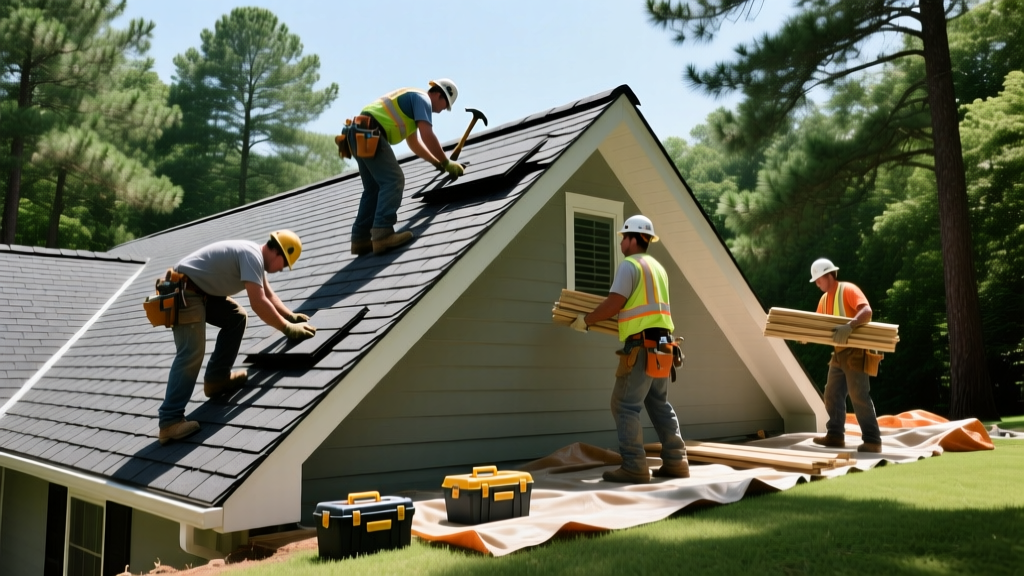
Material Selection Matrix for Forsyth County Homes
Upgrading is not just about replacing what you have; it is an opportunity to install a system engineered for the Southeast. The following matrix compares the top three upgrade paths for Cumming residences, factoring in local HOA restrictions (common in communities like Windermere and Vickery Village) and climate resilience.
| Material Type | Top Product Models | Wind Rating | Cumming Climate Advantage |
|---|---|---|---|
| Architectural Shingles | GAF Timberline UHDZ, Owens Corning Duration | 130 mph | Cost-effective; high HOA approval rate; excellent algae resistance with StainGuard Plus. |
| Standing Seam Metal | McElroy Metal 138T, ATAS Isowall | 150+ mph | Sheds pine needles instantly; reflects UV radiation; impervious to thermal cracking. |
| Stone-Coated Steel | Decra Tile, Gerard Canyon Shake | 120 mph | Mimics slate/shake for strict HOAs; hides debris buildup; superior hail impact resistance. |
Forsyth County Code & Permit Requirements
Executing a roof upgrade in Cumming requires strict adherence to Forsyth County Building Inspections and the adopted International Residential Code (IRC). The region is classified under a 120 mph ultimate design wind speed zone. This dictates specific installation protocols that generic contractors often overlook.
According to the IBHS FORTIFIED Roof standard, achieving true wind resilience in this zone requires more than just code-minimum nailing. Forsyth County permits mandate a maximum of two roofing layers. If your home currently has two layers of shingles, a complete tear-off to the decking is legally required before the new upgrade can be installed. Furthermore, drip edge flashing is now strictly enforced on all eaves and rakes, a detail frequently missed on older Cumming builds from the early 2000s.
Step-by-Step Installation Protocol for High-Humidity Environments
When upgrading your roof material in Cumming, GA, the installation methodology is just as critical as the product itself. High ambient humidity requires specialized moisture management during the installation phase to prevent trapped condensation from rotting the decking from the inside out.
Step 1: Decking Inspection and Reinforcement
Once the existing material is torn off, the roof deck must be evaluated. Many older homes in Forsyth County were built with 7/16-inch OSB (Oriented Strand Board). In Georgia's humid climate, OSB is prone to edge swelling and delamination if exposed to sudden afternoon rain during the installation window.
Replace any damaged OSB with 5/8-inch CDX plywood. CDX is highly resistant to moisture absorption and provides a superior nail-holding surface for heavy architectural shingles or metal panels, ensuring the 120 mph wind ratings are actually achieved.
Step 2: Synthetic Underlayment and Valley Armor
Discard traditional asphalt felt paper. Felt absorbs moisture and wrinkles in high humidity, causing visible ridges under modern architectural shingles. Install a high-traction synthetic underlayment, such as GAF FeltBuster or Titanium UDL. In all roof valleys, apply a 36-inch wide self-adhering ice and water shield (e.g., GAF WeatherWatch). While ice dams are rare in Cumming, this membrane acts as a secondary, watertight barrier against the severe wind-driven rain associated with North Georgia summer squalls.
Step 3: High-Wind Fastening Patterns
To meet the 130 mph wind warranty on premium shingles like the Owens Corning Duration, you must upgrade from the standard 4-nail pattern to a 6-nail pattern. Use 1.25-inch galvanized roofing nails with a minimum 3/8-inch head. Nails must be driven flush—never over-driven, which cuts the fiberglass mat, or under-driven, which breaks the sealant strip.
Step 4: Critical Ventilation Upgrades
Georgia attics act as solar ovens. Without proper exhaust, attic temperatures will bake your new shingles from underneath, voiding manufacturer warranties. The EPA's Energy Star Seal and Insulate guidelines emphasize balanced ventilation. Calculate your net free vent area (NFVA) using the 1:150 rule (1 square foot of ventilation for every 150 square feet of attic space). Install a continuous ridge vent (e.g., GAF Cobra HD) paired with continuous soffit vents. Avoid turbine vents or box vents, which create uneven airflow and are prone to leaking during heavy Forsyth County downpours.
2026 Cost Breakdown: Upgrading in the North Atlanta Metro
Material and labor costs in the Cumming and Suwanee corridor have stabilized but remain higher than the national average due to strict local permitting, high disposal fees at the Forsyth County landfill, and the demand for specialized high-wind installation crews. Below is the current pricing matrix for a standard 2,500-square-foot residential roof (approx. 25 squares).
| Upgrade Material | Material Cost (per sq ft) | Installed Cost (Total 2,500 sq ft) | Expected Lifespan in GA |
|---|---|---|---|
| Premium Architectural Shingle | $4.50 - $6.50 | $11,250 - $16,250 | 22 - 28 Years |
| Stone-Coated Steel | $9.00 - $13.00 | $22,500 - $32,500 | 40 - 50 Years |
| Standing Seam Metal (24ga) | $14.00 - $19.00 | $35,000 - $47,500 | 50+ Years |
Frequently Asked Questions
Will my Cumming HOA allow a metal roof upgrade?
Many master-planned communities in Cumming historically restricted metal roofing. However, the rise of stone-coated steel profiles (like Decra or Gerard) that perfectly mimic traditional clay tile or cedar shake has led to widespread HOA approvals. Always submit a product specification sheet and color sample to your Architectural Review Board (ARB) before signing a contract.
Do I need ice and water shield in Georgia?
While true ice dams are rare in zone 3 climates, Forsyth County building officials and expert installers highly recommend self-adhering membranes in the valleys, around chimneys, and along the eaves. The primary threat is not ice, but wind-driven rain being forced upward under the shingle edges during severe thunderstorms. The membrane provides a watertight secondary defense that traditional underlayment cannot match.
How do I protect my new roof from pine needle damage?
If upgrading to asphalt shingles, ensure the product features a copper-lined algae resistance warranty. For physical debris mitigation, pair your roof upgrade with a micro-mesh gutter guard system and request that your contractor install open metal valleys rather than woven shingle valleys. Woven valleys trap pine needles and hold moisture, whereas metal valleys allow debris and water to wash cleanly off the roof deck.
Written by
David NakamuraDavid Nakamura is a licensed architect (AIA) and construction technology writer focused on sustainable building methods, mass timber engineering, and high-performance building envelopes. He holds a Master of Architecture from the University of Washington and is a certified Passive House Consultant (CPHC). David spent eight years at the Seattle firm Mithun, where he led the design of three LEED Platinum projects, before founding his own practice specializing in net-zero residential design. He serves on the editorial advisory board of GreenBuilder Magazine and has authored peer-reviewed papers on cross-laminated timber (CLT) connections for the Journal of Structural Engineering. In his spare time, David teaches woodworking at Pratt Fine Arts Center and kayaks the Puget Sound.
More from David Nakamura
View all
Construction Cost
Labor Cost to Build a Deck Per Sq Ft: 2026 Installation Guide
Discover the exact labor cost to build a deck per sq ft in 2026. This installation guide breaks down contractor rates, complexity factors, and hidden fees.
Aug 4, 2026

Construction Cost
How Much Does It Cost to Build a 3 Bedroom House? Financing Guide
Learn exactly how much it costs to build a 3 bedroom house and explore 2026 financing options, construction loan types, and budget frameworks for your build.
Aug 4, 2026

Construction Cost
Cost to Build a Tennis Court: 2026 Guide
How much does it cost to build a tennis court in 2026? Breakdowns for asphalt, concrete, and synthetic surfaces plus fencing and lighting.
Jul 30, 2026