Will Tariffs Affect Building Materials? 2026 Selection Guide
Discover how 2026 trade policies impact costs. This guide answers if tariffs affect building materials and offers tariff-safe sourcing strategies.

The Direct Answer: How Trade Policy Alters Material Selection
When project estimators and procurement managers ask, "will tariffs affect building materials?", the answer in 2026 is a definitive yes, but the impact is highly localized by material class and country of origin. Rather than a blanket price increase across all construction supplies, modern trade policies—specifically Section 232 national security tariffs and Section 301 unfair trade duties—create a bifurcated market. Imported structural components face compounding levies, while domestically manufactured alternatives and specific free-trade-agreement (FTA) exempt goods maintain price stability.
According to U.S. Chamber of Commerce trade and tariff analysis, construction firms that fail to adapt their specification sheets to account for import duties routinely see structural framing and finish material budgets overrun by 12% to 18%. This selection guide provides a concrete framework for specifying tariff-resilient materials, bypassing volatile import channels, and protecting your project margins.
The 2026 Tariff Landscape for Core Materials
Understanding the exact financial penalty applied to specific materials is the first step in intelligent substitution. The table below outlines the current duty environment for the most heavily targeted construction commodities.
| Material Category | Primary Targeted Origin | Applicable Duty / Tariff | Estimated Cost Impact |
|---|---|---|---|
| Hot-Rolled Steel Coil | Global (exempting USMCA) | Section 232 (25%) | +$150 to $220 per ton |
| Softwood Dimensional Lumber | Canada | Softwood Lumber Duties (~8.05%) | +$65 to $90 per MBF |
| Aluminum Extrusions | China / Global | Section 232 (10%) + Anti-Dumping | +$0.45 to $0.70 per lb |
| Porcelain & Ceramic Tile | China / India | Section 301 (up to 25%) | +$1.20 to $2.50 per sq. ft. |
Material Selection Matrix: Tariff-Heavy vs. Tariff-Safe Alternatives
To maintain budget integrity, architects and contractors must pivot specifications toward tariff-safe alternatives. The National Association of Home Builders (NAHB) advocacy resources consistently highlight that proactive material substitution is the most effective defense against trade-related inflation.
Structural Framing: Steel and Aluminum
Tariff-Heavy Specification: Imported structural steel beams (ASTM A992) sourced from Asian or European Basic Oxygen Furnace (BOF) mills. These are subject to the 25% Section 232 tariff, plus potential anti-dumping margins.
Tariff-Safe Alternative: Specify domestic steel produced via Electric Arc Furnace (EAF) mini-mills (e.g., Nucor or Steel Dynamics). EAF mills melt recycled domestic scrap, entirely bypassing import duties and often providing a 10-15% cost advantage over imported equivalents. For aluminum curtain wall extrusions, shift from imported billets to domestic suppliers like Alexandria Extrusion Company or source from USMCA-compliant Canadian extruders who qualify for duty-free entry under strict melt-and-pour certificates.
Wood Framing and Sheathing
Tariff-Heavy Specification: Canadian SPF (Spruce-Pine-Fir) dimensional lumber, which remains subject to fluctuating softwood lumber duties and quota restrictions.
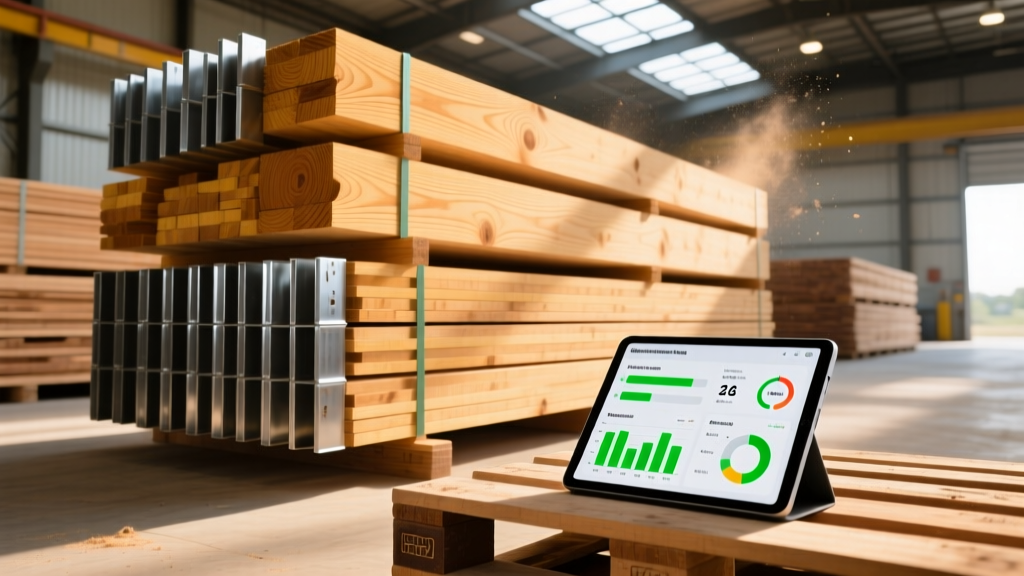
Tariff-Safe Alternative: Transition to domestic Southern Yellow Pine (SYP) for structural framing, which is entirely exempt from import duties and offers superior nail-holding capacity and load-bearing metrics compared to SPF. For engineered wood products, specify domestically manufactured I-joists (such as Weyerhaeuser TJI or Boise Cascade TJI) which utilize localized OSB webs and LVL flanges, insulating the project from cross-border timber disputes.
Strategic Sourcing Framework for Contractors
Answering "will tariffs affect building materials" requires more than just swapping products; it requires a structural change in how you procure. Implement this four-step framework on all commercial and multi-family projects:
- Audit the Bill of Materials (BOM): Isolate all line items containing steel, aluminum, lumber, and fired ceramics. Flag any items where the manufacturer's country of origin is listed as China, Canada, or the EU.
- Request Melt and Pour Certificates: For structural steel, require suppliers to provide mill test reports proving the steel was melted and poured in the U.S. or a USMCA partner country to guarantee tariff exemption.
- Lock in Domestic Pricing Early: Domestic mills often operate on tighter capacity constraints than global markets. Once you pivot to domestic SYP or EAF steel, execute purchase orders 60 to 90 days earlier than standard practice to secure allocation.
- Leverage Cooperative Purchasing: Join regional builder cooperatives to aggregate volume. Domestic manufacturers offer tiered rebates that can offset the baseline premium of U.S.-made goods when purchasing in bulk.
Contract Clauses to Mitigate Tariff Volatility
Even with careful selection, sudden executive actions or trade court rulings can alter duty rates mid-project. Standard fixed-price contracts leave the general contractor absorbing these shocks. You must integrate specific protective language into your subcontracts and owner agreements.
Material Escalation Clause: Do not rely on standard Force Majeure clauses, which rarely cover economic price fluctuations. Instead, draft a Material Escalation Clause with a defined threshold. For example: "If the documented cost of structural steel or dimensional lumber increases by more than 5% from the baseline price established at contract execution due to newly enacted federal tariffs or trade duties, the Owner shall reimburse the Contractor for the excess cost upon presentation of supplier invoices and HTS duty receipts."
Additionally, utilize "Tariff Contingency Allowances" in your initial bids. Line out a specific allowance (e.g., 3% of the structural package) designated exclusively for unforeseen trade duties. If tariffs are not enacted or materials are successfully substituted, the allowance reverts to the owner as a credit, building trust while protecting your margin.
Frequently Asked Questions
Will tariffs affect building materials sourced from Mexico?
Generally, no. Under the United States-Mexico-Canada Agreement (USMCA), building materials that meet specific "rules of origin" requirements—meaning a high percentage of the product's value is created in North America—enter the U.S. duty-free. However, you must obtain proper certificates of origin from your suppliers to claim this exemption.
Are green building materials subject to the same tariffs?
Tariffs are applied based on the material composition and HTS code, not the environmental certification. A LEED-certified imported solar glass panel is subject to the same Section 301 or Section 201 tariffs as standard glass. To achieve both sustainability and tariff-safety, specify domestically manufactured photovoltaic glass or domestically extruded recycled aluminum framing.
How quickly do tariff changes reflect in local lumber yard pricing?
Import tariffs on commodities like Canadian softwood lumber typically reflect in wholesale distributor pricing within 14 to 21 days of enactment. However, retail yard pricing may lag by 30 to 45 days as distributors sell through existing, pre-tariff inventory. This creates a brief window for contractors to purchase at legacy prices if they act immediately upon trade announcements.
Written by
Priya KapoorPriya Kapoor is a real estate market analyst and construction economics researcher with expertise in housing affordability, development feasibility, and infrastructure investment. She holds a Master of Regional Planning from Cornell University and previously worked as a senior analyst at CBRE's Investment Properties group, where she modeled returns for $4B in mixed-use development pipelines. Priya now runs an independent research practice advising developers, municipalities, and REITs on construction cost forecasting and market timing. She publishes the quarterly "BuildMat Market Pulse" report tracking material price indices across 12 commodity categories. Based in Austin, TX, Priya serves on the board of Habitat for Humanity Austin and is a marathon runner.
More from Priya Kapoor
View all
Construction Cost
Cost to Build a 1600 Sq Ft Home in 2026: Full Breakdown
Accurate 2026 cost to build a 1600 sq ft home—material, labor, and regional pricing breakdowns included. Plan your budget with real-time estimates.
Aug 11, 2026

Wood & Lumber
Name the Types of Wood for Pressure Treatment and Preservation
Learn how to name the types of wood best suited for pressure treatment. Compare species treatability, chemical retention levels, and 2026 preservation costs.
Aug 4, 2026

Stone & Masonry
Stone Veneer Suppliers Lindenhurst: 2026 Cost Analysis
Analyze 2026 stone veneer costs in Lindenhurst, NY. Compare local supplier pricing, delivery fees, and Suffolk County installation labor rates.
Aug 4, 2026