Durability & Treatment: Selecting Bamboo Fly Rod Building Supplies
Master bamboo fly rod construction with expert treatment techniques. Explore durable bamboo fly rod building supplies, heat-treating methods, and finishes.
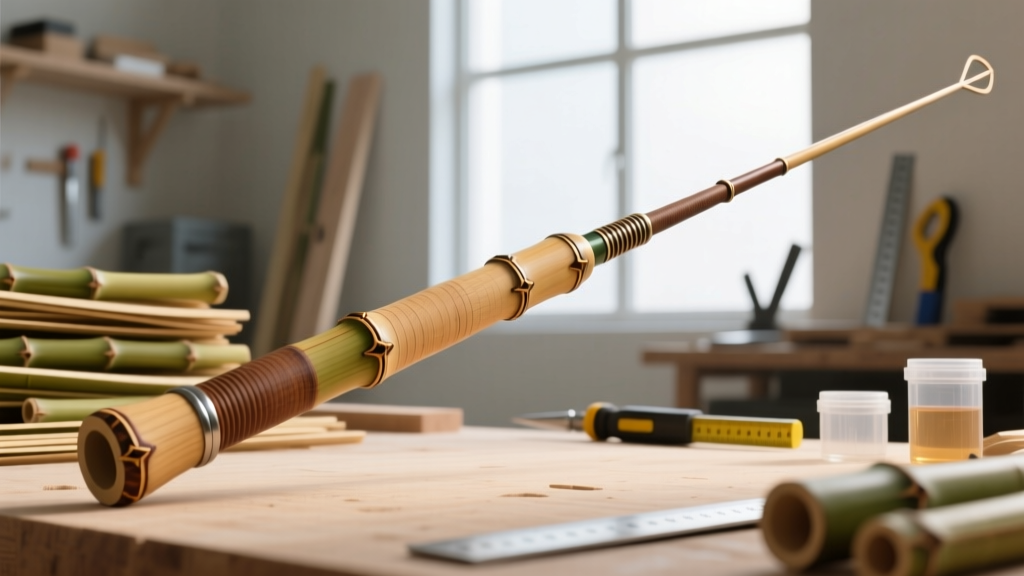
The Foundation: Sourcing and Aging Tonkin Cane
The pursuit of a durable, high-performance split-cane fly rod begins long before the first plane stroke. When evaluating bamboo fly rod building supplies, the raw material itself is the most critical component. The undisputed standard is Tonkin cane (Pseudosasa amabilis), harvested exclusively from the Guangdong province of China. According to the International Bamboo and Rattan Organization (INBAR), the unique microclimate of this region produces cane with an exceptionally high density of vascular bundles and a thick outer enamel layer, both of which are non-negotiable for structural integrity.
Freshly harvested Tonkin cane possesses a moisture content of roughly 16-18%. To achieve dimensional stability, the cane must be air-dried and aged for a minimum of three to five years, allowing the moisture content to equilibrate to 8-10%. Builders purchasing raw culms must verify this aging process; utilizing 'green' or under-aged cane guarantees that the final rod will warp, lose its casting action, and suffer from delamination as the internal pith continues to off-gas moisture over time.
Thermal Modification: Heat Treatment and Straightening
Heat treating is the cornerstone of bamboo durability. Applying controlled heat alters the chemical structure of the bamboo's lignin, plasticizing it for straightening while simultaneously driving out residual moisture and caramelizing the natural sugars. This process hardens the outer enamel, creating a natural moisture barrier that significantly increases the rod's lifespan.
Comparing Heat Treatment Methodologies
Different heat sources yield distinct metallurgical-like changes in the bamboo's cellular structure. Selecting the right approach depends on the builder's desired action and environmental resistance.
| Method | Target Temp | Duration | Effect on Lignin | Durability Impact |
|---|---|---|---|---|
| Oven Roasting | 350°F - 375°F | 12-15 mins | Uniform caramelization throughout the strip cross-section. | High dimensional stability; slight brittleness if temperature exceeds 380°F. |
| Flaming (MAPP Gas) | 400°F+ (Surface) | 2-4 mins | Rapid surface enamel hardening; minimal core modification. | Excellent external moisture barrier; requires strict node monitoring to prevent scorching. |
| Alcohol Lamp | 300°F - 350°F | Variable | Localized softening for node correction. | Best for targeted straightening; less overall structural modification than oven roasting. |
Never apply direct high heat to the nodal dam without pre-warming the adjacent internodes. The nodal diaphragm retains moisture differently than the outer enamel; rapid temperature spikes will cause micro-fractures that propagate during the planing phase, ultimately compromising the rod's tensile strength.
Adhesives and Laminating Supplies
Once the strips are milled to tolerances of 0.001 inches, the selection of adhesive dictates the rod's long-term shear strength. While traditionalists once relied on animal glues, modern bamboo fly rod building supplies favor advanced synthetic resins that resist water ingress and thermal breakdown.
- System Three T-88 Epoxy: A 1:1 mix ratio structural epoxy with a long open time (up to 4 hours at 70°F). It remains slightly flexible when cured, allowing the glue line to absorb the dynamic shock of casting without micro-cracking.
- Unibond 800 (Urea-Formaldehyde): A powder resin mixed with water. It cures harder than epoxy, resulting in a stiffer rod action, but requires a heated curing environment (120°F for 8 hours) and offers slightly lower moisture resistance than marine-grade epoxies.
- Resorcinol Formaldehyde: Historically the gold standard for waterproof glue lines. It cures to a dark purple line and is virtually impervious to water, but the mixed adhesive has a short pot life and requires high clamping pressure (minimum 150 PSI) to prevent starved joints.

Finishing Supplies for Environmental Sealing
The American Bamboo Society emphasizes that UV degradation and moisture cycling are the primary enemies of natural fibers. A bare bamboo blank will absorb ambient humidity, altering its weight and action while inviting fungal rot. Selecting the right finishing supplies is critical for preserving the rod's structural geometry.
Blank Finish Selection Framework
The choice of blank finish involves a direct trade-off between abrasion resistance and action dampening.
- Penetrating Oils (e.g., Birchwood Casey Tru-Oil): Birchwood Casey's Tru-Oil polymerizes within the bamboo's outer pores. It adds virtually zero weight, preserving the crisp, fast action of the cane. However, it offers minimal protection against rock strikes or guide-wrap abrasion. Best for dry-fly specialists fishing in brush-free alpine streams.
- Spar Urethanes (e.g., Minwax Helmsman): Contains UV blockers and flexible resins that expand and contract with the bamboo. A 3-coat application adds roughly 0.002 inches of thickness, slightly dampening the rod's recovery speed but providing a robust, scratch-resistant armor. Ideal for nymphing and streamer fishing where the blank frequently contacts abrasive substrates.
- Waterborne Polyurethanes (e.g., Varathane Crystal Clear): The modern 2026 standard for eco-conscious builders. These low-VOC finishes cure exceptionally hard and resist yellowing under UV exposure, though they require strict temperature and humidity controls (above 65°F, below 50% RH) during application to prevent blushing.
Thread Wrap Encapsulation
Silk or nylon thread wraps secure the line guides, but the thread itself is highly porous. If left unsealed, water will wick under the varnish and rot the cane. Builders must use a two-part rod finish like Flex Coat Lite (CP-2000). Applied in two thin coats over a rotating drying motor, Flex Coat penetrates the thread completely, bonding it to the bamboo blank and creating a flexible, waterproof seal that will not crack when the rod is bent to its maximum deflection angle.
Hardware Integration: Ferrules and Moisture Barriers
The junction where the rod sections connect—the ferrule—is the most common point of catastrophic failure in bamboo construction. When inventorying your bamboo fly rod building supplies, avoid cast brass or aluminum ferrules. Instead, source drawn nickel silver ferrules. Nickel silver (a copper-nickel-zinc alloy) offers superior fatigue resistance and a coefficient of thermal expansion that closely matches Tonkin cane, preventing the ferrule from loosening in cold water or seizing in hot weather.
'The greatest threat to a split-cane rod is not a broken tip, but moisture ingress at the male ferrule. If water enters the hollowed pith of the swelled butt section, it will rot the cane from the inside out, completely hidden beneath the varnish.' — Master Rodmaker's Guild Technical Bulletin
To mitigate this, builders must utilize a moisture plug. After reaming the bamboo to accept the male ferrule, inject a plug of micro-balloons mixed with epoxy, or insert a tightly fitted wooden dowel sealed with ferrule cement (a thermoplastic resin). This creates an impenetrable bulkhead, ensuring that even if the ferrule seal fails, water cannot migrate into the internodal cavity.
Maintenance and Long-Term Storage Protocols
Even the most meticulously treated bamboo requires specific maintenance protocols to ensure generational longevity. Builders should supply end-users with the following care instructions:
- Post-Trip Drying: Never store a damp rod in a sealed aluminum or PVC tube. Break the rod down, wipe the blank with a dry microfiber cloth, and allow it to air dry in a ventilated room for 24 hours before sealing it in the tube.
- Ferrule Care: Apply a microscopic amount of paraffin wax (never petroleum jelly or silicone, which degrade the ferrule cement) to the male slide every 20 hours of fishing time to prevent galling and seizing.
- Annual Inspection: Inspect the thread wraps under a bright LED light. Any hairline cracks in the Flex Coat must be sanded lightly with 1000-grit paper and recoated immediately to prevent water wicking.
By rigorously selecting high-grade materials and applying precise thermal and chemical treatments, builders can craft bamboo fly rods that not only rival modern graphite in performance but possess a structural durability that lasts for decades of active use.
Written by
David NakamuraDavid Nakamura is a licensed architect (AIA) and construction technology writer focused on sustainable building methods, mass timber engineering, and high-performance building envelopes. He holds a Master of Architecture from the University of Washington and is a certified Passive House Consultant (CPHC). David spent eight years at the Seattle firm Mithun, where he led the design of three LEED Platinum projects, before founding his own practice specializing in net-zero residential design. He serves on the editorial advisory board of GreenBuilder Magazine and has authored peer-reviewed papers on cross-laminated timber (CLT) connections for the Journal of Structural Engineering. In his spare time, David teaches woodworking at Pratt Fine Arts Center and kayaks the Puget Sound.
More from David Nakamura
View all
Construction Cost
Labor Cost to Build a Deck Per Sq Ft: 2026 Installation Guide
Discover the exact labor cost to build a deck per sq ft in 2026. This installation guide breaks down contractor rates, complexity factors, and hidden fees.
Aug 4, 2026

Construction Cost
How Much Does It Cost to Build a 3 Bedroom House? Financing Guide
Learn exactly how much it costs to build a 3 bedroom house and explore 2026 financing options, construction loan types, and budget frameworks for your build.
Aug 4, 2026

Construction Cost
Cost to Build a Tennis Court: 2026 Guide
How much does it cost to build a tennis court in 2026? Breakdowns for asphalt, concrete, and synthetic surfaces plus fencing and lighting.
Jul 30, 2026