Maintenance Playbook: Cleaning Architectural Tempered Glass
Master the maintenance of architectural tempered glass with our expert cleaning playbook. Learn safe solvents, tools, and scratch-prevention techniques.
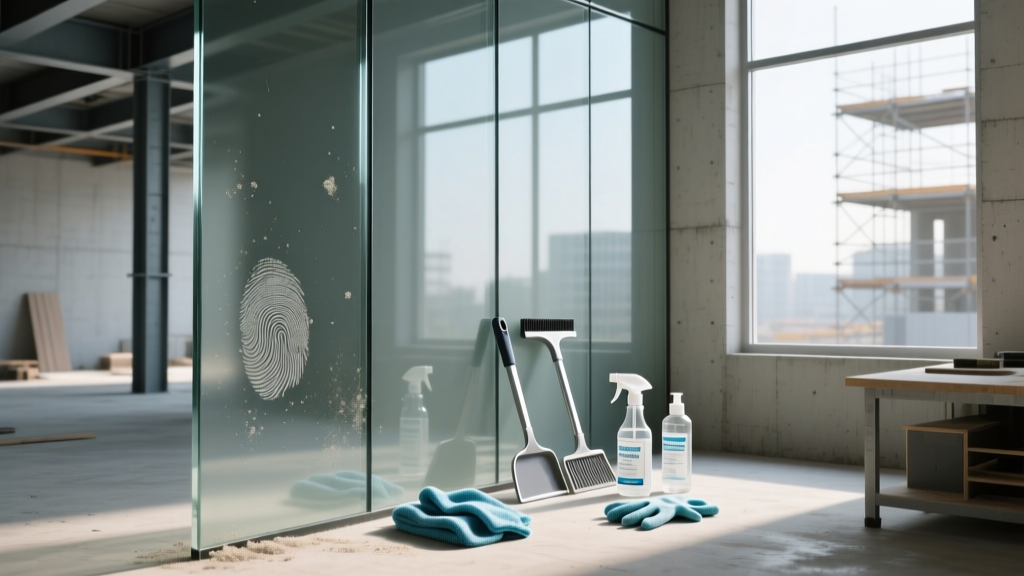
The Unique Vulnerability of Tempered Glass Surfaces
Tempered glass is engineered for structural resilience, processed through thermal or chemical treatments to achieve a minimum surface compression of 10,000 psi, as outlined in the ASTM C1048 standard. However, this extreme surface tension creates a paradox for facility managers: while the glass is highly resistant to impact and thermal stress, its surface is uniquely vulnerable to mechanical scratching and chemical etching during routine maintenance.
The tempering process often leaves microscopic glass particles—known as fabricating debris—fused to the surface. When maintenance crews use standard scraping tools or abrasive pads, these particles are dragged across the pane, resulting in permanent, web-like micro-scratches. Furthermore, architectural tempered glass is frequently paired with low-emissivity (Low-E) coatings on surface #2 or #3 of an insulating glass unit (IGU), requiring strict chemical compatibility to prevent coating degradation.
The 4-Stage Tempered Glass Cleaning Playbook
To maintain optical clarity and structural integrity without inducing surface defects, commercial maintenance teams must adopt a strict, multi-stage protocol. This playbook reflects current industry best practices for 2026 commercial facade management.
Stage 1: Dry Pre-Cleaning and Debris Assessment
Never apply water or chemicals to a dry, heavily soiled tempered glass surface. Begin with a dry microfiber dusting or a soft-bristle brush to remove loose silica dust, pollen, and construction particulates. Perform the 'fingernail test': gently drag your fingernail across the glass. If you feel a gritty, raised texture, fabricating debris or environmental weld spatter is present. Do not proceed to squeegee cleaning until this debris is safely removed using specialized protocols (detailed below).
Stage 2: Pure Water Fed-Pole Systems
For exterior facades, pure water fed-pole systems are the industry standard. The water must be passed through a multi-stage reverse osmosis and deionization (DI) filtration system.
- Total Dissolved Solids (TDS): Must be strictly maintained below 10 ppm (parts per million). Water with a TDS above 20 ppm will leave mineral deposits that bake onto the glass under UV exposure.
- Brush Selection: Use only non-abrasive, synthetic bristle brushes (such as the Unger HydroPower series). Avoid boar-hair brushes on tempered glass, as they can trap coarse grit against the surface.
- Technique: Agitate the glass from top to bottom, allowing the pure water to encapsulate dirt. Rinse thoroughly; the pure water will sheet off and dry spot-free without squeegeeing.
Stage 3: Targeted Chemical Application (Interior & Spot Cleaning)
When chemical intervention is required for interior panes or stubborn exterior hard-water stains, pH control is critical. Tempered glass is susceptible to alkali attack. Avoid any cleaner with a pH above 8.5, as high alkalinity breaks down the silica network, causing irreversible hazing.
For routine interior maintenance, use a neutral-pH, non-ammoniated surfactant like Ettore Squeegee-Off or a dedicated commercial glass soap. Ammonia-based cleaners can degrade the edge seals of IGUs over time and cause off-gassing issues in tightly sealed modern HVAC environments.
Stage 4: Squeegee Technique and Edge Drying
Use a high-grade brass or stainless-steel squeegee channel with a fresh, un-nicked rubber blade (replace blades every 30 days of active use). Employ the 'fanning' or 'S-technique' to keep the leading edge of the blade in the wet zone. Immediately detail the perimeter edges with a surgical-grade, lint-free microfiber cloth to prevent water from migrating into the glazing gaskets or structural silicone seals.
Managing Fabricating Debris Without Scratching
The presence of fabricating debris is the leading cause of post-construction glass replacement disputes. According to guidelines referenced by the Glass Association of North America (GANA), standard metal razor scrapers must never be used on tempered glass.
Safe Debris Removal Protocol
- Lubrication: Flood the affected area with a heavy, high-lubricity glass cleaning solution. Never scrape dry.
- Specialized Tooling: Use a specialized debris-removal tool equipped with a proprietary non-marring blade, such as the Ray-Guard scraper system, which is designed to lift fused glass particles without digging into the tempered surface.
- Chemical Dissolution: For severe cases of weld spatter or hardened mineral silicates, apply a specialized glass-safe acid compound (like Bio-Clean Hard Water Stain Remover) using a non-scratch white Scotch-Brite pad. Keep the surface continuously wet and agitate in small, circular motions.
- Polishing (Last Resort): If micro-scratches have already occurred, professional restoration using a cerium oxide polishing compound and a variable-speed rotary polisher (kept below 1,500 RPM to prevent thermal shock) can restore optical clarity.
Tempered glass is highly resistant to thermal breakage, but localized extreme temperature differentials can still cause spontaneous fracture. Never spray cold water or cold cleaning chemicals onto a tempered glass facade that has been baking in direct, mid-day summer sun. The rapid contraction of the surface layer against the hotter core can exceed the glass's edge-stress tolerances.
Maintenance Frequency and Cost Matrix (2026 Estimates)
Budgeting for architectural glass maintenance requires factoring in building height, access equipment, and local environmental conditions. The following matrix outlines current commercial pricing for professional tempered glass facade maintenance.
| Building Profile | Access Method | Recommended Frequency | Estimated Cost (per sq. ft.) |
|---|---|---|---|
| Low-Rise (1-3 Stories) | Ladders / Ground Poles | Bi-Annual | $0.60 - $1.40 |
| Mid-Rise (4-10 Stories) | Water-Fed Poles / Scissor Lifts | Bi-Annual | $1.50 - $3.20 |
| High-Rise (11+ Stories) | BMU (Gondola) / Rope Access | Annual / Bi-Annual | $3.50 - $7.50+ |
| Post-Construction Debris Removal | Scaffolding / Swing Stage | One-Time (Handover) | $4.00 - $9.00 |
Note: Costs assume standard rectangular panes. Complex geometric facades, structural glass fins, or point-fixed spider glazing systems will incur a 20-40% premium due to the meticulous edge-detailing required.
Strictly Banned Tools and Chemicals
To protect your glass assets and maintain manufacturer warranties, ensure your maintenance contracts explicitly prohibit the following items, adhering to safety and quality standards promoted by the International Window Cleaning Association (IWCA):
- Hydrofluoric Acid (HF): Often found in heavy-duty masonry and brick cleaners used by surrounding trades. HF will instantly and permanently etch tempered glass, leaving a cloudy, frosted appearance that cannot be polished out.
- Metal Razor Blades: Standard flat razor blades will catch on fabricating debris and gouge the tempered surface. Only use specialized, angled, non-marring scrapers.
- Steel Wool (Even Grade #0000): While sometimes recommended in amateur guides for hard water stains, steel wool sheds microscopic iron particles. These particles embed in the glass pores and oxidize over time, creating permanent rust spots.
- High-Alkaline Degreasers: Products with a pH above 9 (like many commercial concrete or heavy-duty kitchen degreasers) will attack the silica structure, causing irreversible chemical hazing.
- Coarse Abrasive Pads: Green or brown Scotch-Brite pads will leave a matrix of fine scratches that become highly visible under direct sunlight or interior LED lighting.
Long-Term Protective Strategies
For buildings in high-pollution areas, coastal environments (salt spray), or near active construction zones, consider the application of a hydrophobic nano-coating (such as EnduroShield or ClearShield). These factory-applied or retrofitted coatings fill the microscopic pores of the tempered glass, creating a non-stick surface that reduces cleaning frequency by up to 50% and prevents hard-water minerals and environmental pollutants from bonding to the silica network. When specifying these coatings, ensure the applicator provides a minimum 10-year warranty against UV degradation and chemical delamination.