Fiberglass Front Door Glass Insert Costs & Calculator 2026
Calculate 2026 costs for fiberglass front doors with glass inserts. Breakdown of Low-E, decorative, and impact glazing upgrades, plus labor.
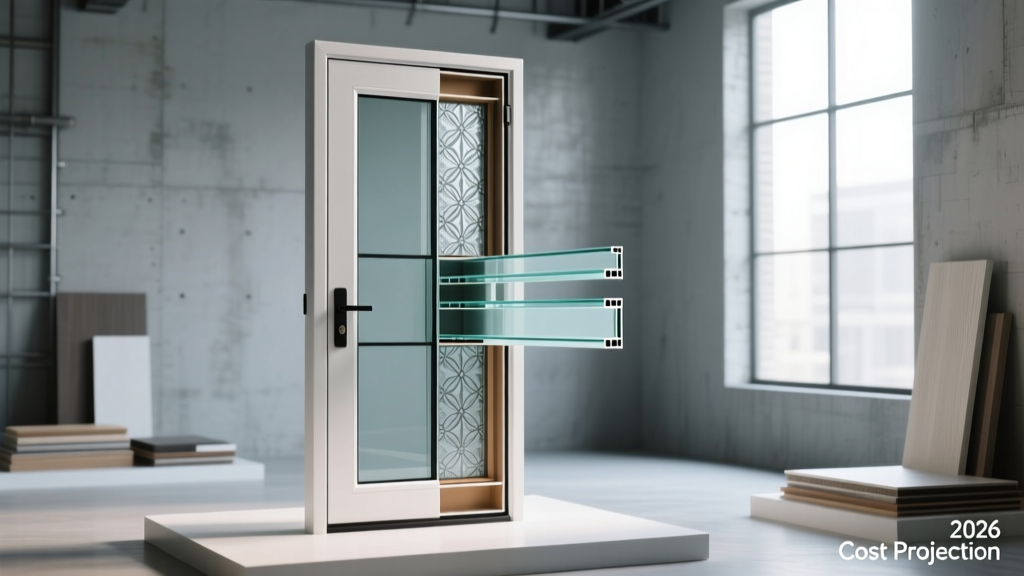
The Fiberglass Front Door Glass Cost Matrix
When estimating the cost of a fiberglass front door, the base slab price is only the starting point. The true cost driver—and the primary thermal variable—is the glass insert (door lite). Fiberglass doors from premium manufacturers like Therma-Tru and ProVia utilize modular glass systems that allow for field-swappable inserts, but each glazing upgrade significantly alters the final budget. Below is the 2026 pricing matrix for standard 36-inch by 80-inch fiberglass entry doors featuring a standard 22-inch by 64-inch glass insert cutout.
| Glass Configuration | Pane Type | U-Factor | SHGC | 2026 Price Adder (Over Solid Slab) |
|---|---|---|---|---|
| Clear Tempered | Double Pane | 0.32 | 0.70 | $250 - $400 |
| Standard Low-E | Double Pane (Argon Fill) | 0.24 | 0.40 | $350 - $550 |
| Advanced Low-E3 | Triple Pane (Krypton Fill) | 0.15 | 0.25 | $600 - $950 |
| Decorative Camed | Triple Pane (Internal Caming) | 0.18 | 0.30 | $900 - $1,800 |
| HVHZ Impact-Rated | Laminated/Insulated (SGP) | 0.22 | 0.40 | $1,200 - $2,100 |
According to the U.S. Department of Energy, upgrading from a standard clear double-pane insert to a triple-pane Low-E configuration can reduce door-related heat loss by up to 40%, a critical factor when calculating long-term HVAC ROI against the initial upfront glazing premium.
Calculating Glazing Upgrades: Low-E, Decorative, and Impact
To accurately estimate your project, you must understand the mechanical and chemical differences between glass tiers. The price adders listed above are not arbitrary; they reflect the cost of gas fills, spacer technologies, and interlayer materials.
Double vs. Triple Pane and Gas Fills
Standard double-pane inserts use an argon gas fill and an aluminum spacer bar. While cost-effective, aluminum spacers conduct heat, creating a cold edge that can lead to interior condensation in freezing climates. Premium triple-pane inserts (like those offered in the Therma-Tru glass catalog) utilize krypton gas—which is denser and more thermally resistant than argon—paired with warm-edge Swiggle or stainless-steel spacers. Expect to pay a $250 to $400 premium specifically for the krypton and warm-edge spacer upgrade.
Decorative Camed Glass: The Triple-Pane Advantage
Historically, decorative camed glass (featuring zinc or brass internal grids) was single or double-pane, resulting in poor thermal performance. Modern fiberglass doors utilize a triple-pane construction where the decorative caming is sealed *between* two panes of clear tempered glass, with a third interior pane providing the Low-E coating. This protects the caming from oxidation and dust while maintaining a U-factor below 0.20. Complex beveling or custom privacy textures (e.g., Water Cube, Chord) will push the glass insert cost toward the $1,800 ceiling.
Impact-Rated Glass in HVHZ (High-Velocity Hurricane Zones)
If your project is located in a coastal region governed by Miami-Dade NOA (Notice of Acceptance) standards, standard tempered glass is illegal for entryways. You must specify impact-rated glass.
- PVB Interlayer: Standard polyvinyl butyral is used for basic impact resistance. It holds shattered glass together but can delaminate under extreme, sustained wind loads.
- SGP (SentryGlas Plus) Interlayer: An ionoplastic interlayer that is 5 times stronger and 100 times stiffer than PVB. SGP is mandatory for large-format sidelites and transoms in HVHZ zones. This material upgrade alone adds $600 to $900 to the glass cost.
Climate Zone Optimization for Glass Inserts
Purchasing the most expensive glass insert does not guarantee the best performance if it mismatches your climate zone. ENERGY STAR divides the country into four distinct climate zones, dictating the required U-Factor (insulation) and SHGC (Solar Heat Gain Coefficient) for entryway glazing.
Southern Zone: Prioritize SHGC (≤ 0.25). Double-pane Low-E with a spectrally selective tint (often a subtle bronze or gray) is more cost-effective than triple-pane, as blocking solar heat gain is more critical than retaining interior heat.
Sidelites and Transoms: Expanding the Glass Footprint
A fiberglass front door rarely operates in isolation. Flanking sidelites and overhead transoms dramatically increase the glass-to-frame ratio, requiring a recalculation of both material and structural costs.
| Component | Standard Size | Base Cost (Clear) | Impact-Rated Cost |
|---|---|---|---|
| 1/4 Sidelite | 14" x 80" | $350 - $500 | $800 - $1,100 |
| 1/2 Sidelite | 22" x 80" | $550 - $750 | $1,200 - $1,600 |
| Transom | 60" x 18" | $600 - $900 | $1,400 - $1,900 |
Structural Warning: Adding sidelites requires a structural mullion (the vertical post separating the door from the sidelite). Standard wood mullions can warp and compromise the glass seal over time. Always specify a composite or aluminum-clad mullion kit (approx. $150-$250) to ensure the heavy fiberglass door does not pull the frame out of plumb, which will shatter the sidelite glass under torsion stress.
Step-by-Step Project Cost Calculator Framework
Use this formula to build a precise line-item estimate for your contractor or building materials supplier.
- Base Door Slab & Frame: $800 - $1,400 (Includes pre-hung fiberglass slab, composite frame, and standard threshold).
- Glass Insert Multiplier: Select your glass tier from the matrix above and add the price adder to the base cost.
- Flanking Glass Add-ons: (Sidelite Cost × Quantity) + (Transom Cost × Quantity).
- Hardware & Lockset Bore: $150 - $400. (Note: Multi-point locking systems are highly recommended for doors with heavy glass inserts to distribute the weight and prevent latch-side sagging).
- Installation Labor: $450 - $850. Impact-rated units require specialized shimming and structural fastening (Tapcon screws into concrete thresholds), pushing labor toward the higher end.
- Permitting (If Applicable): $150 - $300 for HVHZ wind-load inspections.
Example Calculation: A ProVia Signet fiberglass door ($1,100) with a Decorative Camed Triple-Pane insert ($1,400 adder), two 1/4 sidelites ($700), and standard installation ($600) yields a total project cost of $3,800.
Hidden Costs and Failure Modes
Another critical failure mode is Insulated Glass Unit (IGU) seal failure. If the exterior overhang above the door is less than 24 inches, UV degradation and thermal cycling will destroy the butyl seal around the glass spacer. This leads to argon gas leakage and interior fogging. When estimating, factor in the cost of a proper aluminum or composite door canopy if the architectural overhang is insufficient.
Frequently Asked Questions
Can I replace just the glass insert in an existing fiberglass door?
Yes. Most premium fiberglass doors feature a screw-in interior and exterior frame (glazing bead) that allows the glass insert to be swapped without replacing the entire door slab. A replacement 22x64 Low-E insert typically costs $300 to $500, plus $150 in labor.
Does decorative glass reduce the energy efficiency of the door?
Not if manufactured correctly. Modern internal-caming triple-pane units maintain the exact same U-factor as clear triple-pane glass because the decorative elements are suspended in the dead-air space between the outer and middle panes, leaving the inner Low-E coated pane completely uninterrupted.