Lifespan of an Insulated Door for Garage: Durability & R-Value Decay
Analyze the lifespan of an insulated door for garage. Compare polyurethane and polystyrene core durability, R-value decay, and failure modes.
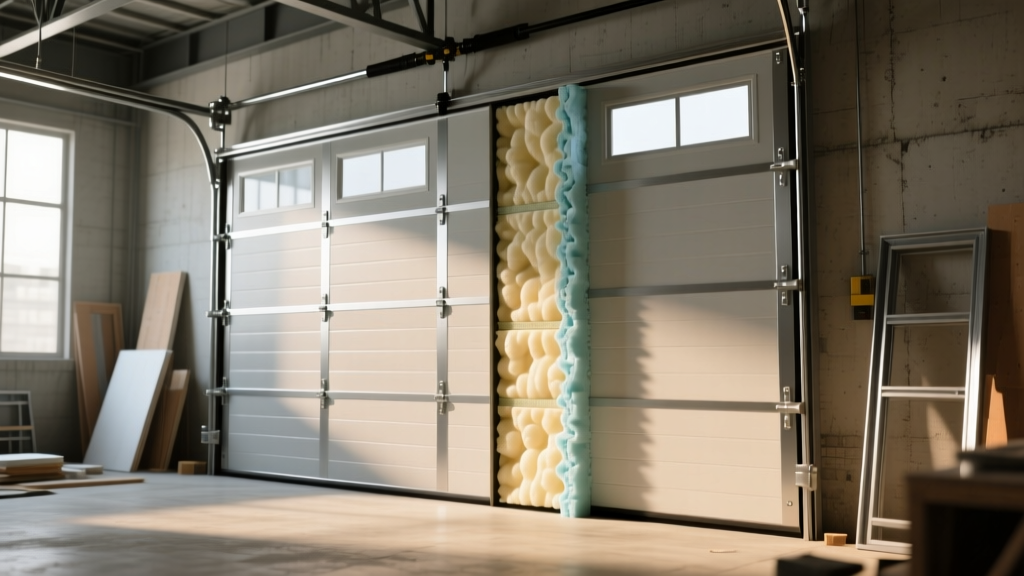
The Anatomy of an Insulated Door for Garage: Core Materials
The thermal performance and structural longevity of an insulated door for garage depend entirely on the interaction between the exterior steel skins and the interior insulation core. While mechanical components like torsion springs and cables typically require replacement every 10,000 to 15,000 cycles (roughly 7 to 10 years), the insulated door panels themselves are engineered to last 20 to 30 years. However, the thermal lifespan—the period during which the door maintains its factory-rated R-value—varies drastically based on the core material used.
Modern garage doors utilize either 24-gauge or 27-gauge steel skins. The 24-gauge steel (0.0239 inches thick) provides superior resistance to denting from hail or vehicle impacts, preserving the physical integrity of the insulation chamber. When the steel skin is compromised, moisture infiltrates the core, accelerating thermal degradation.
• Steel Skins: 20–30 years (highly dependent on corrosion protection)
• Polyurethane Core: 20+ years (lifetime of the door, zero R-value sag)
• Polystyrene Core: 10–15 years before noticeable thermal bridging and settling
• Weather Seals: 3–5 years (requires routine replacement to maintain thermal boundary)
Polyurethane vs. Polystyrene: Long-Term R-Value Retention
The most critical factor in the durability of an insulated door for garage is the chemical composition of the insulation. According to the U.S. Department of Energy, the long-term thermal resistance (LTTR) of foam insulation can degrade if the blowing agents escape the cellular structure over time. In garage doors, this manifests in two distinct ways depending on the material.
Polystyrene (EPS and XPS) Rigid Board Inserts
Polystyrene doors are manufactured by cutting rigid foam boards and inserting them into the cavities of the steel door panels. Because the foam is not bonded to the steel, microscopic air gaps exist between the insulation and the door skin. Over 10 to 15 years, the constant vibration from the door opening and closing causes the rigid polystyrene boards to shift, settle, and grind against the steel. This friction creates physical degradation of the foam edges, leading to air infiltration and a localized drop in R-value. Furthermore, polystyrene typically yields a maximum R-value of R-8 to R-10 for garage doors due to the physical thickness limitations of the panel cavity.
Polyurethane Foamed-in-Place Cores
Polyurethane is injected as a liquid foam that expands to fill the entire cavity, bonding chemically and mechanically to both the interior and exterior steel skins. This creates a structural composite panel that is vastly more rigid than polystyrene. Because there are no air gaps, moisture cannot migrate behind the insulation, and the foam cannot settle or sag. Polyurethane doors reliably maintain their R-16 to R-18 ratings for the entire 25-year lifespan of the door. The Door and Access Systems Manufacturers Association (DASMA) recognizes foamed-in-place polyurethane as the superior standard for long-term thermal stability in sectional overhead doors.
| Feature | Polystyrene (Rigid Insert) | Polyurethane (Foamed-in-Place) |
|---|---|---|
| Average R-Value | R-8 to R-10 | R-16 to R-18+ |
| Thermal Lifespan | 10–15 years (prone to settling) | 20+ years (zero settling) |
| Structural Rigidity | Moderate (skins can flex) | High (composite sandwich) |
| Moisture Vulnerability | High (condensation in air gaps) | Low (fully bonded seal) |
| Typical 2026 Cost (16x7) | $900 – $1,400 | $1,800 – $2,800 |
Primary Failure Modes & Durability Threats
Even with a high-quality polyurethane core, the overall thermal envelope of an insulated door for garage can fail if secondary components degrade. Understanding these failure modes allows homeowners to intervene before the insulation's effectiveness is compromised.
1. Panel Joint Thermal Bridging
The horizontal joints between door panels are the weakest link in the thermal envelope. Older or budget doors use a simple shiplap joint, where the steel skins overlap. This creates a direct thermal bridge, allowing exterior cold or heat to conduct directly through the metal into the garage. Premium doors utilize a tongue-and-groove joint with an integrated thermal break—a physical gap or foam bumper that prevents the interior and exterior steel skins from touching. If the thermal break bumper wears away after 15 years of friction, thermal bridging resumes, causing localized condensation and frost buildup on the interior panel joints during winter.
2. Bottom Astragal Seal Degradation
The bottom astragal is the heavy-duty rubber seal that compresses against the garage floor. Exposure to UV radiation, ozone, and freezing temperatures causes standard vinyl seals to harden, crack, and lose their memory within 3 to 5 years. Once the seal fails, unconditioned air bypasses the insulated door panels entirely, rendering the door's R-value practically irrelevant. Upgrading to a dual-contact EPDM (Ethylene Propylene Diene Monomer) rubber seal extends this lifespan to 8 to 10 years and maintains a continuous thermal boundary.
3. Delamination from Impact Damage
If a 27-gauge steel skin is dented deeply enough by a vehicle or heavy equipment, the polyurethane core behind the dent can crush or delaminate from the steel. This creates a void space inside the panel. While the door may still function mechanically, the void space allows for internal convection currents, drastically reducing the effective R-value of that specific panel section.
Applying aftermarket reflective foil or bubble-wrap insulation kits to the interior of an uninsulated or poorly insulated garage door is highly discouraged. These kits trap moisture against the steel skin, accelerating rust and corrosion. Furthermore, the added weight alters the door's balance, causing premature failure of the torsion springs and opener motor, voiding the manufacturer's warranty.
Environmental Stressors: How Climate Dictates Lifespan
The geographic location of the garage heavily influences the degradation rate of the door's materials.
- Coastal and High-Humidity Zones: Salt air and high humidity accelerate the corrosion of the steel skins, particularly at the cut edges of the panels and the hinge attachment points. In these regions, specifying a door with a baked-on polyester primer and a polyurethane topcoat (or upgrading to an aluminum/glass full-view door with thermally broken frames) is mandatory to achieve a 20-year lifespan.
- Extreme Temperature Swing Zones: Regions with high diurnal temperature variations (e.g., high desert climates) subject the door to constant expansion and contraction. This thermal cycling places immense stress on the panel joints and the perimeter weatherstripping. Polyurethane's superior bonding prevents the core from separating from the skin during these extreme shifts.
- Heavy Snow and Ice Regions: Ice buildup at the base of the door can freeze the bottom astragal to the concrete. Forcing the door open via the automatic operator can tear the seal entirely off the aluminum retainer. Installing a heated threshold mat or applying a silicone-based lubricant to the seal prevents this mechanical failure.
Maintenance Protocols to Maximize Thermal Longevity
To ensure an insulated door for garage reaches its maximum 25-year structural and thermal lifespan, implement the following maintenance schedule:
- Bi-Annual Seal Inspection: Check the perimeter weatherstripping and bottom astragal. If the vinyl is brittle or the rubber no longer compresses to at least 50% of its original thickness, replace it immediately to prevent thermal bypass.
- Hinge and Roller Lubrication: Every six months, apply a lithium-based or silicone garage door lubricant to the hinges, rollers, and bearings. Avoid WD-40, which acts as a solvent and strips existing lubricants, leading to metal-on-metal friction that vibrates the door panels and accelerates polystyrene settling.
- Track Alignment Checks: If the door tracks are misaligned, the door panels will twist slightly as they move. This twisting force breaks the chemical bond between the steel skin and the polyurethane core, leading to internal delamination. Ensure the tracks are perfectly plumb and the gap between the roller and the track is consistent.
- Wash and Wax: Annually wash the exterior steel skins with a mild automotive detergent and apply a coat of carnauba wax. This preserves the clear coat, prevents UV fading, and creates a hydrophobic barrier against moisture intrusion.
Cost vs. Lifespan ROI Analysis
When evaluating the purchase of an insulated door for garage, the initial capital expenditure must be weighed against the long-term thermal retention and energy savings, particularly if the garage is attached to the home or serves as a conditioned workspace.
• Uninsulated Door (R-0): Initial cost $600. Energy penalty: ~$150/year in HVAC losses. 20-year cost: $3,600.
• Polystyrene Door (R-8): Initial cost $1,200. Energy penalty: ~$60/year. 20-year cost: $2,400. (Requires replacement of degraded seals/panels around year 15).
• Polyurethane Door (R-18): Initial cost $2,200. Energy penalty: ~$20/year. 20-year cost: $2,600. (Maintains full R-value and structural integrity through year 20).
Note: The polyurethane door yields the highest long-term value due to zero thermal degradation and superior structural rigidity, reducing mechanical wear on the opener system.
Ultimately, the durability of an insulated garage door is not just a function of the insulation material itself, but the holistic engineering of the panel joints, the gauge of the steel, and the quality of the perimeter seals. For homeowners seeking a true lifetime thermal barrier, a 24-gauge steel door with a foamed-in-place polyurethane core and tongue-and-groove thermal breaks remains the undisputed industry standard.