Brickyard Building Materials Sacramento CA: A Durability Analysis
Evaluate brick durability for Northern California. Explore ASTM specs, mortar selection, and sourcing insights from Brickyard Building Materials Sacramento CA.

Regional Climate Stressors and Masonry Performance
Northern California presents a unique microclimate that aggressively tests building envelopes. Sacramento experiences summer peaks exceeding 105°F, winter nights that frequently dip below freezing, and a high UV index year-round. When specifying masonry for this region, generic material selection leads to premature efflorescence, thermal spalling, and joint degradation. Analyzing the inventory and quality control standards of specialized regional distributors like Brickyard Building Materials Sacramento CA provides a critical benchmark for sourcing climate-resilient masonry components.
Unlike big-box retailers that store porous materials in unsealed outdoor lots, specialized local yards prioritize ground-moisture isolation and UV-protected storage. This distinction directly impacts the initial moisture content of the brick at the time of installation, which dictates long-term efflorescence risks and mortar bond strength.
The Sacramento Climate Matrix: Stressors and Solutions
Durability is not an inherent property of the brick alone; it is the result of matching material specifications to localized environmental loads. The following matrix outlines the primary stressors in the Sacramento Valley and the required material responses.
| Environmental Stressor | Local Impact (Sacramento Valley) | Required Material Specification |
|---|---|---|
| Thermal Shock | 40°F diurnal temperature swings in late summer cause rapid expansion/contraction. | Type N mortar (flexible); expansion joints every 20 linear feet. |
| Winter Freeze-Thaw | Saturated bricks subjected to sub-32°F nights in December/January. | ASTM C216 Grade SW (Severe Weathering) for all ground-contact zones. |
| High UV Exposure | Intense solar radiation degrades synthetic pigments and sealants. | Iron-oxide pigmented fired clay; avoid surface-applied acrylic stains. |
| Seismic Lateral Loads | Proximity to regional fault lines requires flexible veneer anchorage. | Corrugated wall ties at 16" o.c.; compliance with 2026 CBC Chapter 21. |
Material Selection: Decoding ASTM Standards for Regional Use
Not all bricks are engineered for exterior durability. When sourcing from premium suppliers, builders must verify compliance with specific ASTM International standards. The two most common specifications are ASTM C62 (Building Brick) and ASTM C216 (Facing Brick).
Water Absorption and Weathering Grades
For exterior veneers in Sacramento, ASTM C216 is the mandatory baseline. However, within C216, you must specify the correct weathering grade:
- Grade MW (Moderate Weathering): Maximum water absorption of 22.0%. Suitable for protected soffits or interior applications. Using MW brick on an exposed Sacramento exterior risks spalling during rare but severe winter freezes.
- Grade SW (Severe Weathering): Maximum water absorption of 17.0% (often achieving 8-12% in premium runs). This is the required grade for parapets, retaining walls, and the first three courses of brick above grade level to prevent wicking and freeze-thaw damage.
Expert Insight: A common failure mode in Northern California masonry is the use of Grade MW brick for hardscape pavers. Because pavers sit directly on soil, they absorb ground moisture continuously. When winter temperatures drop, the trapped water expands, causing the face of the brick to pop off (delamination). Always specify ASTM C902 Grade SX for clay pavers.
Mortar Compatibility in Seismic and Thermal Zones
The durability of a brick wall is often limited by its mortar. A frequent misconception is that stronger mortar creates a more durable wall. In reality, mortar must be softer and more permeable than the brick it binds.
Type N vs. Type S Mortar
Under the latest California Building Code (CBC) updates, structural requirements for unreinforced masonry have tightened, but for standard brick veneer, flexibility remains paramount.
- Type N Mortar (750 psi): Composed of 1 part Portland cement, 1 part lime, and 6 parts sand. The high lime content provides superior flexibility, allowing the mortar to absorb Sacramento's extreme thermal expansion without cracking. It also exhibits excellent autogenous healing (self-sealing of micro-cracks). This is the default choice for all above-grade exterior veneer.
- Type S Mortar (1800 psi): Composed of 1 part Portland cement, 0.5 part lime, and 4.5 parts sand. The high Portland content makes it rigid. Use Type S only for below-grade foundations, retaining walls, or structural masonry where lateral soil pressure demands high compressive strength. Using Type S on a standard veneer will result in the rigid mortar cracking the brick faces during thermal shifts.
The Supply Chain Advantage: Quality Control at the Yard
Material specifications are meaningless if the inventory is compromised before it reaches the job site. This is where the operational standards of Brickyard Building Materials Sacramento CA differentiate regional specialists from generalist suppliers.
Warning: The Efflorescence Trigger
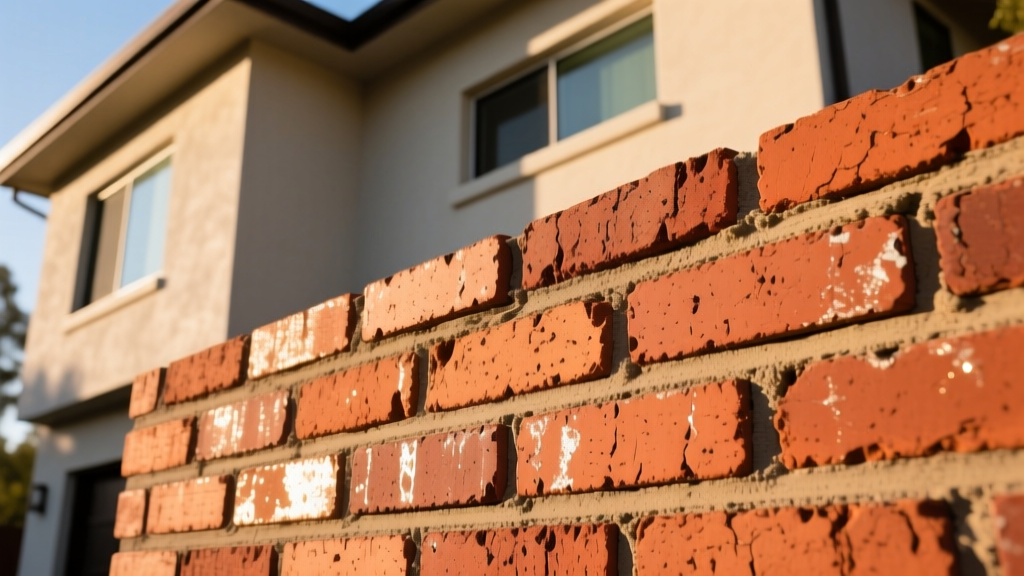
Efflorescence—the white, powdery salt deposit on brick faces—is rarely a defect in the brick itself. It is caused by water dissolving soluble salts within the clay and depositing them on the surface as it evaporates. If a supplier stores brick cubes directly on bare soil without heavy-duty polyethylene base wraps, ground moisture wicks into the bottom three courses of the pallet. By the time the mason installs the brick, it is already pre-saturated with salt-laden moisture, guaranteeing severe efflorescence within the first month of curing.
Specialized masonry yards enforce strict pallet-wrapping protocols and utilize crushed-rock or elevated storage pads. When auditing a supplier for a high-end residential or commercial project in the Sacramento area, inspect the bottom course of their outdoor brick cubes. If the bottom bricks show signs of mud splatter, dampness, or early-stage salt blooming, the yard's storage protocols are inadequate for premium masonry work.
10-Year Durability Maintenance Protocol
Even perfectly specified and installed masonry requires targeted maintenance to achieve its 100-year lifecycle. Builders and property managers should implement the following protocol for Sacramento properties:
- Year 1 (Post-Curing Inspection): Inspect all control joints and weep holes. Ensure weep holes (typically open head joints with plastic mesh inserts) are completely clear of mortar droppings. Blocked weep holes trap water inside the cavity, leading to interior drywall rot.
- Year 3 (Sealant Check): Inspect the elastomeric sealant at the interface between the brick veneer and window/door frames. Sacramento's UV index degrades cheap caulks rapidly. Replace any cracking sealant with a high-modulus polyurethane or silicone joint sealant.
- Year 5 (Vegetation Management): Trim all ivy, climbing vines, and shrubs at least 18 inches away from the masonry face. Root structures penetrate microscopic fissures in the mortar, and the constant moisture trapped by foliage accelerates biological growth and freeze-thaw degradation.
- Year 10 (Mortar Joint Profiling): Conduct a tap test on horizontal mortar joints (ledges, sills, and coping). Horizontal joints collect water and degrade faster than vertical joints. If the joint profile has eroded from a concave or v-joint to a flat surface, schedule tuckpointing before water infiltration compromises the wall ties.
Final Sourcing Directives for Northern California Builders
Achieving maximum durability in Sacramento's climate requires a synthesis of rigorous material specification and uncompromising supply chain management. Always mandate ASTM C216 Grade SW for exposed applications, specify Type N mortar for above-grade thermal flexibility, and verify that your distributor—whether it is Brickyard Building Materials or another specialized local supplier—maintains elevated, moisture-isolated storage for all clay products. For comprehensive regional code compliance, always cross-reference your masonry detailing with the California Building Standards Commission and the technical bulletins published by the Brick Industry Association.
Written by
James ThorntonJames Thornton is a construction industry veteran with 25 years of hands-on experience in wood framing, lumber grading, and residential building codes. He started as a framing carpenter in rural Oregon, earned his ICC Residential Building Inspector certification, and eventually became a senior plan reviewer for the City of Portland Bureau of Development Services. James holds a B.S. in Wood Science & Technology from Oregon State University and is a certified lumber grader through the West Coast Lumber Inspection Bureau (WCLIB). He has inspected over 3,000 residential construction sites and authored the city's internal guide on advanced framing techniques (2x6 at 24" O.C.). James lives in Bend, OR, where he builds custom timber-frame cabins and competes in lumberjack sports.
More from James Thornton
View all
Insulation
Best Home Insulation Materials: Complete 2026 Guide
Compare top home insulation materials for 2026. Find R-values, installed costs per square foot, and best uses for fiberglass, spray foam, and mineral wool.
Aug 4, 2026

Sustainable Building
Certify Your Green Building Material for LEED and WELL
Step-by-step guide to certifying a green building material for LEED v5 and WELL v2. Master EPDs, HPDs, and VOC limits for 2026 project specifications.
Aug 4, 2026

Stone & Masonry
Veneer Stacked Stone Panels: Interior Design & Style Showcase
Discover how veneer stacked stone panels transform interiors. Explore modern design profiles, material pairings, and technical installation specs.
Aug 4, 2026