Lime Wash Brick Durability: Lifespan, Failure Modes, and Long-Term ROI
Analyze the true lifespan of lime wash brick. Compare limewash to acrylic paint, explore failure modes, curing chemistry, and 20-year maintenance costs.
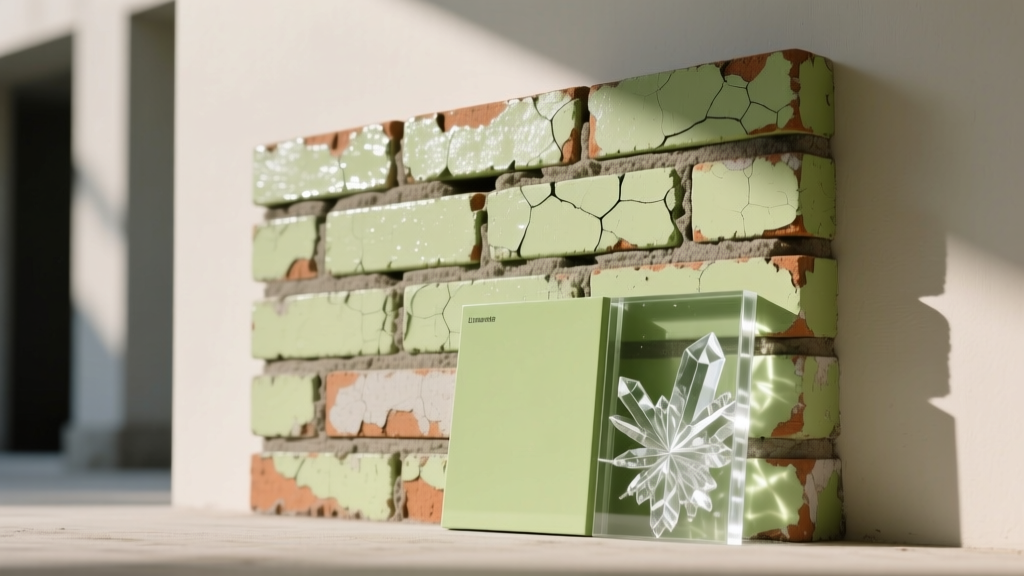
The Carbonation Process: How Limewash Bonds to Masonry
To understand the durability of lime wash brick, you must first understand that limewash is not a paint. Acrylic and latex masonry paints form a superficial polymer film that sits on top of the brick. Limewash, composed primarily of calcium hydroxide (slaked lime) and water, undergoes a chemical transformation known as carbonation. When applied to a porous masonry substrate, the calcium hydroxide reacts with atmospheric carbon dioxide to form calcium carbonate (limestone).
This reaction literally petrifies the coating into the microscopic pore structure of the brick. Because it becomes part of the masonry rather than a skin over it, limewash will never peel, blister, or flake. However, this chemical bond dictates its unique wear pattern: it slowly erodes and chalks over time rather than failing catastrophically. According to building science principles outlined by Building Science Corporation, maintaining the vapor permeability of masonry is critical to preventing freeze-thaw spalling, and limewash's micro-porous structure allows trapped moisture to escape freely.
Lifespan Expectations: Limewash vs. Acrylic Masonry Paint
Homeowners often confuse the 'fading' of limewash with the 'failing' of paint. A limewashed brick wall may lose its opaque whiteness in 5 to 7 years, but the substrate remains protected. Conversely, acrylic paint may look pristine for a decade before it traps moisture and destroys the brick face. Below is a comparative durability matrix for exterior masonry coatings.
| Coating Type | Aesthetic Lifespan | Functional Lifespan | Primary Failure Mode | Vapor Permeability |
|---|---|---|---|---|
| Traditional Limewash | 5 - 7 Years | Indefinite (Sacrificial) | Surface chalking / UV erosion | Extremely High |
| Mineral Silicate Paint | 10 - 15 Years | 15 - 20 Years | Gradual color fading | High |
| 100% Acrylic Masonry Paint | 10 - 15 Years | 7 - 12 Years | Peeling, blistering, moisture trapping | Low to Moderate |
| Elastomeric Coating | 10+ Years | 5 - 8 Years | Substrate spalling, hidden rot | Very Low |
The 5 Primary Failure Modes of Limewashed Brick
While limewash is highly durable, improper application or extreme environmental factors can lead to premature degradation. Recognizing these failure modes is essential for long-term maintenance.
1. Premature Chalking from Acid Rain
Calcium carbonate is highly susceptible to acidic dissolution. In regions with heavy industrial pollution or frequent acid rain (pH below 5.0), the surface layer of the limewash will dissolve faster than the standard 5-to-7-year aesthetic lifespan. In these environments, expect to apply a refresher coat every 3 to 4 years to maintain opacity.
2. Efflorescence Spalling
If limewash is applied over brick that has not been properly cleaned of existing soluble salts, moisture moving through the wall will push those salts to the surface. Because limewash is breathable, the salts will crystallize on top of the coating rather than beneath it, but heavy efflorescence can still create an unsightly white, crusty bloom that mimics coating failure. Always test for efflorescence and treat with a mild muriatic acid wash (neutralized and rinsed) before application.
3. Substrate Incompatibility (The Sealer Trap)
Limewash requires a highly porous, absorptive substrate to penetrate and carbonate. Applying limewash over brick that has been previously treated with a silane/siloxane water repellent or an acrylic sealer will result in immediate failure. The limewash will sit on the surface, fail to penetrate, and wash off in the first heavy rain. The National Park Service explicitly warns against applying water-repellent sealers to historic masonry, as they trap moisture and prevent breathable coatings like limewash from bonding.
4. Application Thickness and Freeze-Thaw Damage
Limewash must be applied in thin, translucent layers. A common DIY mistake is applying it as thickly as latex paint to achieve instant, solid coverage. Thick layers of limewash cannot carbonate fully in the center; they remain as soft, uncured calcium hydroxide. When winter arrives, water enters this uncured layer, freezes, expands, and causes the thick limewash to flake off in sheets.
5. Biological Growth in Deep Shade
While fresh limewash has a highly alkaline pH (12 to 13) that naturally inhibits mold and algae, its alkalinity drops as it carbonates to a neutral pH of 8. On the deeply shaded, perpetually damp north-facing elevations of a building, algae can eventually colonize the surface once the pH neutralizes.
Commercial Product Analysis: Coverage and Longevity
Not all commercial limewashes are created equal. The addition of pozzolans, casein (milk protein), or acrylic polymers drastically alters the durability and application process. Here is an analysis of the top-tier products available on the market.
- Romabio Classico Limewash: The industry standard for residential exteriors. It is a slaked lime base fortified with mineral additives for improved adhesion. Cost: ~$270 per 4-gallon bucket. Coverage: 300-400 sq. ft. per gallon (diluted). Durability Note: Requires a 1:1 dilution for the first coat and 1:1.5 for the second. It achieves a highly durable, chalky patina that resists UV degradation exceptionally well.
- Color Atelier Limewash: A premium, highly refined European-style limewash. It contains no synthetic polymers, relying entirely on the purity of the lime and natural pigments. Cost: ~$95 per gallon. Coverage: 250-300 sq. ft. per gallon. Durability Note: Because it lacks modern binding additives, it requires a perfectly prepared, highly porous substrate and a minimum of three thin coats for exterior durability. Best reserved for historic restorations.
- BioMAYA Limewash: Formulated with natural plant-based binders to increase flexibility and reduce the number of coats required. Cost: ~$180 per 4-gallon bucket. Coverage: 350 sq. ft. per gallon. Durability Note: The organic binders slightly reduce the vapor permeability compared to pure lime, but significantly improve resistance to mechanical abrasion and driving rain.
Pro-Tip: The 'Splash Test' for Substrate Readiness
Before purchasing materials, throw a cup of water against the brick. If the water beads up and runs off, the brick is sealed and will not accept limewash. If the water is immediately absorbed and darkens the brick, the substrate is ready. If it is sealed, you must mechanically abrade the surface or use a specialized masonry stripper before proceeding.
The Maintenance Matrix: Refreshing vs. Reapplication
Maintaining lime wash brick is fundamentally different from repainting. You do not need to scrape, sand, or prime. Use this decision framework to determine your maintenance protocol when the facade begins to look patchy or faded.
| Condition of Facade | Required Action | Estimated Labor Time (per 1,000 sq ft) |
|---|---|---|
| Uniform fading, no dirt/mildew | Refresh: Wet the wall with a garden hose and apply one thin, heavily diluted coat (1 part lime to 2 parts water). | 4 - 6 Hours |
| Patchy fading, minor dirt accumulation | Clean & Refresh: Soft-wash with a low-PSI washer and TSP substitute. Rinse, wet, and apply one standard coat. | 8 - 10 Hours |
| Heavy efflorescence, algae, or thick dirt | Reapply: Pressure wash (max 800 PSI with a 40-degree tip), treat algae with oxygen bleach, allow to dry, and apply a full two-coat system. | 16 - 24 Hours |
20-Year Cost Analysis: The True ROI of Limewash
When evaluating the lifespan of lime wash brick, the initial material cost is higher than standard masonry paint, but the long-term maintenance costs invert the financial advantage. Below is a 20-year cost projection for a 2,500 square foot brick exterior.
High-Grade Acrylic Paint
- Initial Application: $4,500 (Includes extensive scraping, priming, and two topcoats)
- Year 10 Repaint: $5,500 (Requires heavy scraping of peeling areas, mildewcide treatment)
- Year 20 Repaint: $6,500
- Substrate Repair Risk: High (Brick face spalling due to trapped moisture often requires tuckpointing or brick replacement: +$2,000)
- 20-Year Total: $18,500
Premium Limewash
- Initial Application: $5,200 (No scraping/priming required, just cleaning and two coats)
- Year 7 Refresh: $1,200 (Simple hose-down and one thin diluted coat)
- Year 14 Refresh: $1,400
- Substrate Repair Risk: Near Zero (High permeability protects the masonry matrix)
- 20-Year Total: $7,800
While limewash requires more frequent aesthetic intervention, the labor intensity of those interventions is a fraction of what is required to prep and repaint a failing acrylic coating. Furthermore, the structural preservation of the brick substrate ensures that the masonry itself will outlast the building's framing, making limewash not just an aesthetic choice, but a critical preservation strategy for long-term structural durability.