Fake Brick Wall Panels: Lifespan, Durability & Failure Modes
How long do fake brick wall panels last? We analyze polyurethane, PVC, and MDF durability, UV resistance, and failure modes for 2026 installations.
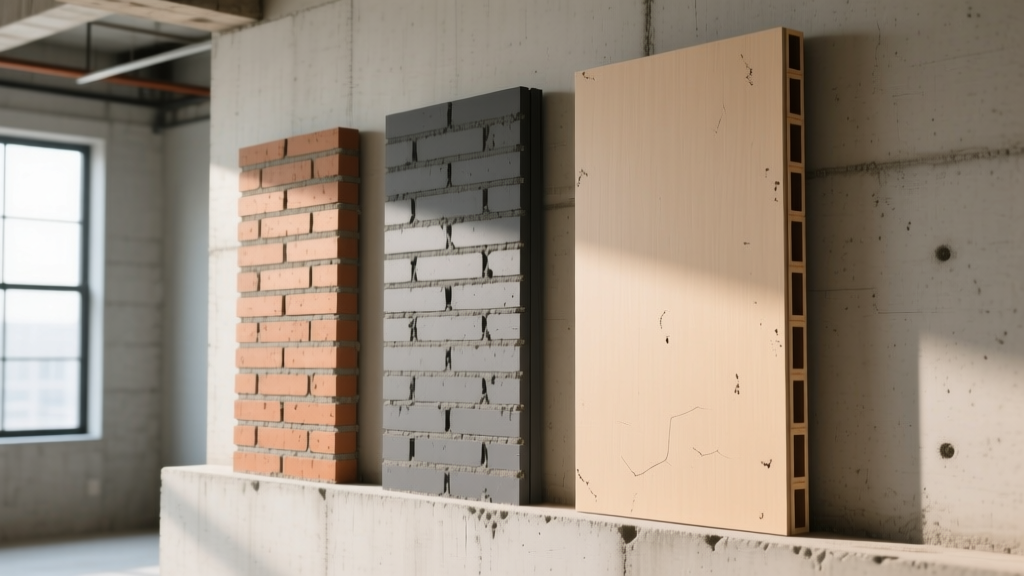
Material Composition: What Are Fake Bricks Actually Made Of?
The term "fake brick wall panels" encompasses a wide range of synthetic cladding materials, but their durability is entirely dictated by their core chemical composition. In 2026, the market is dominated by three primary substrates: High-Density Polyurethane (PU), Polyvinyl Chloride (PVC), and Medium-Density Fiberboard (MDF). Understanding the physical properties of each is the first step in predicting their lifespan and structural integrity under environmental stress.
Polyurethane (PU) vs. PVC vs. MDF
High-density polyurethane panels are manufactured at a density of 2.5 to 3.5 pounds per cubic foot, making them exceptionally rigid while remaining lightweight (typically 1 to 1.5 lbs per square foot). PVC panels are heavier, more brittle in freezing temperatures, and rely on extrusion rather than molding, which limits their textural realism. MDF panels are strictly interior products; they consist of compressed wood fibers and resin, making them highly susceptible to hydroscopic swelling.
| Material | Density / Weight | Moisture Resistance | UV Stability | Primary Application |
|---|---|---|---|---|
| High-Density PU | 2.5 - 3.5 lbs/cu ft | Impervious (Closed-cell) | High (with UV inhibitors) | Exterior & Interior |
| Rigid PVC | Heavier, variable | Impervious | Moderate (Prone to chalking) | Exterior & Interior |
| MDF / Fiberboard | 3.5 - 4.5 lbs/cu ft | Very Poor (Hydroscopic) | N/A (Interior only) | Interior Accent Walls |
Expected Lifespan: Indoor vs. Outdoor Environments
The lifespan of fake brick wall panels is not a single number; it is a spectrum defined by environmental exposure. When installed in a climate-controlled interior environment, high-density PU and MDF panels can easily last 20 to 30 years with minimal degradation. The primary threats indoors are physical impact and accidental moisture exposure (e.g., in bathrooms without adequate ventilation).
Exterior installations face a much harsher reality. Direct solar radiation, thermal cycling, and wind-driven rain accelerate material fatigue. According to building envelope guidelines on moisture control and exterior wall finishes published by the U.S. Department of Energy, synthetic claddings must manage bulk water and vapor diffusion to prevent systemic failure. Premium exterior-grade PU panels, manufactured with integral color pigments and advanced UV stabilizers, carry a realistic functional lifespan of 15 to 25 years before aesthetic degradation (chalking or fading) necessitates replacement or heavy restoration.
Common Failure Modes and Edge Cases
When synthetic brick panels fail prematurely, it is rarely due to the material spontaneously disintegrating. Failure is almost always the result of improper installation, ignored thermal dynamics, or poor substrate preparation. Below are the most common failure modes observed in field inspections.
1. Thermal Expansion and Buckling
Polyurethane and PVC expand and contract with temperature fluctuations. PU panels typically have a coefficient of linear thermal expansion of approximately 3.0 x 10^-5 in/in/°F. If a 48-inch panel experiences a 100°F temperature swing from winter night to summer day, it will expand by roughly 0.14 inches. If the installer butted the panels tightly together without leaving the manufacturer-specified 1/8-inch expansion gap, the panels will buckle, warp, or pop off the fasteners.
2. Moisture Trapping and Substrate Rot
A critical edge case occurs when fake brick panels are installed directly over oriented strand board (OSB) or plywood without a weather-resistant barrier (WRB) or a rain screen gap. While the PU panel itself is waterproof, the joints and fastener penetrations are not. Water that infiltrates behind the panel becomes trapped against the wood substrate. As detailed in the Building Science Corporation builders guides, trapping moisture against wood sheathing without a drying potential leads to rapid fungal decay and structural rot, completely undermining the wall assembly long before the fake brick panel itself fails.
3. Impact Damage and Brittle Fracture
While high-density PU is resilient, it is not structural. In high-traffic areas (like commercial hallways or garage interiors), repeated impacts from carts, tools, or vehicles can dent or puncture the foam. PVC panels, conversely, suffer from brittle fracture in sub-zero temperatures. An impact that would merely dent a PU panel in July will shatter a PVC panel in January.
Real-World Pricing and Replacement Cycles
Evaluating the durability of fake brick wall panels requires factoring in the cost of eventual replacement. The initial material cost is only one part of the lifecycle equation.
| Panel Type | Material Cost (per sq. ft.) | Expected Exterior Lifespan | Cost to Repair/Refinish |
|---|---|---|---|
| Premium PU (e.g., NextStone, GenStone) | $9.00 - $14.50 | 20 - 25 Years | $2.50/sq ft (Paint/Seal) |
| Standard PVC Faux Brick | $5.50 - $8.50 | 10 - 15 Years | Requires full replacement |
| Interior MDF Faux Brick | $3.00 - $6.00 | N/A (Interior: 15+ Years) | $1.50/sq ft (Patch/Paint) |
Installation Variables That Dictate Longevity
The physical durability of the panel is entirely dependent on the chemical and mechanical bonds securing it to the wall. Adhesive failure is the number one cause of premature panel detachment.
Expert Adhesive Specification: For exterior high-density polyurethane panels, standard construction adhesives fail under prolonged thermal cycling. You must use a polyurethane-based adhesive, specifically Loctite PL Premium 3X or an equivalent ASTM C920 compliant sealant. Apply using a 1/4-inch notched trowel to ensure 85% substrate coverage, preventing hollow voids where water can pool and freeze.
Furthermore, mechanical fastening is non-negotiable for exterior applications. Adhesive alone cannot withstand the shear forces of wind-driven rain and ice damming. Panels must be secured with corrosion-resistant fasteners (stainless steel or hot-dipped galvanized) driven directly into the wall studs, not just the sheathing. The fastener heads should be countersunk slightly into the faux mortar joint and concealed with a color-matched, exterior-grade polyurethane caulk.
Testing Standards for UV and Weathering
When selecting fake brick wall panels for exterior use, verify that the manufacturer has subjected the product to ASTM G154 or ASTM G155 weathering testing. These standardized tests utilize fluorescent UV lamps or xenon-arc exposure combined with water spray to simulate years of solar and moisture degradation in a compressed timeframe. Panels that pass 2,000+ hours of ASTM G154 exposure without significant Delta-E (color shift) or loss of impact strength are classified as premium exterior-grade.
Maintenance Framework for Maximum Lifespan
To push fake brick wall panels to the absolute upper limit of their lifespan, a proactive maintenance framework is required. Unlike traditional clay masonry, which is virtually maintenance-free, synthetic panels require periodic intervention to maintain their UV-resistant coatings and joint seals.
- Biannual Joint Inspection: Every spring and fall, inspect the vertical and horizontal joints between panels. Thermal expansion will eventually cause the polyurethane caulk in the seams to lose adhesion. Rake out any cracked caulk and replace it with a high-quality, paintable exterior silicone-acrylic hybrid sealant.
- Low-Pressure Cleaning: Never use a high-pressure power washer on fake brick panels. Pressures exceeding 1,500 PSI will strip the factory-applied UV topcoat and force water behind the panel seams. Use a garden hose with a mild, non-bleach detergent (like Simple Green Oxy Dog or a dedicated siding wash) and a soft-bristle brush to remove biological growth, dirt, and oxidized chalk.
- UV Topcoat Reapplication: Around year 12 to 15, exterior PU panels will begin to show microscopic chalking—a natural sacrifice of the UV inhibitors to protect the core foam. At this stage, clean the wall thoroughly and apply a single coat of 100% acrylic exterior masonry paint or the manufacturer's proprietary clear UV-sealant. This resets the UV clock and can extend the panel's aesthetic lifespan by another decade.
- Impact Repair Protocol: If a panel is dented or punctured, do not attempt to fill it with standard wood filler or Bondo, which will crack during thermal expansion. Use a two-part, flexible polyurethane repair compound, sand it flush with the faux brick texture, and hand-paint the repair with the manufacturer's exact-match touch-up kit to blend the color variation.
By respecting the material science of synthetic claddings and adhering to strict installation tolerances, fake brick wall panels can provide a highly durable, cost-effective alternative to traditional masonry, provided their specific environmental limitations are actively managed.