AirStone Spring Creek Gray Faux Stone Veneer Reviews & Install Guide
In-depth AirStone Spring Creek 8-sq ft gray faux stone veneer reviews, covering installation specs, cost analysis, and real-world troubleshooting.

Material Composition and Core Specifications
The AirStone Spring Creek 8-sq ft gray faux stone veneer represents a specific niche in the manufactured stone market: ultra-lightweight, DIY-oriented architectural cladding. Unlike traditional cast stone veneers that rely on heavy aggregate mixes, AirStone utilizes a proprietary blend of Portland cement, pumice, and iron oxide pigments. This specific formulation drops the weight to approximately 1.2 pounds per square foot, compared to the 8 to 12 pounds per square foot typical of natural limestone or standard manufactured stone.
Technical Breakdown: Spring Creek 8-Sq Ft Box
- Coverage: 8 square feet per carton (flat pieces only; corners sold separately).
- Weight: ~9.5 lbs per box, allowing a single installer to carry multiple boxes up scaffolding or ladders without structural fatigue.
- Profile Depth: Ranges from 1.5 to 2.5 inches, providing a stacked-stone shadow line without requiring deep ledge extensions on window sills.
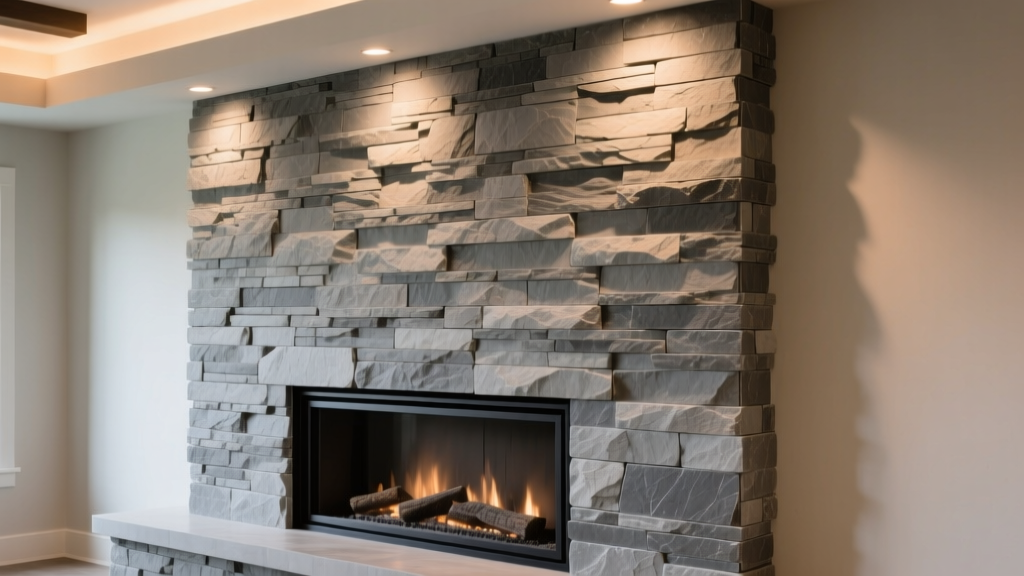
- Colorway: Spring Creek features a cool-toned gray base with subtle charcoal and slate undertones, designed to mimic weathered river rock and quarried bluestone.
Synthesizing User Reviews: Real-World Performance
Analyzing aggregated AirStone Spring Creek gray faux stone veneer reviews from professional contractors and DIY homeowners reveals a distinct split in satisfaction based on substrate preparation and expectation management. The primary praise centers on the material's forgiveness during cutting and its interlocking edge design, which hides minor leveling errors. However, critical reviews consistently highlight two specific vulnerabilities: color batch variation and edge brittleness during transit.
The Pros: What Installers Praise
- Zero Mortar Requirement: Eliminates the need for mixing Type S mortar, applying scratch coats, or managing messy masonry trowels. According to Bob Vila's faux stone overview, this adhesive-based approach reduces installation time by up to 40% for interior accent walls.
- Cutting Efficiency: The pumice aggregate allows the stone to be scored and snapped with a utility knife for minor trims, or cut cleanly with a standard miter saw equipped with a masonry blade, generating significantly less silica dust than natural stone.
- Structural Load: Because it weighs under 2 lbs/sq ft, it can be applied directly to standard interior drywall (with caveats) or exterior cement board without requiring additional wall framing or structural reinforcement.
The Cons: Common Complaints
- Pattern Repetition: The Spring Creek mold set is relatively small. Installers who do not dry-fit and rotate the stones often end up with visible repeating 'C' or 'L' shapes in the veneer field.
- Shipping Breakage: The lightweight pumice matrix is inherently more brittle than dense natural stone. Reviews frequently note chipped corners upon unboxing, requiring the installer to use a masonry file or snap off the damaged edge to create a natural-looking fracture.
Installation Framework: Adhesive Selection and Substrate Prep
The most frequent cause of failure in AirStone installations is incorrect adhesive pairing. AirStone manufactures two distinct proprietary adhesives, and using the wrong one for the environment will result in catastrophic delamination.
While AirStone is light enough to hang on drywall, the adhesive bond is stronger than the drywall's paper face. If you apply AirStone Interior Adhesive directly to unpainted drywall, the weight of the stone can pull the paper layer off the gypsum core. Always prime the drywall with a high-quality PVA drywall sealer or acrylic primer before application, or ideally, install the veneer over 1/2-inch cement backer board for a permanent bond.
Adhesive Protocols by Environment
- Interior Applications: Use AirStone Interior Adhesive. Apply using a standard caulking gun in a continuous 3/8-inch serpentine bead on the back of the stone. This adhesive remains flexible and cures via moisture evaporation. Open time is approximately 15 minutes at 70°F.
- Exterior Applications: You must use AirStone Outdoor Adhesive. This is a polyurethane-based formulation designed to withstand freeze-thaw cycles and UV degradation. It requires a 1/4-inch square-notched trowel applied to the substrate, followed by a back-buttering of the stone. Family Handyman's veneer installation protocols emphasize that exterior temperatures must be 40°F and rising during application and for 48 hours post-installation to ensure proper cross-linking of the polyurethane.
Cost Matrix: AirStone vs. Alternative Veneers
When evaluating the AirStone Spring Creek 8-sq ft box, the material cost appears higher per square foot than some big-box alternatives, but the total installed cost often balances out due to the elimination of mortar, metal lath, and specialized masonry labor.
| Material Type | Material Cost (Per Sq Ft) | Required Substrate & Fasteners | Install Skill Level | Total Est. Cost (Per Sq Ft) |
|---|---|---|---|---|
| AirStone Spring Creek | $5.60 - $6.80 | Cement board / Primed Drywall | Beginner DIY | $7.50 - $9.00 |
| GenStone Polyurethane Panels | $11.00 - $13.50 | OSB / Plywood (Screws) | Beginner DIY | $13.00 - $15.50 |
| NextStone High-Density Foam | $9.00 - $11.50 | OSB / Plywood (Screws) | Intermediate DIY | $11.50 - $14.00 |
| Traditional Cast Stone Veneer | $4.00 - $7.00 | Weather barrier, Lath, Scratch coat | Professional Mason | $18.00 - $26.00 |
| Natural Limestone (Quarried) | $12.00 - $18.00 | Structural footing, Lath, Mortar | Professional Mason | $35.00 - $50.00+ |
Troubleshooting Common Failure Modes
Even with lightweight faux stone, edge cases and installation errors occur. Use this diagnostic framework to address common issues encountered with the Spring Creek profile.
Symptom: Adhesive Bleed-Through and Staining
Cause: Applying excessive interior adhesive near the edges of the stone, or using a non-approved construction adhesive (like standard Liquid Nails) that contains solvents. Solvents can migrate through the porous pumice matrix and leave permanent dark grease spots on the gray Spring Creek finish.
Fix: Keep the adhesive bead at least 1 inch away from the perimeter of the stone. If staining occurs, a poultice made of diatomaceous earth and acetone can draw the oils out of the pores, though prevention is the only guaranteed remedy.
Symptom: Exterior Spalling After One Winter
Cause: Failure to seal the exterior veneer. While AirStone is rated for exterior use, the Portland cement matrix is highly porous. If water infiltrates the micro-voids and freezes, the expansion will cause the face of the stone to spall (flake off).
Fix: According to AirStone official guidelines, exterior applications must be sealed with a high-quality, breathable, penetrating silane/siloxane masonry sealer. Never use a film-forming acrylic sealer, which will trap moisture inside the stone and accelerate freeze-thaw damage. Reapply the penetrating sealer every 3 to 5 years.
Symptom: Outside Corners Look Manufactured and Repetitive
Cause: AirStone outside corners are pre-cast in fixed lengths. If stacked directly on top of one another without staggering, the horizontal joint lines align perfectly, creating an obvious vertical seam that destroys the illusion of natural masonry.
Fix: Cut the pre-cast corners to varying lengths using a masonry blade. Alternate between long and short corner pieces, and occasionally weave a flat field stone around the corner edge to break up the rigid 90-degree profile.
Final Verdict: Best Use Cases for Spring Creek
The AirStone Spring Creek 8-sq ft gray faux stone veneer is an exceptional choice for interior accent walls, basement renovations, and DIY fireplace surrounds where structural load limits and messy mortar mixing are primary concerns. Its cool gray tonal variations pair excellently with modern farmhouse and industrial design schemes. However, for large-scale exterior cladding or high-impact commercial zones, traditional cast stone or high-density polyurethane alternatives like GenStone may offer superior impact resistance and long-term durability. For the targeted DIYer willing to meticulously prep their substrate and manage adhesive application, Spring Creek delivers a highly realistic aesthetic at a fraction of the installed cost of natural quarried stone.
Written by
Priya KapoorPriya Kapoor is a real estate market analyst and construction economics researcher with expertise in housing affordability, development feasibility, and infrastructure investment. She holds a Master of Regional Planning from Cornell University and previously worked as a senior analyst at CBRE's Investment Properties group, where she modeled returns for $4B in mixed-use development pipelines. Priya now runs an independent research practice advising developers, municipalities, and REITs on construction cost forecasting and market timing. She publishes the quarterly "BuildMat Market Pulse" report tracking material price indices across 12 commodity categories. Based in Austin, TX, Priya serves on the board of Habitat for Humanity Austin and is a marathon runner.
More from Priya Kapoor
View all
Construction Cost
Cost to Build a 1600 Sq Ft Home in 2026: Full Breakdown
Accurate 2026 cost to build a 1600 sq ft home—material, labor, and regional pricing breakdowns included. Plan your budget with real-time estimates.
Aug 11, 2026

Wood & Lumber
Name the Types of Wood for Pressure Treatment and Preservation
Learn how to name the types of wood best suited for pressure treatment. Compare species treatability, chemical retention levels, and 2026 preservation costs.
Aug 4, 2026

Stone & Masonry
Stone Veneer Suppliers Lindenhurst: 2026 Cost Analysis
Analyze 2026 stone veneer costs in Lindenhurst, NY. Compare local supplier pricing, delivery fees, and Suffolk County installation labor rates.
Aug 4, 2026